Glossary of Pet Healthcare & Veterinary Terms Every Owner Should Know – pet health terms glossary
Walking out of a clinic after an emergency visit leaves many pet owners overwhelmed by complex clinical phrasing. Having a reliable pet health terms glossary on hand transforms how you manage your pet’s healthcare and communicate with your veterinary care team. Every owner should know basic medical definitions so they can spot early symptoms, advocate for their companions, and navigate unexpected diagnoses without panic.
Table of Contents
- Decoding Veterinary Jargon for Everyday Pet Owners
- Essential Pet Health Terms Glossary: Common Clinical Abbreviations Explained
- What Is Orthopedic Health? Key Musculoskeletal Terms Defined
- How Calcium, Magnesium, and Phosphorus Interact in Canine Skeletal Development
- Understanding Gastrointestinal and Metabolic Health Terms
- What Do Dermatological and Parasitic Terms Mean on Vet Reports?
- Empowering Your Pet Care Decisions Through Medical Literacy
Medical terms sound intimidating. Many owners feel lost when clinics throw around technical words. A frequent issue raised in a discussion on pet owner vet visits is leaving the clinic confused by rapid-fire explanations and high bills. Research on veterinary medical terminology comprehension proves that clients frequently misunderstand routine clinical phrasing. You don’t need a medical degree to understand your dog or cat’s chart, but knowing key concepts protects your pet’s wellbeing.
You are your pet’s best advocate. When you understand what phrases like subcutaneous fluids or pruritus mean, you make better daily choices. You notice subtle warning signs faster. You ask clearer questions during checkups. Knowing this language transforms stressful clinic visits into productive conversations about your pet’s treatment plan.
Understanding clinical signs also means paying attention to subtle body signals and sounds. Watching experts decode vocal cues helps you recognize early stress or pain before a medical crisis occurs.
Pet owners frequently ask us about standard clinical phrases and how veterinary training works. Here are answers to common questions about veterinary vocabulary:
- What are some common terms used in veterinary jargon? Everyday clinical vocabulary includes terms like edema (swelling), erythema (skin redness), NPO (nothing by mouth), and palpation (examining the body by touch).
- What is the rule of 20 in veterinary medicine? It’s a critical care checklist used in veterinary intensive care units. Vets track 20 key physiological parameters, including fluid balance, blood pressure, electrolytes, and pain management, to keep critically ill animals stable.
- Is a DVM harder than an MD? Both degrees require intense study. However, Doctor of Veterinary Medicine (DVM) students must master anatomy, physiology, and pharmacology across multiple species, whereas Medical Doctors (MD) focus entirely on human biology.
- Can you provide a list of common veterinary terminology terms? This reference guide breaks down clinical acronyms, musculoskeletal conditions, metabolic markers, and skin health phrases into plain language.
Preventative nutrition plays a massive role in avoiding emergency clinic visits. When review sheets highlight joint stiffness or bone density issues, targeted nutritional support makes a big difference. We recommend PrimePet Bone Care, available directly for PKR 1,500. It features a balanced mix of Calcium, Magnesium, and Phosphorus to build strong bones, teeth, and joints. It works exceptionally well for growing puppies, nursing mothers, and senior dogs needing structural support.
Exploring a comprehensive pet health terms glossary clears up confusing medical records. It takes the guesswork out of prescriptions, discharge papers, and lab results. Let’s break down the essential medical vocabulary every responsible pet owner needs to master.
Essential Pet Health Terms Glossary: Common Clinical Abbreviations Explained
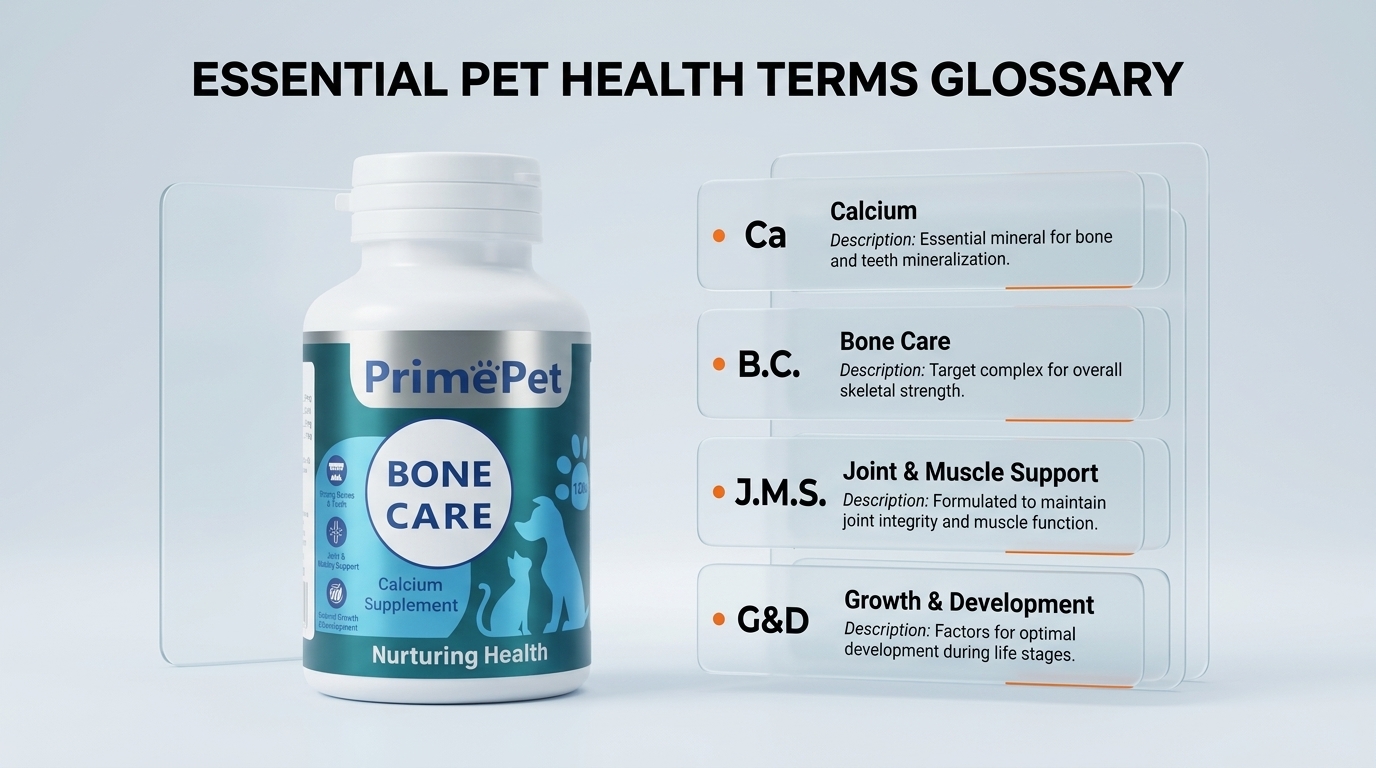
Walking out of the clinic with a sheet of paper full of random letters can feel confusing. You just want to know if your dog or cat will be okay. Vets use shorthand to write notes quickly during busy shifts. Many people vent about this frustration pet owners express on Reddit, noting that medical teams often talk in codes that sound like a secret language. Learning a few common letters helps you read these reports with total confidence.
Understanding Diagnostics with a Pet Health Terms Glossary
Diagnostic shorthand shows how your pet’s body works on the inside right now. These letters tell the doctor if your animal has enough energy, healthy blood flow, or an active infection. Keeping a simple pet health terms glossary on hand helps you interpret these vital baseline numbers during routine checkups or emergency visits.
- CBC (Complete Blood Count): Think of this test as a factory head-count for your pet’s blood cells. It checks red blood cells that carry oxygen, white blood cells that fight off sickness, and platelets that seal cuts. High white cells usually point to an infection or body stress.
- CRT (Capillary Refill Time): Your vet gently presses your pet’s gum until it turns white, then lets go. They count how many seconds it takes for the pink color to return. A normal CRT is under two seconds. It shows that blood flows well through tiny blood vessels.
- BAR (Bright, Alert, Responsive): This simple note describes your pet’s mental state. A BAR pet wags their tail, watches the room, and reacts normally to sounds around them.
If you want to hear how veterinary technicians break down these basic building blocks in real-world practice, watch this quick guide:
Prescription Acronyms and Daily Medication Timelines
Prescription labels rely on quick shorthand to tell you when and how to give pills. Missing these details can change how well a drug works. They tell you the exact timing your pet needs for a full recovery.
| Abbreviation | What It Means | Practical Example |
|---|---|---|
| BID | Twice a day (every 12 hours) | Give one tablet with breakfast at 8 AM and dinner at 8 PM. |
| TID / QID | Three times daily / Four times daily | Space doses evenly across waking hours to keep medicine levels steady. |
| PRN | As needed | Give medicine only when symptoms flare up, like mild stiffness after a long run. |
| PO | By mouth | The medication goes straight into the mouth or gets mixed into food. |
You might also see NSAID on a chart. This stands for Non-Steroidal Anti-Inflammatory Drug. Vets prescribe these to reduce swelling and ease pain from joint wear or injuries. While NSAIDs work well for sudden discomfort, supporting joint health early can reduce how often your pet needs heavy pain meds later in life.
Keeping bones strong prevents long-term joint strain before daily NSAID prescriptions ever become necessary. Routine veterinary discharge records frequently show bone strain in growing pups and aging adults alike. You can protect their frame with PrimePet Bone Care, priced at PKR 1,500. This direct formula combines balanced Calcium, Magnesium, and Phosphorus to rebuild bone density and maintain solid joint structure. It gives growing puppies, nursing mothers, and senior dogs the exact mineral backbone they need to stay mobile without unnecessary stress.
Common Questions About Veterinary Medical Shorthand
Is a DVM harder than an MD?
Both degrees demand intense study. A Doctor of Veterinary Medicine (DVM) must master anatomy and treatments across multiple species—like dogs, cats, horses, and birds—without patients ever explaining where it hurts. A Doctor of Medicine (MD) focuses deeply on human biology alone.
What is the Rule of 20 in veterinary medicine?
Vets use the “Rule of 20” when caring for critically ill animals in intensive care. It is a checklist of twenty vital body parameters—including blood pressure, fluid balance, pain levels, and oxygenation—that staff check daily to make sure no critical system fails during recovery.
What Is Orthopedic Health? Key Musculoskeletal Terms Defined
When your veterinarian hands you an X-ray report filled with complex words, it can feel like reading a foreign language. Orthopedic health simply refers to how well your dog or cat’s bones, joints, muscles, and ligaments work together. Think of the musculoskeletal system as the structural frame and door hinges of your pet’s body. Bones act as sturdy framing studs, while cartilage serves as smooth rubber padding inside each moving hinge. When these parts fit smoothly, your pet runs, jumps, and plays without pain.
Understanding these medical terms helps you catch mobility issues early. Many owners check Reddit discussions on veterinary medical terms when trying to decipher why an orthopedic assessment matters. Broadly speaking, any condition affecting bones, joints, or ligaments falls under this clinical category.
This visual guide breaks down how joints articulate, helping owners see why smooth cartilage is essential to prevent bone friction.
Decoding Skeletal Jargon: Your Pet Health Terms Glossary for Bones and Joints
To help you make sense of your pet’s medical charts, we have translated five core musculoskeletal terms into clear everyday language using standard references like the NCBI skeletal system terminology guide.
| Medical Term | Everyday Analogy | Clinical Meaning |
|---|---|---|
| Osteoarthritis (OA) | Worn-out brake pads | Progressive cartilage loss causing raw bone surface to rub against bone inside a joint. |
| Hip Dysplasia | A loose trailer hitch | A genetic malformation where the hip ball does not fit securely into the socket. |
| Ossification | Wet cement hardening | The natural biological process where soft cartilage transforms into hard, mineralized bone tissue. |
| Subluxation | A drawer off its track | A partial dislocation where joint bones shift out of place without separating completely. |
| Degenerative Joint Disease (DJD) | Rust on a bike chain | An umbrella term for long-term breakdown of cartilage and surrounding joint structures over time. |
Navigating these definitions inside a comprehensive pet health terms glossary makes it far easier to advocate for your animal during vet checkups.
Developmental Issues vs. Age-Related Wear
It helps to group bone issues into two distinct categories: developmental disorders and wear-and-tear conditions. They look similar on the surface because both cause limping. Their root mechanisms are quite different.
Developmental issues happen while your pet is growing up. During puppyhood, cartilage transforms into solid bone through ossification. If growth plates close unevenly or bones form improperly, conditions like Hip Dysplasia take root early. The ball and socket fail to align. You’ll notice soft symptoms like “bunny hopping” or awkward strides before your dog reaches two years old.
Age-related wear happens late in life. Years of running, fetching, and carrying weight slowly grind down slick joint cartilage. Friction increases. Degenerative Joint Disease and Osteoarthritis stem from this ongoing physical load. Joint linings swell, protective fluid thins, and bone spurs form as the body tries to steady the joint.
Clinical Note: A puppy with Hip Dysplasia has an early architectural design flaw. A senior dog with Osteoarthritis has worn out their high-mileage tires. Both need joint care, but their underlying causes sit at opposite ends of the life spectrum.
Proper mineral intake early in life protects skeletal architecture before growth plates seal. Whether you are raising a fast-growing puppy or supporting a senior dog dealing with stiff morning legs, targeted nutrition helps maintain solid bone density. We recommend supplementing your dog’s diet with PrimePet Bone Care skeletal supplement, available for PKR 1,500. Its balanced mix of Calcium, Magnesium, and Phosphorus provides direct structural support for growing puppies, nursing mothers, and aging dogs alike.
How Calcium, Magnesium, and Phosphorus Interact in Canine Skeletal Development
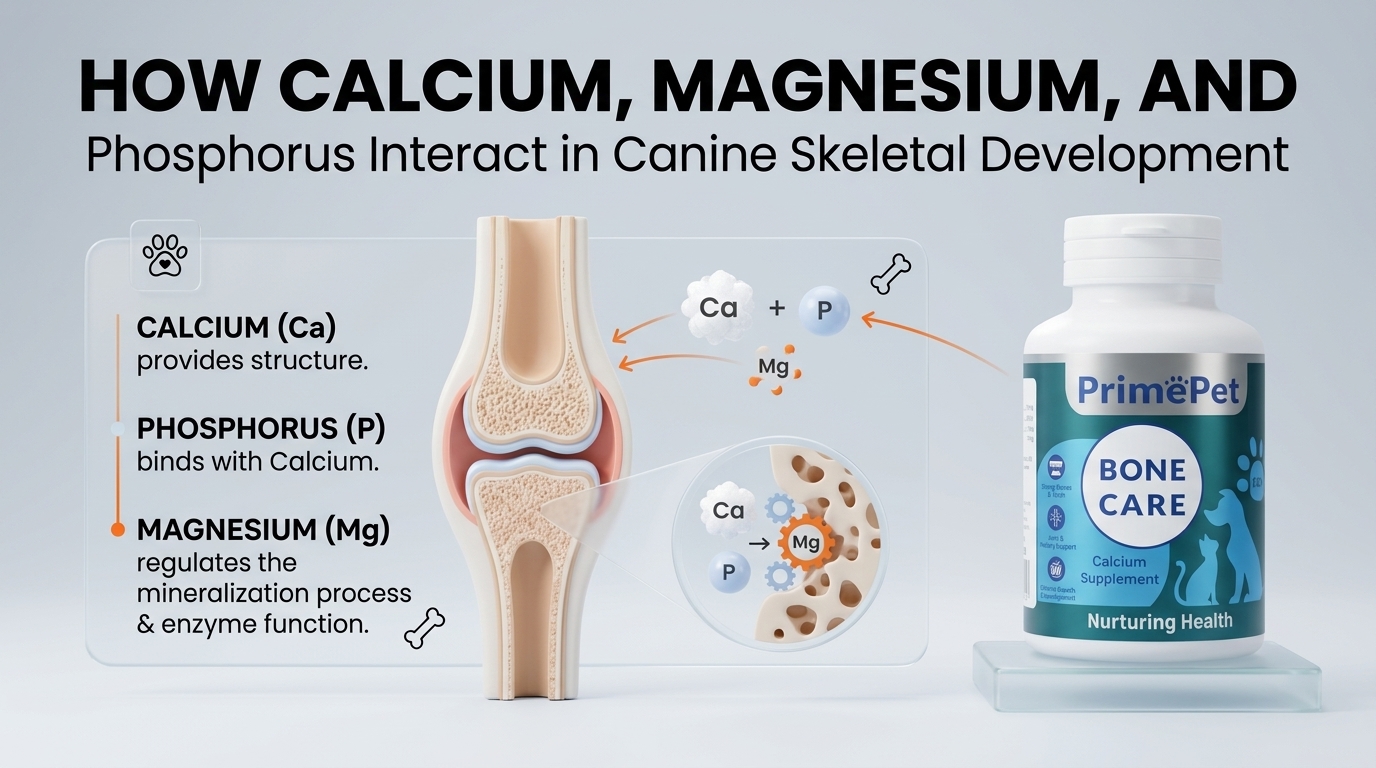
Bones are living tissue. They constantly break down and rebuild throughout your dog’s life. Think of a skeleton as a brick wall. Calcium is the hard brick, phosphorus is the mortar, and magnesium acts as the master builder guiding construction. If you don’t have all three working together, the wall crumbles under pressure.
Decoding Mineral Balance in a Pet Health Terms Glossary
When searching through a pet health terms glossary, you’ll run into complex biochemistry concepts that sound like a college chemistry test. Understanding what calcium, magnesium, and phosphorus do simplifies your daily feeding decisions.
What is the role of calcium and phosphorus in dogs’ health? Calcium gives structural strength to bones and teeth while helping nerves fire and muscles contract. Phosphorus works right alongside it to store cellular energy and build healthy cell membranes. According to Eukanuba research on canine skeletal nutrients, calcium is the most abundant mineral in your dog’s body, but it cannot build structural bone alone.
The ratio between these two minerals is vital. The ideal calcium to phosphorus ratio for growing dogs generally falls between 1.2:1 and 1.4:1. Throwing this balance off causes serious physical harm. Too much calcium locks up phosphorus absorption. Too little calcium forces the body to strip mineral reserves straight from leg bones. Unbalanced mineral deposits can even accumulate inside the kidneys, creating a slow progression of organ damage that vets sometimes call a silent killer of dogs because early symptoms stay hidden. Pet owners on a Reddit forum thread on dicalcium phosphate build-up pointed out how poorly balanced sources like excessive tricalcium phosphate cause progressive systemic strain over time.
Bio-availability, Ratios, and Bone Remineralization Explained
To read your dog’s supplement labels like an expert practitioner, you must master three core clinical terms:
Bio-availability: This measures how much of an ingested mineral your dog’s gut actually absorbs into the bloodstream. Low-grade bone meal might list high calcium levels on paper, but if the bio-availability is poor, your pet simply passes it out in stool.
Mineral Ratio: The strict proportional balance between interacting nutrients. Calcium, magnesium, and phosphorus compete for the exact same cell receptors in the intestine.
Bone Remineralization: The continuous natural process where the body deposits absorbed minerals back into cartilage and bone matrices to repair daily wear, tear, and growing joint structures.
Magnesium plays the role of an essential regulator. It activates enzyme reactions that convert vitamin D into its active form. Without magnesium, calcium can’t settle into bone tissue efficiently. Instead, it circulates in the blood, forming painful soft-tissue calcifications.
This biochemistry lesson by JJ Medicine breaks down how Vitamin D and digestive pathways regulate calcium absorption into body tissues.
Skeletal Support for Puppies, Nursing Bitches, and Senior Dogs
Different life stages demand different levels of mineral support. Growing large-breed puppies need tight mineral control. Over-supplementing a puppy with pure calcium causes skeletal deformities like hip dysplasia and osteochondrosis. As highlighted in a Quora user discussion on puppy calcium supplements, unvetted calcium pills often do far more damage than good.
Nursing mothers experience massive calcium drains while producing milk for heavy litters. Without quick mineral replenishment, they risk eclampsia, a sudden drop in blood calcium that causes severe muscle tremors and seizures. Senior dogs face the opposite challenge; their aging gut lining absorbs fewer nutrients, leading to steady bone thinning.
As detailed in the Merck Veterinary Manual guide on canine mineral disorders, improper dietary mineral levels directly increase disease susceptibility in genetically prone dogs.
“A mineral supplement shouldn’t just dump calcium into your dog’s bowl. It must deliver a biologically precise mix of calcium, magnesium, and phosphorus so bones absorb every microgram safely.”
We formulated PrimePet Bone Care (priced at PKR 1,500) specifically to solve this balancing act. Designed with an optimal bio-available blend of Calcium, Magnesium, and Phosphorus, PrimePet Bone Care protects structural bone density, encourages healthy cartilage formation, and prevents dangerous mineral imbalances. Whether you’re supporting a rapidly growing puppy, helping a lactating mother maintain stamina, or easing a senior dog’s stiff joints, this balanced formula delivers direct, authoritative nutritional support without the risk of mineral overload.
Quick Reference: Mineral Roles in Canine Health
| Mineral | Primary Skeletal Function | Risk of Imbalance |
|---|---|---|
| Calcium | Bone matrix rigidity, tooth structure, muscle contraction | Excess causes bone malformation; deficiency causes soft bones and eclampsia |
| Phosphorus | Structural energy transfer (ATP), collagen cross-linking | Excess triggers kidney stress; deficiency causes weak, brittle bones |
| Magnesium | Enzyme activation, Vitamin D conversion, calcium transport | Deficiency causes arterial calcification and poor calcium uptake |
Understanding Gastrointestinal and Metabolic Health Terms
Veterinary discharge papers can make your head spin. When your pet falls ill, reading terms like dysbiosis or renal insufficiency adds panic to an already stressful situation. Navigating this section of our pet health terms glossary gives you the clarity you need. You’ll learn how to spot the difference between a minor stomach bug and a serious metabolic emergency.
Defining Key Internal Medicine Terms in Your Pet Health Terms Glossary
Internal medicine focuses on the vital organs beneath your pet’s fur. Let me break down four of the most common terms found on medical workups:
- Dysbiosis: Your pet’s gut relies on trillions of helpful bacteria to digest meals. Dysbiosis happens when harmful microbes outnumber the helpful ones. Think of it like a garden where wild weeds choke out bright flowers. Recent community conversations on bacterial gut balance highlight how an unhealthy microbiome quickly disrupts digestion and energy levels.
- Pancreatitis: The pancreas produces chemicals that break down food. In pancreatitis, this organ becomes inflamed and starts digesting itself. Imagine a factory heater leaking hot coal onto its own wooden floor. It causes severe abdominal pain, sudden vomiting, and extreme weakness.
- Hepatic Lipidosis: Commonly called fatty liver disease, this condition affects cats most often. When a feline stops eating suddenly, the body sends stored fat to the liver for quick energy. The liver gets stuffed with fat cells and stops filtering waste. It acts like a mailroom jammed with too many packages to move.
- Renal Insufficiency: This phrase means the kidneys can no longer clear waste from the blood effectively. Think of a household water filter that is clogged and letting dirty water back into your tap. Toxins build up in the body, causing chronic thirst, excessive urination, and weight loss.
Clinical Severity: Acute Distress vs. Systemic Disease
Pet owners often wonder if a sudden bout of diarrhea signals organ failure. It helps to separate short-term gut trouble from long-term metabolic disease.
| Feature | Acute Gastrointestinal Distress | Systemic Metabolic Disorder |
|---|---|---|
| Primary Target | Stomach and intestinal lining | Internal organs (Liver, Kidneys, Pancreas) |
| Onset Speed | Sudden (hours to days) | Gradual progression over weeks or months |
| Common Symptoms | Diarrhea, mild vomiting, temporary gas | Jaundice, weight loss, extreme thirst, persistent abdominal pain |
| Urgency Level | Moderate; monitor hydration closely | High; requires immediate veterinary intervention |
A dog eating garbage often develops acute gastroenteritis. That’s scary, but it usually resolves quickly with fluids and simple treatments. Systemic issues affect how organs manage energy and filter toxins. As highlighted in pet nutrition threads analyzing metabolic gut connections, chronic digestive inflammation impairs long-term nutrient absorption.
Deconstructing Veterinary Digestive Terminology
You don’t need a medical degree to understand medical records. Learning basic medical roots helps you decode vet terminology easily:
Gastro- (Stomach) + Entero- (Intestines) + -itis (Inflammation) = Gastroenteritis (Inflammation of stomach and intestines).
Hepat- (Liver) + -ic (Relating to) = Hepatic (Relating to the liver).
Nephr- or Ren- (Kidneys) + -pathy (Disease) = Nephropathy (Kidney disease).
Breaking these long medical terms into roots makes reading standard gastrointestinal terminology guides simple. You can ask your vet much better questions during appointments.
Watch this video breakdown of internal anatomy to see how digestive organs process fuel and interact under strain:
Severe diarrhea or liver strain rapidly drains vital mineral reserves. Healthy bones depend on continuous nutrient absorption in the gut. When pets recover from digestive upsets or go through demanding stages like growth and aging, their frames need targeted nutritional support.
Giving your dog daily support like PrimePet Bone Care helps keep their skeleton strong. Formulated with a balanced blend of Calcium, Magnesium, and Phosphorus, this daily supplement reinforces bones, teeth, and joints. Available for PKR 1,500, it provides essential nutrition for growing puppies, nursing mothers, and senior dogs needing extra support.
What Do Dermatological and Parasitic Terms Mean on Vet Reports?
You open your dog’s discharge paperwork after a long clinic visit. Words like pruritus and dermatitis fill the page. It feels like reading a foreign language. Your pet won’t stop scratching, and you need clear answers fast. Veterinary dermatology focuses on skin, hair, and claw health. According to an NCBI research on veterinary dermatologic conditions, long-term skin management requires pet owners to understand these core terms early.
Think of your pet’s skin as a protective roof over a house. When bugs or allergies damage the shingles, rain leaks inside. In the medical world, that leak causes redness, swelling, and constant discomfort. Vets inspect these skin barrier breaks using cytology slides, tape impressions, and skin scrapings.
Navigating Skin and Parasite Definitions in a Pet Health Terms Glossary
Veterinary reports rely on precise language to explain skin damage and invader activity. Decoding these labels helps you follow treatment plans without second-guessing your vet’s advice.
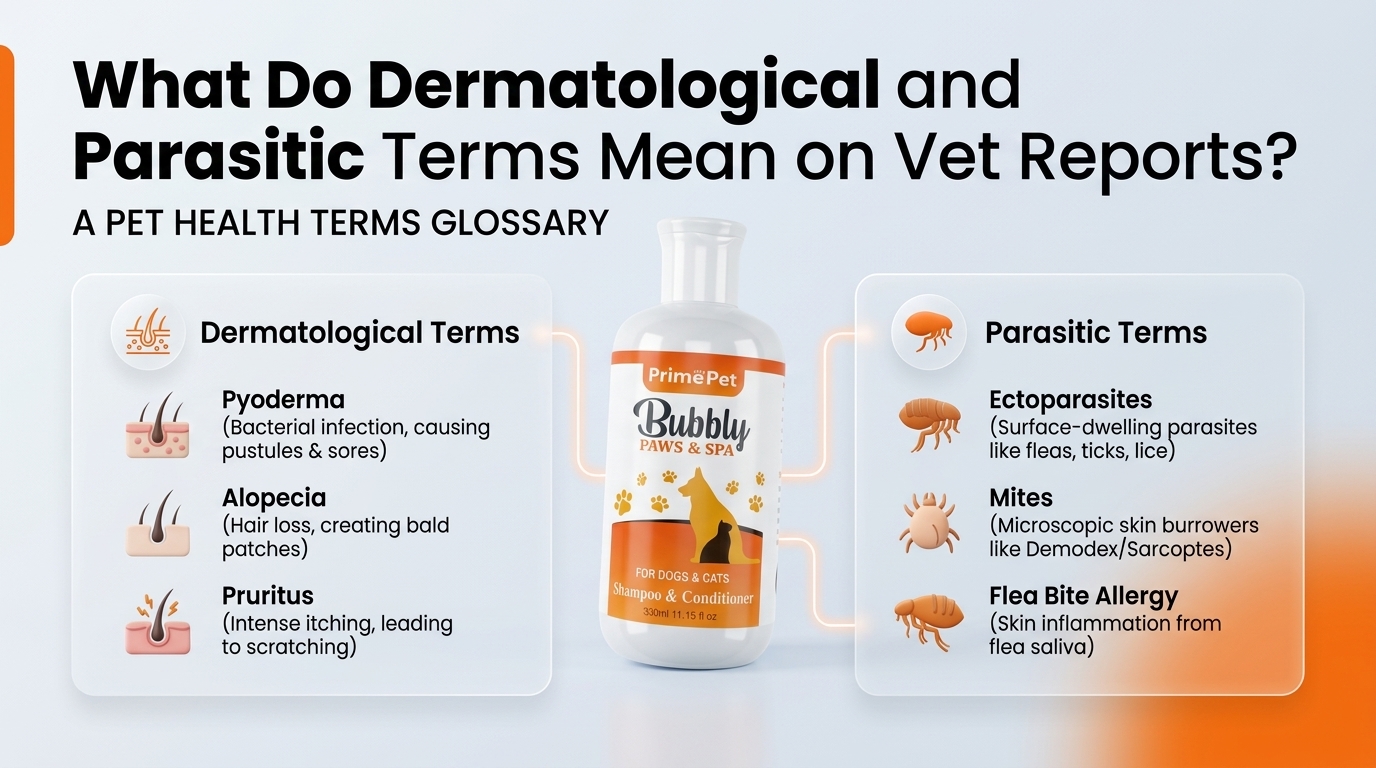
- Pruritus: The medical term for itching. It isn’t a standalone disease. It is an intense sensation that drives pets to lick, chew, or scratch their skin raw.
- Dermatitis: Inflammation of the skin. It occurs when immune cells flood the tissue, making the area hot, red, and swollen.
- Alopecia: Hair loss. This happens in small patches or across large sections of the body when hair follicles get damaged or pulled out by biting.
What is the definition of a parasite in veterinary terms?
In veterinary medicine, a parasite is any living organism that feeds on or inside a host animal. Parasites steal vital nutrients and cause tissue damage or inflammatory flare-ups.
Parasites fall into two primary groups based on where they live. Ectoparasites survive on the external skin surface or inside ear canals. Fleas, ticks, and mange mites are standard ectoparasites. Endoparasites live inside internal organs like the guts, heart, or lungs. Roundworms, hookworms, and heartworms are typical endoparasites.
Some external pests carry microscopic hitchhikers called vector-borne pathogens. When a tick feeds on your dog, it acts as a vector. It transfers dangerous bacteria into the bloodstream, triggering systemic illnesses like Lyme disease or Ehrlichiosis.
What is a parasitic skin infection in dogs? It occurs when pests like mites or fleas invade hair follicles and skin layers. Mites burrow into skin tissue, causing sarcoptic or demodectic mange. Flea bites inject foreign proteins that spark massive histamine releases. Vets diagnose parasite-induced inflammatory responses by taking skin scrapings to catch microscopic mites under a lens.
How to get rid of parasites on dogs’ skin? Vets prescribe target-specific oral chewables, topical spot-on liquids, or antiparasitic washes. Clearing your pet’s bedding and living space is just as important. Pet parents often share their frustrations online when dealing with stubborn skin bugs. In a DogAdvice Reddit discussion on persistent itching, experienced owners stress that strict preventative schedules must continue alongside medicated treatments to break the parasite life cycle completely.
Understanding host-parasite dynamics makes managing long-term treatment easier. This helpful video breaks down parasite classifications and how these organisms interact with host tissues:
| Vet Record Term | Everyday Meaning | Diagnostic Procedure |
|---|---|---|
| Pruritus | Severe itching leading to scratching | Visual assessment & itch scale tracking |
| Ectoparasitism | External pest infestation (fleas/mites) | Microscopic skin scrapings or flea comb tests |
| Vector-Borne Pathogen | Blood infection spread by bug bites | In-clinic 4Dx blood antibody test |
Internal parasites can strip nutrients from growing dogs fast. Rebuilding your pet’s strength requires consistent care and balanced everyday nutrition. Adding PrimePet Bone Care (priced at PKR 1,500) helps young puppies and recovering dogs maintain robust physical health. Its blend of Calcium, Magnesium, and Phosphorus supports sturdy bone structure, healthy teeth, and joint resilience while your vet clears away unwanted parasites.
Keep this pet health terms glossary handy for your next vet visit. Recognizing terms like alopecia or dermatitis helps you ask smart questions and pick the best path forward for your companion.
Empowering Your Pet Care Decisions Through Medical Literacy
Knowledge changes everything. When you master veterinary shorthand, you no longer feel helpless reading clinic discharge notes or hearing rapid jargon during an emergency visit. Having a clear pet health terms glossary at your fingertips bridges the communication gap between you and your care team.
Dogs mask their discomfort. Showing illness marks an animal as vulnerable in nature, so your canine companion will naturally hide subtle stiffness or internal distress for as long as possible. Pet owners reflecting on a discussion on animal survival instincts quickly realize why waiting for obvious symptoms is risky. Noticing small changes in movement, eating habits, or pulse rates lets you catch problems long before they become severe crises.
Learning basic clinical evaluation skills—like assessing pulse rates and physical vitals shown in this instructional guide—helps you monitor your pet at home and report clear details to your veterinarian.
Daily prevention requires action. You can’t rely solely on annual checkups to keep your dog active and pain-free. Skeletal support forms the foundation of lifelong mobility, especially for rapidly growing puppies, nursing mothers, and aging senior dogs. Targeted nutritional fortification makes a noticeable difference in your pet’s daily quality of life.
We created PrimePet Bone Care to deliver direct, balanced support for your dog’s skeletal system. Priced at PKR 1,500, this formula provides a precise ratio of Calcium, Magnesium, and Phosphorus to keep bones dense, teeth strong, and joints resilient. Adding high-quality nutritional support to your daily routine keeps your dog moving comfortably through every stage of life.
True pet advocacy isn’t just about reacting to illness. It’s about combining medical literacy with daily proactive care to protect the bond you share with your dog.
You don’t need a veterinary degree to give your dog exceptional care. Relying on an accessible pet health terms glossary allows you to ask targeted questions, evaluate treatment choices confidently, and advocate for your pet’s health. Pair that medical literacy with solid daily nutrition, and you give your companion the best chance at a long, vibrant life by your side.