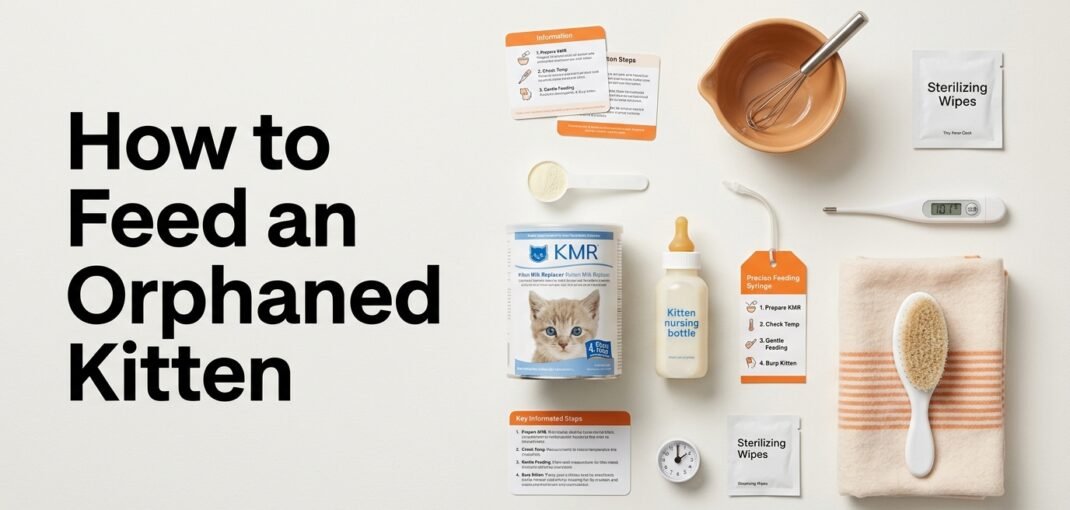
How to Feed an Orphaned Kitten: KMR Schedule & Step-by-Step Tutorial
Finding an orphaned baby kitten is an intense, heart-pounding experience. Tiny kittens are remarkably fragile. If you’ve recently rescued a newborn, understanding how to feed kmr to kittens safely is the single most vital step you can take for their survival. Never give a baby kitten store-bought cow’s milk. It lacks essential fats and causes severe, life-threatening diarrhea. Newborns up to 8 weeks old require a precise balance of nutrients that only a dedicated milk replacer can deliver.
Table of Contents
- Nurturing Orphaned Kittens: Essential Guidance on Kitten Milk Replacer
- Step-by-Step Guide: How to Feed KMR to Kittens Safely and Correctly
- How Much and How Often Should You Feed KMR to Kittens by Age?
- What to Do After Feeding: Stimulation, Burping, and Troubleshooting Digestion
- Building a Foundation for Lifelong Feline Health with Prime Pet KMR
Mother’s milk is nature’s ultimate fuel for a newborn. It delivers essential proteins, vital fats, and key nutrients directly to a kitten’s developing body. When a mother cat isn’t around, you need a high-quality formula that won’t upset delicate stomachs. That’s why experienced caregivers rely on Prime Pet’s KMR Premium Kitten Milk Replacer (available for PKR 1,000). Scientifically formulated to closely mimic natural queen’s milk, this highly digestible formula ensures maximum nutrient absorption for growing kittens from birth up to 8 weeks old. It gives vulnerable rescues the exact biological foundation they need to thrive.
To help you visualize proper care, watch this quick overview by Kitten Lady on bottle-feeding basics. Seeing correct handling in real-time makes hands-on care far less intimidating.
As many concerned rescuers share on Reddit’s r/cats community, keeping a neonate warm, clean, and fed requires round-the-clock commitment. You might wonder how much formula they need daily or how long kittens should drink KMR before starting solid food. We’ve built this complete guide to answer every question. You’ll master safe bottle-positioning techniques, exact feeding schedules, burping methods, and post-meal bathroom stimulation. Let’s make sure your tiny rescue grows into a strong, healthy cat.
Step-by-Step Guide: How to Feed KMR to Kittens Safely and Correctly

Before you open any bottle, remember one golden rule: never feed a cold kitten. Cold bodies cannot digest milk properly, which leads to dangerous digestive shutdown. Always warm the little one first using a wrapped heating pad or warm water bottle next to their nest.
Step-by-Step: How to Feed KMR to Kittens Safely
Feeding an orphaned rescue feels intimidating at first, but following a clean step-by-step routine keeps your neonate safe and thriving.
1. Prepare the Formula Correctly
Mix 1 part powdered formula with 2 parts warm water. Whisk it gently with a small fork until completely smooth. Avoid using a blender because high speeds trap air bubbles that cause painful gas. Test the liquid on the inside of your wrist—it should feel comfortably warm, right around 100°F (38°C). We recommend using KMR Premium Kitten Milk Replacer (PKR 1,000), which is scientifically formulated to mimic mother’s milk and promote maximum absorption in delicate newborn stomachs. Only mix what you need for the day. Freshly mixed formula lasts up to 24 hours in the fridge.
2. Pick the Right Feeding Tool
Choosing between a syringe and a specialized bottle depends on your kitten’s age and health:
- 1ml to 3ml Syringe: Best for weak newborns or fussy rescue kittens under two weeks who lack a strong suckling reflex.
- Pet Bottle with Miracle Nipple: Ideal for healthy kittens over two weeks who can latch and draw fluid independently.
3. Position Belly-Down (Never on Their Back)
This is the single most vital safety step when learning how to feed KMR to kittens. Human babies drink lying on their backs, but doing this to a kitten sends liquid straight into their lungs. Always place the kitten flat on their stomach on a towel, resting on their knees, with their head tilted slightly up. This natural nursing posture prevents fatal fluid aspiration.
“The kitten needs to be fed kitten formula from a small bottle with a small nipple… never feed cow milk and keep them warm first.” — Rescue advice from Reddit’s cat care community.
4. Establish a Natural Latch
Place a tiny drop of warm milk on the tip of the nipple to spark their appetite. Gently slide the tip into their mouth. Let the kitten suckle at their own pace. Never squeeze liquid into their throat; pushing milk too fast causes choking and severe diarrhea.
Watch this visual guide by Kitten Lady to see ideal posture and latch techniques in action:
How Much and How Often Should You Feed KMR to Kittens by Age?
Feeding newborn kittens requires exact timing and accurate portioning. Newborns cannot regulate their own blood sugar. If they skip a meal, dangerous hypoglycemia can set in quickly. Master how to feed kmr to kittens by matching their daily intake directly to their growing body weight.
Kitten Feeding Schedule: How to Feed KMR to Kittens by Age
A standard baseline rule is feeding about 2 tablespoons (30 mL) of prepared formula per 4 ounces (115g) of body weight over a 24-hour period. However, rigid numbers do not fit every rescue situation. Experienced fosters on Reddit’s FosterAnimals community emphasize that while charts provide a vital baseline, caregivers should allow a healthy kitten to suckle until comfortably full without forcing extra liquid.
| Kitten Age | Average Weight | Feeding Frequency | Amount per Feed |
|---|---|---|---|
| Week 1 | 50 – 150g | Every 2 – 3 hours | 2 – 6 mL |
| Week 2 | 150 – 250g | Every 3 – 4 hours | 6 – 10 mL |
| Week 3 | 250 – 350g | Every 4 – 5 hours | 10 – 14 mL |
| Week 4 | 350 – 450g | Every 5 – 6 hours | 14 – 18 mL |
| Weeks 5 – 8 | 450g+ | 4 meals daily | KMR + Wet Food Slurry |
To prevent diarrhea or underfeeding during these fragile weeks, proper nutrient absorption is vital. We recommend using KMR Premium Kitten Milk Replacer (priced at PKR 1,000). This highly digestible formula closely mirrors natural mother’s milk. It helps delicate newborn stomachs absorb maximum nutrients, ensuring steady daily weight gain and preventing sudden blood sugar crashes.
Check out the video above for a quick visual demo on calculating precise daily intake. By week 4 or 5, you can start blending warm KMR with canned wet kitten food to create a smooth weaning slurry. This eases their transition to solid food by week 8 while keeping them fully hydrated.
What to Do After Feeding: Stimulation, Burping, and Troubleshooting Digestion

Post-Feed Routine: Burping and Stimulation
Feeding is only half the job when you learn how to feed kmr to kittens safely. Once your tiny rescue finishes nursing, post-feed care begins immediately. Gas bubbles get trapped easily inside small stomachs. Hold the kitten upright against your shoulder or lay them tummy-down on your lap. Gently pat their upper back with two fingers. You will often feel a tiny bubble release. Experienced caregivers in online parenting forums emphasize that keeping newborns upright after feeding reduces painful gas and reflux.
Kittens under four weeks old cannot go to the bathroom by themselves. In nature, mother cats lick their babies to trigger elimination. You must mimic this exact motion after every meal. Take a soft, warm, damp cotton round. Gently rub their genital and anal area in small circular motions. The kitten will pee almost immediately and poop regularly. Wipe them clean with a fresh towel right after.
Hygiene Tip: Always wipe your kitten’s face with a damp warm cloth after feeding. Dried formula causes fur loss and skin irritation.
Troubleshooting Digestion Problems
Bottle-fed kittens often face tummy troubles. Recognizing warning signs early saves lives.
- Constipation: Can milk replacer cause constipation in kittens? Yes. Mixing formula too thick or using low-grade brands hardens stool. Ensure correct water ratios.
- Bloat: Trapped gas creates a hard, swollen belly. Never feed a cold kitten or force formula down their throat.
- Diarrhea: Bacteria from dirty bottles or poor-quality milk cause loose, watery stools. Wash bottles in boiling water after every use.
Preventing digestive upset comes down to formula quality and hygiene. Using KMR Premium Kitten Milk Replacer (PKR 1,000) provides a highly digestible formula that matches natural queen’s milk. It absorbs easily, helping fragile newborn systems avoid gas build-up, diarrhea, and constipation while supporting steady daily weight gain.
Building a Foundation for Lifelong Feline Health with Prime Pet KMR
Hand-rearing orphaned newborns requires round-the-clock dedication. Many guardians suddenly find themselves caring for dumped kittens needing emergency care without prior experience. It’s normal to feel overwhelmed. You’ll master the routine once you stick to the basics: feed them on their bellies, keep them warm, and stimulate them after every meal. New foster parents often ask how long kittens should drink KMR. Most babies rely on formula as their main food until four weeks of age, slowly transitioning to solid food by eight weeks. During this window, keep the 3-3-3 rule for kittens in mind: give them 3 days to adjust to bottle feeding, 3 weeks to set a routine, and 3 months to feel fully secure.
Nutrition makes all the difference during these fragile weeks. Rescue workers sometimes ask how to make KMR kitten milk at home in a pinch. Avoid homemade cow’s milk recipes. They lack vital taurine and often cause side effects like severe diarrhea and dehydration. Instead, choose a scientifically balanced formula like KMR Premium Kitten Milk Replacer by Prime Pet. Priced at PKR 1,000, this highly digestible formula closely mimics natural mother’s milk to ensure maximum nutrient absorption for sensitive newborn stomachs. Pairing this formula with simple tools—like a soft Miracle Nipple or a calibrated syringe—prevents milk aspiration and keeps feeding sessions calm.
Steady weight gain is your best indicator of health. Weigh your kittens on a digital scale at the exact same time every day.
Calculating how much KMR to feed a kitten per day depends entirely on their scale weight. Aim for roughly 30ml of prepared formula per 100 grams of body weight daily, divided evenly across their age-appropriate feeding schedule. Mastering how to feed kmr to kittens safely isn’t just about surviving the neonatal weeks. It’s about building strong bones, robust immunity, and lifelong feline vitality. When you offer consistent warmth, proper care, and authentic nutrition through Prime Pet KMR, you give vulnerable kittens the best possible start in life.