Glucosamine vs Chondroitin for Dogs: Which Joint Supplement Works Best?
Watching your once-energetic companion hesitate at the stairs breaks any pet owner’s heart. As dogs age, natural wear and tear grinds down their protective joint cartilage, making daily movement stiff and painful. When searching for relief, you’ll instantly run into the debate of glucosamine vs chondroitin for dogs to see which joint supplement works best for long-term mobility. Both natural compounds serve as foundational building blocks for healthy cartilage, but they fulfill distinct roles in protecting your dog’s joints.
Table of Contents
- Navigating Canine Joint Care: Understanding Glucosamine and Chondroitin
- What Is the Core Biological Difference Between Glucosamine and Chondroitin?
- Glucosamine vs Chondroitin for Dogs: Key Differences in Speed and Efficacy
- Why Do Veterinarians Recommend Combining Glucosamine and Chondroitin?
- How to Determine the Right Joint Supplement Strategy for Your Dog
- Optimizing Joint & Daily Wellness: The Role of Complete Micronutrient Support
- Long-Term Mobility Solutions for a Happier, Active Pet
Navigating pet health store shelves feels overwhelming with so many overlapping claims. It’s easy to confuse these two nutrients because supplement labels often blend them together into single formulas. Think of your dog’s cartilage as a heavy-duty cushion sitting between bones. Glucosamine acts like the raw bricks needed to rebuild worn tissue. Chondroitin works like a damp sponge inside that cushion, drawing in water to absorb heavy impacts whenever your pet runs, jumps, or plays.
Selecting the ideal mobility strategy means evaluating absorption rates, speed of action, and overall active ingredient strength. Joint care rarely exists in a vacuum. Standard pet foods often lose essential nutrients during high-heat processing, leaving nutritional gaps that impact overall tissue recovery. Adding a broad-spectrum daily formula such as PrimePet Vital Mix Multivitamin & Mineral Supplement for Dogs & Cats (priced at PKR 1,500) supplies essential micronutrients that enhance energy levels and promote overall vitality alongside specialized joint care. Let’s compare glucosamine vs chondroitin for dogs side by side so you can make the most informed decision for your pet.
What Is the Core Biological Difference Between Glucosamine and Chondroitin?
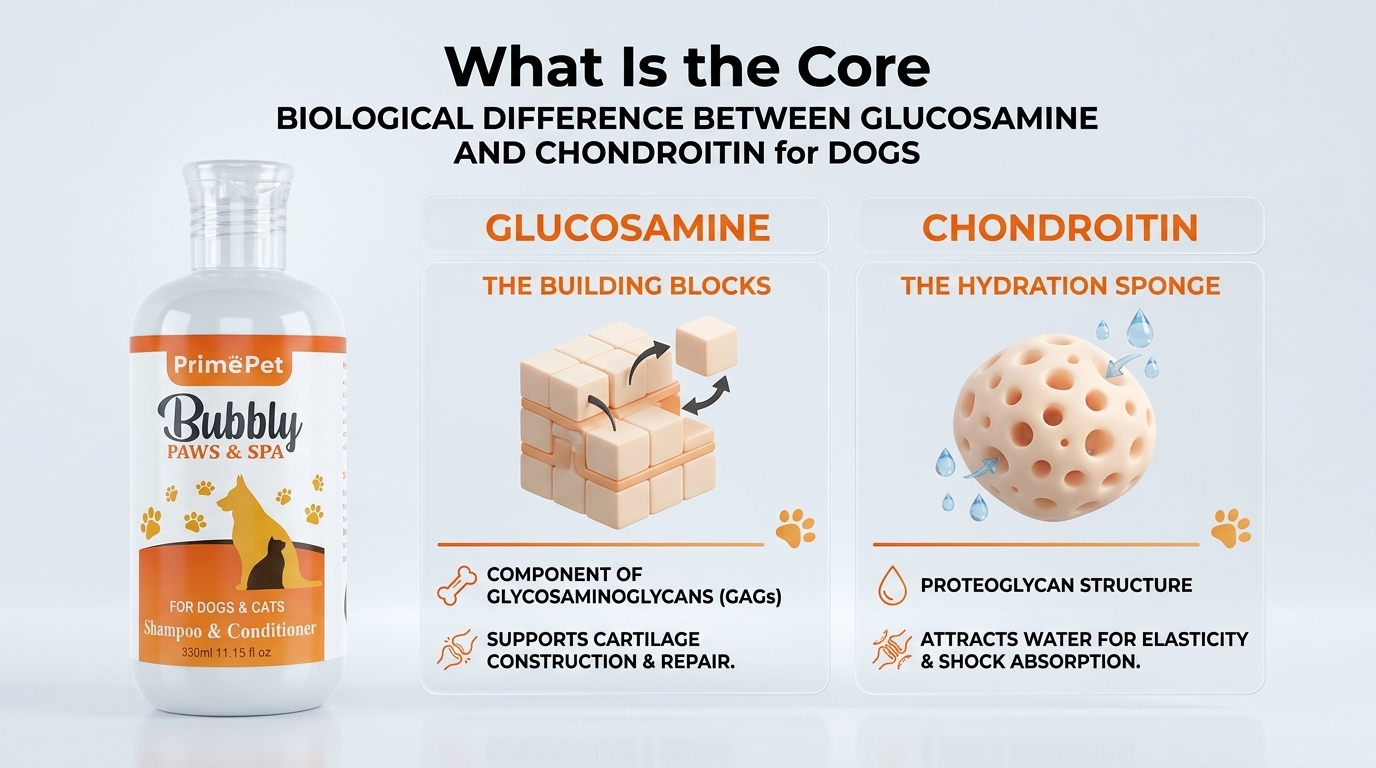
Understanding the Biological Breakdown: Glucosamine vs Chondroitin for Dogs
Think of your dog’s joint cartilage like a thick water sponge. Every time your dog jumps for a ball, lands after a run, or stands up from a nap, this sponge absorbs the impact so bones don’t grind together. When cartilage wears down, joints lose their padding. To understand how to protect your pet’s body, looking at glucosamine vs chondroitin for dogs comes down to seeing how one compound rebuilds worn structure while the other shields existing tissue from further harm.

Glucosamine is a natural amino sugar that your dog’s liver produces. It serves as the primary brick used to build special molecules called glycosaminoglycans. These molecules act like raw mortar. They repair micro-tears in damaged cartilage and stimulate cells called chondrocytes to produce fresh joint padding. Glucosamine also feeds the thick, slippery lubricant known as synovial fluid. Without enough fluid, joints turn stiff, scratchy, and dry. By supplying fresh building materials, glucosamine keeps that internal lubricant thick and gooey, allowing joints to glide freely without friction.
Chondroitin plays a very different, defensive role inside the joint matrix. It’s a large, tough molecule naturally woven into the cellular framework of connective tissue. Instead of acting as mortar, chondroitin works like a bouncy elastic net. It draws water deep inside cartilage tissue to give it shock-absorbing springiness. Even more importantly, chondroitin acts like a security guard. It neutralizes aggressive enzymes—such as collagenase and aggrecanase—that actively break down cartilage proteins when joints get inflamed. By stopping these destructive enzymes from eating away at the joint, chondroitin preserves the structural padding your dog already has left.
| Biological Feature | Glucosamine | Chondroitin |
|---|---|---|
| Primary Role | Tissue repair and raw material builder | Enzyme blocker and shock absorber |
| Molecular Action | Stimulates production of new collagen and fluid | Inhibits destructive tissue-degrading enzymes |
| Target Benefit | Refills synovial fluid and repairs micro-cracks | Retains cartilage elasticity and prevents cushion loss |
| Key Analogy | Fresh asphalt patching up potholes | A tough spring mechanism that repels road damage |
Joint repair doesn’t happen in isolation. Your dog’s body needs a wide array of raw trace minerals, vitamins, and antioxidants to absorb these large molecules through the gut wall and transport them into cartilage tissue. Sadly, standard commercial kibble loses many delicate nutrients during high-heat manufacturing.
Pairing targeted joint care with complete daily nutrition gives your pet the best outcome. Introducing PrimePet Vital Mix Multivitamin & Mineral Supplement for Dogs & Cats (PKR 1,500) fills critical nutritional gaps left by processed pet foods. It delivers vital minerals that support immune health, enhance natural energy, and help connective tissues absorb key repair agents more efficiently.
Field Note: Glucosamine acts as the construction team building back lost joint padding, while chondroitin acts as the fence keeping destructive enzymes out. Using both creates a complete defense system for aging hips and knees.
When analyzing glucosamine vs chondroitin for dogs at the cellular level, scientists consistently observe a synergetic relationship. Glucosamine works fast to produce sticky sugar chains, while chondroitin takes longer to build up in tissues, providing deep structural resistance. A combined approach prevents joint degradation from outstripping your dog’s natural repair speed. Research published in a veterinary cartilage matrix analysis shows that suppressing matrix-degrading enzymes allows raw repair precursors to work twice as effectively compared to using single-compound therapies alone.
Glucosamine vs Chondroitin for Dogs: Key Differences in Speed and Efficacy
Think of joint care like fixing a damaged house. Glucosamine works like a fast-acting patch crew that fills holes in the roof. Chondroitin acts like a heavy-duty waterproof sealant that protects the whole structure from future storms. They don’t work at the same speed, and their jobs in your dog’s body are surprisingly distinct.
Comparing Glucosamine vs Chondroitin for Dogs: Absorption Rates and Target Speed
Small molecules move fast. Glucosamine is a simple amino sugar with tiny molecules that pass through your dog’s stomach and intestines easily. Clinical studies show dogs absorb glucosamine efficiently within hours of eating it. Most pet parents notice their dogs moving with less morning stiffness after four to six weeks of daily use. It gets right to work making new cartilage components.
Large molecules play the long game. Chondroitin sulfate is a massive, complex molecule made of long sugar chains. Because it’s so big, your dog’s gut takes much longer to digest and transport it into joint tissues. It often takes eight to twelve weeks before chondroitin reaches steady levels inside joint fluid. Once it settles in, it stays put and offers long-lasting protection.
| Performance Metric | Glucosamine | Chondroitin |
|---|---|---|
| Molecular Size | Small (Simple Amino Sugar) | Large (Complex Glycosaminoglycan) |
| Onset Speed | Fast (4 to 6 weeks) | Slower (8 to 12 weeks) |
| Main Mechanism | Rebuilds damaged joint tissue | Locks in water and blocks destructive enzymes |
| Targeted Benefit | Acute repair and early collagen building | Long-term structural preservation under heavy stress |
Glucosamine shines when joints need immediate building blocks. If your dog suffers a mild strain or shows early signs of cartilage wear, glucosamine acts as raw material. It supplies the exact precursor molecules your dog’s body needs to spin new collagen fibers and cushion joint surfaces.
Chondroitin excels when joints face chronic wear and tear. Aging joints produce destructive enzymes that chew up healthy cartilage. Chondroitin acts like a sponge by pulling fluid into the joint matrix, which absorbs shock when your dog runs or jumps. It also neutralizes those bad enzymes so your dog doesn’t lose existing cartilage over time.
Glucosamine builds new joint structures quickly, while chondroitin protects old joint structures from breaking down.
When weighing glucosamine vs chondroitin for dogs, remember that joint tissue can’t rebuild itself on raw sugars alone. Your dog’s body relies on balanced minerals and vitamins to spark these biological repairs. Standard pet foods often lose vital micronutrients during high-heat cooking. To give your pet’s body the nutritional tools it needs to process joint supplements efficiently, consider pairing joint care with PrimePet Vital Mix Multivitamin & Mineral Supplement for Dogs & Cats. Available directly for PKR 1,500, this complete mix fills daily nutritional gaps, boosts natural energy, and strengthens immune health so your dog stays active for years to come.
Why Do Veterinarians Recommend Combining Glucosamine and Chondroitin?
Think of joint repair like fixing a brick wall in a stormy field. Glucosamine brings fresh bricks to the construction site. It feeds your dog’s body the raw materials needed to manufacture smooth new cartilage tissue. Chondroitin acts like a heavy-duty waterproof tarp over the workers. It blocks destructive enzymes from knocking down the new wall while locking in moisture so the bricks stay cushioned and shock-resistant.
When pet owners compare glucosamine vs chondroitin for dogs, they often ask if choosing just one ingredient is enough. Giving glucosamine alone is like sending builders into a storm without shelter. Your dog creates new joint lining, but active inflammatory enzymes chew it up almost as fast as it’s built. Giving chondroitin by itself protects existing cartilage, but leaves the joint flat and dry because there aren’t enough raw materials to rebuild worn surfaces. Combining both compounds creates a continuous cycle of repair and protection.

Understanding Joint Synergy: Glucosamine vs Chondroitin for Dogs
Veterinarians rarely recommend single-agent joint care because veterinary joint supplement clinical trials show that combined formulas deliver far better physical mobility. One compound builds tissue while the other prevents destruction. They don’t just add to each other’s effects—they multiply them.
Here is how these two compounds work side-by-side inside your dog’s joint capsule:
- Cartilage Synthesis (Glucosamine): Stimulates specialized cells called chondrocytes to produce fresh collagen and glycosaminoglycans. It acts as the primary repair engine.
- Enzyme Inhibition (Chondroitin): Neutralizes aggressive enzymes like matrix metalloproteinases that eat away joint tissue. It acts as a defensive shield.
- Fluid Retention (Chondroitin): Traps water inside the cartilage matrix. This maintains a thick, liquid cushion that stops painful bone-on-bone grinding.
“Administering glucosamine and chondroitin together creates a balanced system where tissue repair consistently outpaces natural tissue breakdown.”
Rebuilding joint structures requires more than just targeted glucosamine and chondroitin. Your dog’s body relies on balanced trace minerals and daily vitamins to process and absorb these joint nutrients effectively. That’s why broad daily nutrition plays such a big role alongside joint-specific care.
Adding the PrimePet Vital Mix Multivitamin & Mineral Supplement for Dogs & Cats (Primepet Vital) to your pet’s daily meals ensures their body gets essential micronutrients that support cartilage maintenance, immune resilience, and daily energy. At an authentic direct price of PKR 1,500, this all-in-one powder helps fill nutritional gaps left by processed pet foods, helping your dog get the maximum benefit from their mobility care routine.
How to Determine the Right Joint Supplement Strategy for Your Dog
Finding the right balance for your pet isn’t a one-size-fits-all formula. Weight, age, and daily activity levels dictate how fast cartilage wears down. A 90-pound German Shepherd carries far more stress on its hips than a Toy Poodle running across a living room rug.

Tailoring Glucosamine vs Chondroitin for Dogs by Weight and Age
Body weight remains the single most important factor when sizing up daily doses. Larger breeds need higher raw amounts of active compounds to rebuild joint fluid and protect cartilage matrix structures. Senior dogs showing stiff morning walk routines also need higher initial support compared to younger pups with genetic predispositions like dysplasia.
| Dog Weight | Glucosamine Daily Target | Chondroitin Daily Target | Mobility Goal |
|---|---|---|---|
| Under 25 lbs | 250 – 500 mg | 200 – 400 mg | Preventative care and mild morning stiffness |
| 25 – 50 lbs | 500 – 1,000 mg | 400 – 800 mg | Active wear and moderate limping support |
| 51 – 90 lbs | 1,000 – 1,500 mg | 800 – 1,200 mg | Advanced cartilage cushion replacement |
| Over 90 lbs | 1,500 – 2,000 mg | 1,200 – 1,500 mg | Severe mobility loss and senior care |
Always plan for an initial loading phase. For the first four to six weeks, standard veterinary guidance calls for doubling the regular daily maintenance dose. This double-strength period saturates dry joint tissues quickly. Once your dog climbs stairs easier or stands up without hesitating, drop back down to standard maintenance amounts.
Expect real changes to take time. Natural joint compounds work like slow-acting repair crews, rebuilding tissue cell by cell rather than masking pain instantly like pharmaceutical drugs.
You’ll usually see visible progress within four to eight weeks. Early signs include shorter warm-up times after naps, smoother steps, and renewed interest in backyard games.
Managing Administration Routines and Mild Digestive Upset
Mixing supplements directly into food keeps daily routines easy. Giving chewable treats or powders alongside regular meals prevents stomach irritation. Some dogs experience minor digestive shifts when starting new active compounds. Watch for loose stools, extra gas, or temporary loss of appetite during the first week.
If mild diarrhea appears, don’t panic. Cut the daily dose in half for five days so your dog’s digestive system can adapt. Slowly work back up to the target amount as their stomach settles.
Joint building blocks require a steady supply of basic vitamins and minerals to absorb correctly. Standard commercial dog foods often lose essential nutrients during high-heat processing. Pairing your joint care plan with PrimePet Vital Mix Multivitamin & Mineral Supplement for Dogs & Cats fills these hidden nutritional gaps. Priced at PKR 1,500, this daily blend delivers foundational micronutrients that support immune function and help your pet synthesize cartilage repair compounds far more effectively.
When weighing your options in the glucosamine vs chondroitin for dogs discussion, combining both compounds alongside daily vitamins yields the strongest mobility outcomes. For broader insights on safe administration, review the AKC canine joint wellness recommendations to keep your pet moving comfortably.
Optimizing Joint & Daily Wellness: The Role of Complete Micronutrient Support
Beyond Isolated Compounds: Micronutrients and Glucosamine vs Chondroitin for Dogs
Think of your dog’s joints as a busy building site. Glucosamine provides the scaffolding, while chondroitin acts as the shock-absorbing rubber matting between heavy stones. But even the best raw building materials sit unused without skilled workers and proper tools. Essential micronutrients are those biological workers. Trace minerals like manganese and zinc, along with vitamins C and E, act as key spark plugs. They activate the body’s natural enzymes that lock joint molecules together into resilient cartilage. Without broad micronutrient support, a dog’s body struggles to metabolize and absorb raw joint building blocks efficiently.
“Giving isolated joint supplements to a dog running on micronutrient-depleted food is like buying high-end tires for a car that has no engine oil. The structural parts are present, but the underlying machinery can’t run the necessary chemical reactions.”
Standard commercial dog kibble usually falls short here. Most pet foods undergo high-heat processing called extrusion during manufacturing. This intense heat destroys delicate, heat-sensitive vitamins and essential trace minerals long before the food reaches your pet’s bowl. Your dog might consume enough daily calories, but their cellular system lacks the nutrient background needed to rebuild worn tissue. Over time, this nutritional gap leaves their immune system drained and slows down joint recovery.
To fix this hidden gap, smart joint care starts with a complete daily baseline. Adding PrimePet Vital Mix Multivitamin & Mineral Supplement for Dogs & Cats to your pet’s routine fills these exact nutritional voids for just PKR 1,500. It delivers a balanced, bioavailable dose of vital nutrients that high-heat cooking strips away, giving your pet strong immunity and better cellular energy.
| Nutritional Approach | Metabolic Absorption | Cartilage & Daily Health Support |
|---|---|---|
| Single-Molecule Joint Care Alone | Partial absorption; tissue-building enzymes lack mineral co-factors. | Focuses only on joint repair; offers no help for daily immunity or stamina. |
| Joint Care + PrimePet Vital Mix (PKR 1,500) | Maximum bio-utilization driven by active zinc, manganese, and antioxidants. | Complete cartilage building plus total immune protection and metabolic balance. |
When weighing **glucosamine vs chondroitin for dogs**, don’t judge these powerful compounds in isolation. Pairing targeted cartilage repair agents with the complete restorative formula of Vital Mix gives your dog the exact biological foundation they need. It keeps their joints fluid, their immune system sharp, and their daily energy high through every stage of life.
Long-Term Mobility Solutions for a Happier, Active Pet
Sustaining Canine Agility: Glucosamine vs Chondroitin for Dogs in Daily Care
Cartilage wears down over time. Keeping your dog active requires a clear strategy that protects their joints from daily wear and tear. When evaluating glucosamine vs chondroitin for dogs, understanding their distinct roles helps you decide which joint supplement works best for your pet’s needs. Glucosamine serves as the building block for new cartilage tissue, helping repair microscopic wear inside the joint capsule. Meanwhile, chondroitin acts like a tiny sponge, pulling fluids into connective tissue to cushion every step and leap. Combining both ingredients creates a powerful defense system that keeps your dog moving comfortably.

Don’t wait for visible limping. Early intervention remains the secret to long-term mobility. Starting joint support before your dog shows signs of stiffness protects their cartilage while it’s still healthy. Pair these daily supplements with steady, low-impact exercise like swimming or controlled walking. Controlling your pet’s weight also takes unnecessary pressure off their hips and knees, preserving their natural agility for years to come.
Joint supplements work best alongside complete daily nutrition. Standard pet foods often lose vital vitamins during high-heat manufacturing, leaving nutritional gaps that affect overall physical health. We recommend adding PrimePet Vital Mix Multivitamin & Mineral Supplement for Dogs & Cats (Primepet Vital) #2 to your pet’s morning routine. Available for PKR 1,500, this complete formula restores essential nutrients, boosts daily energy levels, and reinforces immune strength to support your dog’s overall joint and body wellness.
Consistently combining targeted joint building blocks with balanced micronutrient support provides the strong foundation your pet needs to stay active, happy, and pain-free throughout their golden years.
Joint care requires daily commitment. We’ve seen how dedicated pet parents transform their dog’s comfort simply by taking action early. Consult your veterinarian, establish a consistent supplement schedule, and watch your companion enjoy every game of fetch with ease. Reviewing trusted canine orthopedic health resources can help you make informed decisions about your pet’s long-term mobility care.