How to Safely Apply Spot-On Tick Treatment for Dogs - how to apply spot on tick treatment dog
Finding an engorged parasite on your four-legged companion is every pet parent's nightmare. Learning how to apply spot on tick treatment dog owners depend on is your first true line of defense against debilitating tick-borne illnesses like Lyme disease, Anaplasmosis, and Ehrlichiosis. When you safely apply spot-on tick treatment for dogs directly onto their skin, the medication shields their entire body. Yet, a surprisingly high number of home treatments fail simply because the liquid never reaches the dermal layer.
Table of Contents
- Why Proper Application Technique Is Critical for Canine Tick Defense
- What to Prepare Before You Open the Applicator Tube
- A Step-by-Step Guide on Applying Spot-On Treatments Correctly
- What Should You Do Immediately After Applying Spot-On Medication?
- How to Identify and Manage Skin Irritation or Adverse Reactions
- Why Supporting Cellular Immunity and Skin Barrier Health Complements Tick Defense
- Establishing a Safe, Consistent Year-Round Parasite and Wellness Routine
Ticks move fast. Their bites bring severe trouble. These blood-feeding arachnids transmit bacterial pathogens in as little as 24 to 48 hours after attaching to host tissue. Trusted topical spot-on medications—such as Frontline Plus or K9 Advantix II—work through translocation. The active ingredients dissolve into your dog's natural sebaceous oils and spread across the entire skin surface over 12 to 24 hours. The oily mantle acts like a protective conveyor belt. If you deposit the solution onto the fur coat rather than the bare dermis, the medication stays trapped in the hair shafts, evaporates, or rubs off onto your carpets.
Poor technique does more than waste expensive tubes. It creates immediate hazards. In pet parent communities on canine care discussion forums, owners frequently report topical runoff pooling down the dog's neck or shoulders. When dogs twist around and lick these wet chemical residues, they risk accidental ingestion. That mistake triggers intense hypersalivation, vomiting, tremors, and gastric distress. Even worse, an under-dosed dog remains completely vulnerable to infected tick bites during walks through tall brush.
Mastering how to apply spot on tick treatment dog guardians can execute in minutes ensures maximum parasite mortality with zero chemical wastage. Total protection also requires a resilient biological foundation. Standard pet foods often lose essential nutrients during high-heat processing, leaving dogs with dry, flaky skin that struggles to distribute topical solutions evenly. Integrating PrimePet Vital Mix Multivitamin & Mineral Supplement for Dogs & Cats (PKR 1,500) into your pet's daily meals supports the cellular immunity and dermal lipid balance needed to keep that natural defense barrier robust year-round.
What to Prepare Before You Open the Applicator Tube

Pre-Treatment Safety: How to Apply Spot On Tick Treatment Dog Checklist
Rushing to snap open a pipette is the most common mistake pet parents make. When learning how to apply spot on tick treatment dog protocols safely, preparation determines whether the medication protects your pet or causes unexpected complications. Take five minutes to complete three foundational checks before breaking the tube seal.
Clinical Rule of Thumb: Spot-on topicals rely on natural skin oils to move across your dog's body. If the skin barrier is broken, wet, or irritated, the medication cannot spread evenly and may absorb too rapidly into the bloodstream.
Confirming an Exact Body Weight
Never guess your dog's weight. Spot-on tick medications are formulated around precise weight bands. If your dog weighs 10.2 kg and you purchase a box rated for pets up to 10 kg, that tiny 200-gram difference can leave your dog underprotected against dangerous tick-borne diseases. Giving a small dog a higher bracket dose exposes them to unnecessary chemical toxicity.
Weigh your dog on a digital scale before buying or opening your product. If your pet will not sit on a scale, weigh yourself first, pick up your dog, step back on the scale, and subtract your personal weight. Most veterinary clinics will also let you use their walk-on platform scale free of charge.
Inspecting Dermal Integrity and Moisture Levels
Part your dog's fur along the spine from the base of the skull down to the shoulder blades. Inspect the bare skin under bright light. You need to verify two conditions:
- The coat and skin must be bone dry: Water creates an invisible barrier against lipid-based medication carriers. If your dog swam, took a bath, or walked in heavy rain within the past 48 hours, wait. Washing your dog strips sebum, which is the oily film needed to carry the active ingredients across the epidermis.
- The surface must be free of lesions: Check for open scratches, flea bite dermatitis, hot spots, or active tick bites. Liquid pesticides applied directly over broken skin will sting intensely and risk acute chemical absorption.
A resilient skin barrier makes topical pest defense far more effective. Standard commercial kibble often loses vital fatty acids and micronutrients during high-heat manufacturing, leaving dogs with flaky, brittle skin. Adding PrimePet Vital Mix Multivitamin & Mineral Supplement for Dogs & Cats (PKR 1,500) to their daily meals supplies foundational vitamins and minerals that strengthen cellular immunity and rebuild the dermal lipid layer from within.
Quarantine and Multi-Pet Household Management
Do you live with multiple dogs or cats? Set up a physical separation plan before handling medication. Many canine tick products contain permethrin or concentrated furan compounds. Permethrin is safe for canines at measured doses, but it is lethal to felines because their livers lack the enzymes needed to break it down.
Dogs also love to groom each other. If an untreated dog licks wet medication off a pack mate's neck, they will ingest concentrated chemicals that trigger intense salivation, vomiting, or tremors. As highlighted in community parasite management edge cases, accidental ingestion remains one of the top reasons for emergency calls after home treatments. Designate a quiet room or crate where your treated dog can rest undisturbed for two to four hours until the application site dries completely.
A Step-by-Step Guide on How to Apply Spot On Tick Treatment Dog Owners Can Rely On
Applying topical parasite medication takes more than squeezing liquid onto your dog's back. If the medication sits on the outer fur coat, it dries up, rubs off on your furniture, and leaves your pet vulnerable to tick-borne infections. Knowing how to apply spot on tick treatment dog owners can depend on requires mastering four simple mechanical steps: body control, skin exposure, volume division, and clean release.
Positioning and Securing Your Dog Without Stress
Keep your dog calm before opening any packaging. Anxious pets wiggle, which turns a quick task into a messy accident. Set small dogs on a non-slip countertop or table at waist height. For medium to giant breeds, back them gently into a room corner so they cannot reverse away from you.
Work with a partner whenever possible. One person can hold a silicone lick mat covered in dog-safe peanut butter or offer tiny liver treats. While your dog focuses on the food, you have both hands free to handle the fur and applicator. Stand beside your dog rather than hovering directly over their head. Looming over a dog makes them feel trapped, causing sudden head turns or jumps that can spill the dose.
Executing the Dermal Application: How to Apply Spot On Tick Treatment Dog Technicians Recommend
Veterinary technicians focus on one rule: the liquid must touch bare skin. Spot-on treatments do not absorb through hair shafts. Instead, they rely on the lipid layer of the skin to distribute the active ingredients across the entire body surface.
Locate the base of the skull, just cranial to the shoulder blades. This spot is virtually impossible for your dog to lick or groom off. Use your non-dominant hand to separate the coat. Place your thumb and forefinger against the skin and pull the fur apart sideways. Look closely before moving the tube. You must see bare, pink, or pigmented skin at the bottom of the parted furrow.
Hold the opened pipette inverted against the exposed skin. Press the applicator firmly to deposit the medication directly onto the dermal surface. Maintain constant pressure on the tube body until you pull it completely away from your dog's coat.
Clinical Technique Tip: Never release your squeeze while the applicator tip still touches the dog. Releasing your grip while touching the damp surface creates a vacuum. This back-suction draws half of the liquid back into the plastic vial, short-changing your dog's protective dose.
Dosing Strategy: Single-Spot vs. Multi-Spot Application Along the Spine
A frequent mistake pet parents make is dumping an entire high-volume tube into a single spot on a large dog. When four or five milliliters of liquid sit in one place, surface tension breaks. The chemical solution runs down the dog's ribcage, soaking into the coat where it evaporates instead of absorbing.
Adjust your distribution based on your dog's adult weight:
- Small Dogs (Under 10 kg / 22 lbs): Apply the full volume in a single location between the shoulder blades. The liquid volume is small enough to pool and absorb without running.
- Medium Dogs (10 to 20 kg / 22 to 44 lbs): Divide the tube between two distinct spots: one between the shoulder blades and a second spot halfway down the thoracic spine.
- Large & Giant Dogs (Over 20 kg / 44 lbs): Distribute the liquid across three or four distinct spots along the dorsal midline. Start between the shoulder blades and end near the base of the tail. Ensure you part the hair down to the dermal layer at every single site along the spine.
Never apply spot-on medication past the base of the tail or near the flanks where your dog can easily twist around and ingest it during daily grooming.
Supporting the Skin Barrier to Maximize Treatment Efficiency
Topical tick solutions rely on healthy skin oils to disperse across the body. Dry, flaky, or inflamed skin slows down this natural spreading process. When standard pet food goes through high-heat processing, vital fatty acids and minerals that nourish the dermal barrier often break down.
You can reinforce your dog's skin integrity from within by adding targeted nutritional support to their daily bowl. The PrimePet Vital Mix Multivitamin & Mineral Supplement for Dogs & Cats (Primepet Vital) (available for PKR 1,500) delivers balanced micronutrients that support cellular immunity, optimize coat texture, and maintain a resilient dermal surface. A well-hydrated skin layer allows tick topicals to bind properly, giving your pet continuous, dependable defense against outdoor pests.
What Should You Do Immediately After Applying Spot-On Medication?
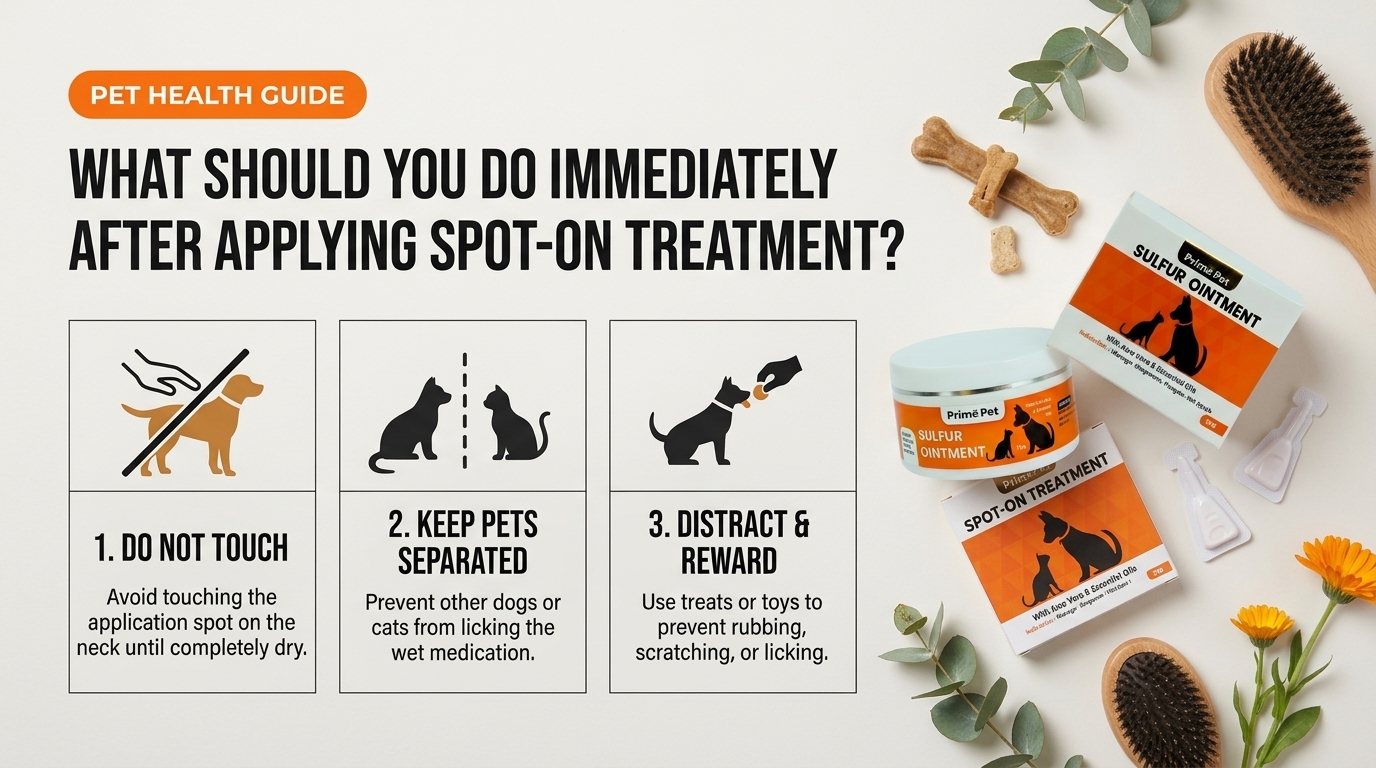
Emptying the pipette onto your dog's skin is only half the battle. What you do over the next thirty minutes determines whether the dose works or ends up rubbed off on your living room rug. Learning how to apply spot on tick treatment dog safely means managing the immediate aftermath with calm, watchful precision.
The liquid needs time to settle. Spot-on treatments do not absorb directly into the bloodstream. Instead, they dissolve into the skin's natural oils and spread across the entire body through the sebaceous glands, like ink soaking through a paper towel. If your dog shakes vigorously, rubs against a sofa, or gets groomed by another pet, that protective barrier fails before it even forms.
Post-Application Care: How to Apply Spot On Tick Treatment Dog Owners Can Monitor Safely
Your main goal right now is keeping your pet distracted while the solvent evaporates. Most dogs hate the cold, wet feeling between their shoulder blades. Their natural instinct is to roll over immediately.
- Keep them on their feet for 20 to 30 minutes. Take your dog on a relaxed leash walk around the yard or play a gentle game of search with low-calorie treats. Movement prevents them from dropping onto their back to scrub the liquid off on your carpets.
- Supervise body language closely. If you notice head-shaking or frantic turning toward the shoulder blades, redirect their focus with an interactive chew toy. Never wrap a bandage or place a t-shirt over the application spot, as fabric will simply absorb the medicine.
- Enforce strict separation in multi-pet households. Dogs and cats often groom each other as a sign of affection. However, licking wet spot-on medication can cause severe chemical poisoning. Keep treated pets in a separate room until the wet patch is completely dry to the touch.
Cat Safety Alert: Many canine spot-on formulas contain permethrin, a synthetic insecticide that is lethal to cats. Even slight accidental grooming of a treated dog can trigger feline seizures and neurological failure. Keep your cats away from treated dogs for at least 24 hours.
Topical treatments rely on healthy sebum production to migrate smoothly across the epidermis. If your dog suffers from flaky skin or a dull coat, active ingredients struggle to disperse evenly. Supporting the skin barrier from the inside out makes topical parasite defense far more reliable. For daily dermal reinforcement, you can support your pet's natural coat health with PrimePet Vital Mix Multivitamin & Mineral Supplement for Dogs & Cats (Primepet Vital) #2. Standard kibble loses vital micronutrients during high-heat manufacturing. At PKR 1,500, this direct formula delivers balanced vitamins and zinc that boost everyday vitality, strengthen the skin barrier, and soothe post-treatment sensitivity.
The 48-Hour Waterproof Window
Pet owners often ask when their dog can swim or take a bath after an application. The rule is firm: observe a strict 48-hour dry window. Do not expose your dog to heavy rain, lakes, or shampoo during this timeframe.
| Timeframe | Activity Status | What Is Happening on the Skin |
|---|---|---|
| 0 to 2 Hours | Total isolation from other pets; no petting on the neck. | Carrier alcohol evaporates; active ingredients start binding to surface lipids. |
| 2 to 24 Hours | Normal household movement; keep away from water puddles and rain. | Medication migrates across the hair follicles and oil glands. |
| 24 to 48 Hours | Gentle petting allowed; avoid swimming and bathing. | Chemical reservoir locks into skin glands for month-long sustained release. |
| After 48 Hours | Full water resistance unlocked; swimming and mild baths permitted. | Product is fully settled and will not wash away under normal water exposure. |
Wash your hands thoroughly with warm water and soap once you finish handling your pet. Do not let children hug or sleep with the dog until the product has dried entirely. Following these simple precautions keeps your family safe and guarantees that the tick preventative does its job without interruptions.
How to Identify and Manage Skin Irritation or Adverse Reactions
Even if you follow every veterinary guideline on how to apply spot on tick treatment dog owners must still prepare for unpredictable biological sensitivities. Most dogs handle topical flea and tick drops without missing a beat. Others possess delicate skin barriers or unique metabolic pathways that trigger adverse responses within minutes or days of application.
Reactions fall into two distinct clinical categories: localized dermal irritation and systemic neurotoxicity. Catching the symptoms early prevents a minor skin flare from turning into an intensive care emergency.
Recognizing Localized Irritation Versus Systemic Toxicity
Localized contact dermatitis happens right at the application site between the shoulder blades or along the spine. Think of it like a human dealing with poison ivy. The dog's skin turns bright pink or angry red. You might see them frantically rubbing their back against low furniture, scratching at their neck with their hind paws, or whining from localized burning sensations. Over the next forty-eight hours, this surface irritation can cause cosmetic flaking, oily crusts, or localized alopecia (patchy hair loss). These skin issues look alarming, but they rarely threaten a dog's life.
Systemic reactions are far more dangerous. They typically happen when a dog licks wet medication off their fur, when a pet parent accidentally uses a product meant for a different species or weight class, or when an animal absorbs the chemical directly into their bloodstream.
Clinical Warning Sign: If you observe involuntary muscle fasciculations (fine muscle tremors that look like constant shivering), pinpoint pupils, stumbling or uncoordinated walking (ataxia), or thick hypersalivation pooling at the lips, treat the situation as an immediate toxicological crisis.
Watch their gait closely. Severe neurotoxicity can progress from mild twitching to full-body seizures within hours. Pyrethroids and organophosphates hit the central nervous system hard. Never adopt a wait-and-see attitude if neurological red flags appear.
Immediate Crisis Care: How to Apply Spot On Tick Treatment Dog Decontamination
When you spot either severe burning or neurological changes, you must strip the oily chemical off your dog's skin before more penetrates the epidermis. Water alone will not work. Topical tick preventatives use lipid-soluble carriers designed to bind tightly to skin oils and sebum.
- Reach for a degreasing liquid dish soap. Standard dog shampoos are too gentle to break down synthetic chemical carriers. Plain, unscented liquid dishwashing detergent works best to lift stubborn oily residues off the coat and dermal layers.
- Rinse only with cool or lukewarm water. Hot water opens the skin's capillary beds and pores. That speeds up chemical absorption into the bloodstream. Keep the spray gentle and moderately cool to soothe stinging tissue.
- Wash three consecutive times without scrubbing hard. Lather the application zone generously. Let the suds sit for sixty seconds, then rinse completely. Repeat this cycle twice more. Avoid harsh scrubbing sponges, which push active ingredients deeper into inflamed follicles.
- Preserve the medication packaging immediately. Grab the discarded tube, the retail box, and the package insert. Your emergency vet must know the exact active chemicals, dosage strengths, and EPA or FDA registration numbers to select the correct antidote or supportive therapy.
Call your veterinarian or an animal poison control center right away. If your dog shows tremors or cannot stand, skip home baths entirely. Transport them straight to the nearest emergency clinic wrapped in a cool, clean towel. Bathing a seizing dog creates a severe risk of hypothermia and accidental drowning.
After weathering acute chemical stress or contact dermatitis, a dog's epidermal moisture barrier sits depleted and inflamed. High-heat commercial kibble manufacturing often destroys sensitive micronutrients that dogs need to repair skin cells and run healthy immune responses. Pet parents looking to rebuild that protective outer layer from within frequently use PrimePet Vital Mix Multivitamin & Mineral Supplement for Dogs & Cats (Primepet Vital) #3 (PKR 1,500). Supplying targeted zinc, B-vitamins, and essential trace minerals helps replenish damaged cellular defenses, soothing reactive skin and bolstering overall wellness against future environmental stressors.
Why Supporting Cellular Immunity and Skin Barrier Health Complements Tick Defense

Topical tick treatments protect your dog from the outside in. They spread through the natural oil layer of the skin or enter hair follicles to kill ticks on contact. That external shield is only half the battle. When a tick lands or attempts to bite, your dog's systemic immunity and dermal barrier control what happens next.
Think of a spot-on treatment like an electric perimeter fence around a home. It shocks intruders who touch the wire. But if the house itself has broken windows and cracked foundation walls, wind and rain will still ruin the interior. A dog's skin barrier serves as that physical wall. When pet owners study how to apply spot on tick treatment dog formulations correctly, they often focus solely on the chemical barrier while overlooking the biological tissue underneath.
Connecting Cellular Defense to How to Apply Spot On Tick Treatment Dog Owners Depend On
Every tick bite punctures the epidermis. Even if the parasite dies moments later from the topical medication, the physical wound remains. A healthy dog with robust cellular immunity seals that micro-puncture quickly. Specialized immune cells rush to the site, neutralizing foreign tick saliva proteins and preventing secondary bacterial infections.
Dogs with depleted skin barriers face a different outcome. They experience prolonged redness, intense itching, flaking, and hot spots. In many veterinary forums, owners frequently ask why their dog continues scratching even after a successful spot-on dose. The parasite may be dead, but damaged skin cells and sluggish tissue regeneration leave the animal uncomfortable for days.
Clinical Insight: A topically applied tick medication requires healthy sebum (skin oil) to spread evenly across your dog's body. Dry, dehydrated, or inflamed skin impedes this natural dispersion, leaving untreated patches where parasites can latch.
Most commercial dry kibbles struggle to provide the raw materials needed for this dermal strength. Kibble manufacturing relies on high-heat extrusion, with temperatures routinely exceeding 200°C. While this cooking process kills bacteria and stabilizes shelf life, it degrades heat-sensitive micronutrients. Critical B-complex vitamins, zinc, and vital trace minerals break down under intense heat. Your dog may feel full, but their cellular repair machinery runs on empty.
This nutritional gap is where targeted daily supplementation steps in. We recommend introducing PrimePet Vital Mix Multivitamin & Mineral Supplement for Dogs & Cats into your dog's regular feeding routine. Formulated directly by Prime Pet and priced at PKR 1,500, it provides a cost-effective, concentrated defense against the micronutrient loss caused by commercial food processing.
PrimePet Vital Mix delivers bioavailable vitamins and minerals straight to the bloodstream. These nutrients reinforce the lipid bilayer in the skin, tighten intercellular junctions, and stimulate natural keratin production. When your dog's dermal barrier is dense and hydrated, topical spot-on treatments spread smoothly across the coat without triggering contact dryness.
| Defense Layer | Primary Mechanism | Primary Vulnerability | Nutritional Countermeasure |
|---|---|---|---|
| Topical Spot-On Treatment | Neurotoxic disruption of ticks via external contact | Does not heal bite sites or reduce saliva allergy reactions | Consistent application on clean, well-hydrated skin |
| Internal Skin Barrier | Physical brick-and-mortar lipid layer blocking secondary pathogens | Degraded by high-heat processed kibble and poor fatty acid profiles | PrimePet Vital Mix (PKR 1,500) to restock trace minerals and vitamins |
| Cellular Immune System | Rapid leukocyte response and tissue regeneration at bite wounds | Sluggish recovery, chronic inflammation, and recurring crusts | Daily micronutrient therapy to maintain optimal white blood cell function |
Pairing internal cellular care with external spot-on drops creates a dual-layer shield. You eliminate parasites on the surface while maintaining a tough, resilient dermis that heals fast, resists irritation, and keeps your dog happy through peak tick season.
Establishing a Safe, Consistent Year-Round Parasite and Wellness Routine
Mastering How to Apply Spot On Tick Treatment Dog Schedules Year-Round
Ticks don't disappear just because the temperature drops. Many pet parents assume winter brings a safe break from parasites, but brown dog ticks thrive indoors, and adult blacklegged ticks hunt whenever the thermometer creeps above freezing. Skipping doses creates dangerous protection gaps. Setting a strict 30-day calendar reminder prevents this slip-up entirely, in line with established Companion Animal Parasite Council guidelines. You shouldn't double up treatments if you notice a stray tick right after dosing. Layering multiple pesticide products causes accidental chemical overlaps that overwhelm your dog's central nervous system. Stick to a single proven topical formula applied to dry skin at the base of the neck, and trust its steady release across the sebaceous glands over the full month.
Knowing how to apply spot on tick treatment dog formulas correctly is only half the battle. Think of topical medication as an external shield that relies heavily on healthy skin lipids to carry the active ingredients across the dog's coat. If your dog suffers from flaky, inflamed, or nutrient-starved skin, that protective barrier fails. The medicine won't distribute evenly. Standard commercial pet kibble often loses vital trace minerals and essential fatty acids during extreme high-heat cooking, leaving your pet vulnerable from the inside out. External chemicals kill bugs on contact, but a robust internal immune system repairs the microscopic bite wounds and prevents secondary bacterial infections.
That internal defense is where targeted daily nutrition proves its value. We formulated the PrimePet Vital Mix Multivitamin & Mineral Supplement for Dogs & Cats to bridge those exact dietary gaps for pet owners seeking dependable long-term protection. At an accessible direct price of PKR 1,500, it delivers the zinc, selenium, and essential vitamins needed to reinforce cellular repair and sustain a resilient dermal coat. Pairing this internal booster with your monthly topical spot-on gives you a complete dual-layer defense. You protect the skin surface while nourishing the cells beneath it.
Every walk through tall brush carries an invisible risk. Protecting your companion shouldn't feel like a guessing game between harsh chemical overdoses and neglected seasons. Mark your calendar for the same day each month, part the fur down to the pink skin, and keep their nutritional tank full with daily essentials. Consistent care keeps your pet playful, pest-free, and healthy for years of adventures together.
Dr. Attaur Rehman (DVM)
Certified Veterinary Surgeon and Founder of Prime Pet Pakistan. Lab-formulated treatments and authentic clinical care for dogs and cats.