Post-Parvo Puppy Nursing and Sanitation Checklist - post parvo recovery checklist
Bringing your puppy home from the veterinary clinic feels like an enormous victory, but discharge day is only the midpoint of survival. Walking through your front door with a fragile dog means your living room transforms into an intensive care step-down unit. Implementing a strict post parvo recovery checklist is essential to safeguard your puppy's fragile rebound during these high-risk early days. Dedicated post-parvo puppy nursing and systematic home sanitation will make the difference between sustained healing and an emergency hospital readmission.
Table of Contents
- Phase 1 Checklist: Managing the First 48 Hours of Home Convalescence and Hydration
- Phase 2 Checklist: Safe Re-Feeding Protocols and Bland Diet Reintroduction
- Essential Post Parvo Recovery Checklist for Restoring Gut Health and Immunity
- Phase 3 Checklist: Rigorous Environmental Disinfection and Biosecurity Protocols
- How to Spot a Relapse: Urgent Warning Signs Requiring Immediate Veterinary Intervention
- Phase 4 Checklist: Vaccination Rescheduling, Weight Gain Tracking, and Safe Socialization
- Long-Term Vitality: Sustaining Your Dog's Complete Rehabilitation After Parvovirus
Leaving the veterinary hospital does not mean your puppy is completely cured. The canine parvovirus targets and destroys rapidly dividing cells, striking the lining of the small intestine with brute force. Think of healthy intestinal villi as a deep, plush carpet that absorbs water, electrolytes, and vital nutrients. Parvovirus strips that carpet down to bare plywood. As documented in clinical studies on canine parvoviral enteritis pathology, the gut barrier remains leaky and severely inflamed long after active vomiting stops. Bacteria that normally stay locked inside the digestive tract can easily slip into the bloodstream, putting your dog at risk for dangerous secondary infections.
Many pet owners experience intense anxiety during this handover. In community threads like Reddit's puppy101 care discussions, owners often describe bringing home a pet that is still cold, weak, and terrified to eat. Experienced shelter caretakers know that puppies frequently require up to ten full days of hands-on nursing before they truly stabilize. You aren't just feeding a pet; you're managing a recovering patient whose digestive tract cannot tolerate normal handling.
Equipping your home with the right medical-grade tools will streamline your care routine and protect your household. While traditional household bleach kills the virus, it produces harsh fumes and requires a clean surface to work. Professional veterinary disinfectants like Rescue Disinfectant Cleaner (accelerated hydrogen peroxide) work much faster, cutting contact times down to minutes while remaining far safer for delicate canine lungs. For dietary support, prescription formulas like Purina Pro Plan Veterinary Diets EN Gastroenteric wet food provide balanced electrolytes, low fat levels, and soluble fibers. These veterinary formulas generally protect healing intestines far better than plain boiled chicken and rice, which can lack vital micro-minerals and strain an inflamed pancreas.
Every decision during this convalescent window matters. We've built this actionable post parvo recovery checklist to give you clear, hour-by-hour instructions. By following this staged roadmap, you'll know how to manage hydration, re-feed without triggering nausea, sanitize your living space, and catch subtle relapse signs before they spiral into a life-threatening crisis.
Phase 1 Checklist: Managing the First 48 Hours of Home Convalescence and Hydration
Walking through your front door with a discharged puppy is both a relief and a shock. In pet parent forums, owners often describe this transition with the same raw panic found in new parent threads—wondering what to do the moment they bring home a fragile life. Your puppy beat the virus at the clinic, but their intestines are raw and sloughing tissue. Following a structured post parvo recovery checklist eliminates guesswork when your exhausted brain is running on two hours of sleep.
Your primary objective during these opening hours is maintaining stability. You are not trying to fatten them up or get them back to their playful self yet. You are protecting their hydration, keeping them warm, and giving their gut lining time to seal without triggering sudden nausea.
The First 48 Hours: Your Post Parvo Recovery Checklist for Home Nursing
Before unpacking medications, set up a dedicated isolation area. Puppies recovering from canine parvovirus cannot regulate their own body temperature efficiently. They have burned through their fat stores, and low blood sugar makes them prone to hypothermia. Choose an enclosed space with non-porous flooring, like a laundry room or an exercise pen lined with puppy pads over tile.
Keep the room ambient temperature between 75°F and 78°F. Place a warm blanket fresh from the clothes dryer into their bed, or tuck a self-warming thermal pet mat beneath a towel. Avoid electric human heating pads directly under your dog; sedated or weak puppies cannot move away if the pad gets too hot, creating a severe burn risk. This room must remain off-limits to all other animals to maintain strict nursing sanitation.
| Timeline | Action Item | Clinical Target |
|---|---|---|
| Hours 0 – 2 | Establish isolation crate, log baseline vitals, and verify prescription discharge times. | Settle the patient into a warm, quiet resting state without food or drink demands. |
| Hours 2 – 6 | Administer prescribed antiemetic if due. Begin syringe micro-hydration 30 minutes later. | Control nausea before introducing any fluids into the stomach. |
| Hours 6 – 18 | Provide 5–10 ml of electrolyte solution every 60–90 minutes. Monitor mucosal gums. | Maintain steady capillary refill times without triggering dry heaving. |
| Hours 18 – 36 | Evaluate stool consistency, check skin turgor, and log rectal temperature twice daily. | Confirm the dog is holding fluid and maintaining core temp between 100°F and 102.5°F. |
| Hours 36 – 48 | Assess gut readiness. If zero vomiting has occurred for 24 hours, discuss micro-feeding with your vet. | Transition from strict fluid therapy toward gastrointestinal nourishment. |
Every two to three hours, perform two physical checks: capillary refill time and skin turgor. To check capillary refill, lift your puppy's upper lip and look at the gums. They should be a healthy bubblegum pink. Press your thumb gently against the gum until the spot turns white, then let go. Count how long it takes for the pink color to flush back. In a well-hydrated puppy, it returns in under two seconds. If the gum stays pale or takes three to four seconds to flush, blood volume is low.
Next, pinch the loose skin between the shoulder blades upward into a small tent and release it. Hydrated skin snaps flat immediately. Dehydrated skin crawls back slowly or stays tented in place. Dry, sticky gums paired with tenting skin mean your puppy is losing the hydration battle at home and requires clinic re-evaluation.
Clinical Pearl: Never place a full bowl of cold water in front of a recovering puppy. A parvo-damaged stomach cannot handle sudden volume. An eager dog will lap up the entire bowl, stretch their stomach wall, trigger an immediate gag reflex, and vomit up precious fluids and electrolytes.
Hydration must happen in measured sips. Using a clean needleless syringe, slide the tip into the side pocket of their cheek—never shoot liquid straight down the back of the throat, which can cause fluid to enter the lungs. Administer room-temperature rehydration solution slowly: roughly 1 to 2 milliliters per pound of body weight every hour. If your puppy weighs ten pounds, aim for 10 to 20 ml per hour, spread out in small syringe presses over several minutes.
Two fluid options dominate home convalescence: ready-to-use veterinary formulas like Oralade GI Support and standard unflavored store-bought solutions like Pedialyte. While unflavored Pedialyte works in a pinch, it was built for human electrolyte ratios and contains simple sugars that can sometimes draw excess water into the bowel, causing loose stools. Veterinary options like Oralade provide balanced isotonic electrolytes alongside simple amino acids (glycine and glutamate) that nourish enterocytes—the healing cells lining the damaged intestinal wall. If using pediatric electrolyte fluids, dilute them 50/50 with boiled, cooled water unless directed otherwise by your clinician.
Always align your fluid schedule around medications. If your vet prescribed an antiemetic such as maropitant (Cerenia) or ondansetron, give the medication precisely on time. Wait at least 30 to 45 minutes after giving an antiemetic before offering your next scheduled dose of fluids. Giving the pill or liquid suspension time to enter the system shuts down the vomiting center in the brain, allowing the rehydration solution to stay where it belongs. As detailed in the Veterinary Partner post-parvo discharge guide, keeping medications and tiny fluid volumes separated by consistent intervals prevents gastric overload during this fragile period.
Walking out of the animal hospital with your puppy feels like an incredible relief, but the real work starts now. Parvovirus wreaks havoc on a young dog's gastrointestinal tract, stripping the intestinal lining bare and depleting the immune system. Following a structured post parvo recovery checklist is your best defense against dangerous setbacks during this fragile nursing window. You are no longer just an owner; you are your dog's primary rehabilitation nurse.
Many owners feel lost during the first week back home. A common frustration highlighted in a canine recovery community discussion on post-illness bland diets is why loose stools suddenly return just when a puppy seems to be recovering. The culprit is damaged gut anatomy. Parvovirus blunts the microscopic villi—the tiny, brush-like absorptive fingers lining the small intestine. When food enters the system too quickly or contains too much fat, these flattened villi cannot absorb fluids or nutrients, which triggers sudden osmotic diarrhea. Nursing your puppy back to full vitality requires calculated micro-portions, strict hydration checks, and patient dietary transitions.
At the same time, medical recovery goes hand-in-hand with environmental safety. Even a playful puppy can shed viral particles for weeks after symptoms subside, posing a severe threat to unprotected pets. As emphasized in Today's Veterinary Nurse enteral feeding recommendations, combining careful mucosal support with hospital-grade sanitization drastically lowers complication rates. This complete guide provides your master post parvo recovery checklist, covering home nursing protocols, re-feeding timelines, pathogen eradication, and long-term immune rebuilding.
Table of Contents
- Surviving Canine Parvovirus: Navigating the Critical Transition from Clinic to Home
- Phase 1 Checklist: Managing the First 48 Hours of Home Convalescence and Hydration (Overview)
- Phase 2 Checklist: Safe Re-Feeding Protocols and Bland Diet Reintroduction (Overview)
- Essential Post Parvo Recovery Checklist for Restoring Gut Health and Immunity (Overview)
- Phase 3 Checklist: Rigorous Environmental Disinfection and Biosecurity Protocols (Overview)
- How to Spot a Relapse: Urgent Warning Signs Requiring Immediate Veterinary Intervention (Overview)
- Phase 4 Checklist: Vaccination Rescheduling, Weight Gain Tracking, and Safe Socialization (Overview)
- Long-Term Vitality: Sustaining Your Dog's Complete Rehabilitation After Parvovirus (Overview)
Essential Post Parvo Recovery Checklist for Restoring Gut Health and Immunity
Surviving the virus is only half the battle. Canine parvovirus sweeps through a young dog's gastrointestinal tract like a wildfire. It destroys the crypt cells at the base of the intestinal wall, shearing away the delicate villi until the gut lining looks like raw sandpaper. Many owners turn to online dog forums wondering what to feed a dog recovering from parvo, hoping a simple bowl of boiled meat will fix the damage. It won't. Food alone cannot repair a broken intestinal barrier.
When the intestinal lining remains stripped, your dog faces a condition known as increased mucosal permeability, or "leaky gut." Dangerous toxins and bacteria can slip directly into the bloodstream, while essential electrolytes leak out. Working through this targeted post parvo recovery checklist gives the gut the specific clinical building blocks it needs to seal the mucosal wall, jump-start digestion, and rebuild a suppressed immune system.
Clinical Post Parvo Recovery Checklist: Restoring Mucosal Architecture
Rebuilding a digestive tract after viral devastation requires precision. You aren't just feeding a dog; you are nursing damaged tissue back to life. These four therapeutic interventions form the foundation of internal recovery:
| Therapeutic Agent | Primary Clinical Goal | Key Veterinary Guidelines |
|---|---|---|
| Veterinary Probiotics & Prebiotics | Replaces flora wiped out by parvo and IV antibiotics; downregulates mucosal inflammation. | Use high-potency, multi-strain formulas. Look for *Enterococcus faecium* or *Saccharomyces boulardii*. |
| L-Glutamine Powder | Fuels enterocyte regeneration to rebuild the brush-border villi. | Administer pure, unflavored amino acid powder mixed into bland meals twice daily. |
| Digestive Enzyme Blends | Pre-digests proteins, fats, and starches so an inflamed gut doesn't have to work as hard. | Use plant- or porcine-based enzymes containing protease, amylase, and lipase with every meal. |
| High-Potency B-Complex & Iron | Reverses profound post-viral anemia and fuels muscle rebuilding. | Prioritize bioavailable methylcobalamin (B12) and iron bisglycinate to avoid stomach upset. |
The gut microbiome is completely wiped out by the time a dog leaves the clinic. Both the virus itself and the intensive broad-spectrum antibiotics used to prevent sepsis clear out good bacteria alongside the bad. Standard consumer-grade dog treats with added probiotics won't cut it here. You need high-potency, veterinary-formulated products. Purina Pro Plan Veterinary Supplements FortiFlora works well for short-term immune priming and enticing picky eaters to finish their meals. If your dog suffers from lingering watery stools, a high-density, multi-strain therapeutic like Visbiome Vet delivers hundreds of billions of live colony-forming units (CFUs) to quickly restore balance. Pair these with gentle prebiotics like fructooligosaccharides (FOS) to feed the new microbial colonies without triggering bloat.
Enterocytes are the hard-working cells lining the intestinal wall. They absorb every drop of water and every gram of nutrition your dog consumes. During parvo, millions of enterocytes die off. L-glutamine serves as their primary fuel source. Giving your dog pure L-glutamine powder speeds up cellular turnover, helping the body re-knit microscopic gaps between intestinal cells. This direct fuel stops the leakage of endotoxins and gets stools firm faster.
Because the brush-border enzymes of the small intestine are largely absent right after recovery, food passes through only partially digested. When undigested proteins hit the large intestine, bad bacteria feast on them, sparking foul-smelling gas and painful cramping. Adding a comprehensive digestive enzyme supplement takes this mechanical burden off the gastrointestinal tract. It splits food molecules down before they hit the lower bowel, letting your puppy absorb vital calories with minimal effort.
Muscle wasting happens fast. Days of starvation and bloody diarrhea deplete the body of its water-soluble vitamins and iron stores, causing severe lethargy and anemia. A high-potency multivitamin enriched with B-complex vitamins, particularly vitamin B12 (cobalamin), kick-starts appetite centers in the brain and helps rebuild red blood cells. According to Veterinary Partner's protocol on caring for recovered canine patients, close attention to nutrient absorption and diet stabilization prevents unnecessary hospital readmissions.
Field Practitioner Rule: Never introduce all four supplements on the same afternoon. Stagger them. Start with your veterinary probiotic for 48 hours. If the dog's stool remains stable, introduce L-glutamine, followed by digestive enzymes two days later. Spacing them out lets you identify the culprit immediately if your dog develops an upset stomach.
Watch your dog's gums daily during this phase. Pale, grayish, or tacky gums tell you that anemia or lingering dehydration is holding them back. Once their gut barrier seals and vitamins start absorbing properly, those gums should return to a bright bubblegum pink, signaling that their internal defense system is back online.
Phase 3 Checklist: Rigorous Environmental Disinfection and Biosecurity Protocols
Bringing your dog home from the veterinary hospital feels like a victory, but the battleground simply shifts to your living room. Canine parvovirus doesn't disappear when clinical symptoms fade. In fact, recovered dogs continue shedding millions of microscopic viral particles in their feces for 14 to 28 days. Because CPV is a non-enveloped virus, it lacks a fragile lipid membrane. Think of it like a microscopic tank armored in a hard protein shell. Ordinary household sprays, pine cleaners, and scented wipes will not kill it. Following a systematic post parvo recovery checklist is your best defense against reinfecting your recovering pup or contaminating other animals.
Every surface your dog touches during this transition requires strict biological control. In shelter medicine and clinical decontamination, success depends on mechanical removal first, followed by an EPA-registered parvocidal disinfectant with an exact wet contact time, as demonstrated in hospital-grade terminal cleaning protocols. Skipping steps leaves live virus behind.
Sanitizer Selection and Dilution for Your Post Parvo Recovery Checklist
Never guess chemical ratios. Too weak, and the virus survives; too strong, and you risk burning your dog's paws and respiratory tract. Here is how proven parvocidal agents compare for home sanitation:
| Disinfectant | Standard Parvocidal Ratio | Required Wet Dwell Time | Best Applications |
|---|---|---|---|
| Sodium Hypochlorite (Regular Bleach, 5.25–6%) | 1:32 (1/2 cup bleach per gallon of cool water) | 10 minutes strictly wet | Non-porous hard floors, stainless steel crates, hard plastic toys. Highly corrosive to fabric and metal. |
| Potassium Peroxymonosulfate (e.g., Virkon S / Trifectant) | 1% solution (typically 1 tablet or scoop per pint/quart per label) | 10 minutes strictly wet | Porous materials, concrete runs, artificial turf, vehicle upholstery. Far less corrosive than bleach. |
| Accelerated Hydrogen Peroxide (e.g., Rescue) | 1:16 or 1:32 (refer to specific parvocidal label directions) | 5 to 10 minutes strictly wet | Sealed flooring, daily touchpoints, plastic crates. Breaks down into harmless water and oxygen. |
If you choose standard household bleach, prepare a fresh batch every 24 hours. Bleach breaks down quickly when exposed to light and air, losing its germ-killing strength. Never mix bleach with ammonia, vinegar, or acidic cleaners, as this produces deadly chloramine gas.
Decontaminating Porous vs. Non-Porous Household Zones
Hard surfaces are straightforward. Porous fabrics, carpets, and untreated timber require a completely different strategy because viral particles embed deeply into fibers.
Non-Porous Hard Surfaces: Start by scrubbing away any dried vomit, food debris, or microscopic fecal dust using warm water and standard dish soap. Organic matter instantly deactivates bleach and slows down chemical penetration. Rinse the area with clear water, dry it, and then flood the surface with your chosen parvocidal solution. Let it sit visibly wet for the entire contact window before wiping or air drying. Keep your dog out of the room until the surface dries completely.
Porous Soft Goods and Bedding: You cannot effectively bleach a thick memory foam orthopedic bed without destroying it. If an item is cheap or heavily soiled, discard it in a heavy-duty, sealed trash bag. For washable blankets, crate pads, and towels, run them through an intensive sanitization cycle:
- Pre-rinse: Run a cold rinse cycle first to flush out loose organic matter without baking proteins into the weave.
- Wash: Run a second cycle on the hottest water setting available using regular laundry detergent combined with bleach (for whites) or an accelerated hydrogen peroxide laundry additive.
- Dry: Tumble dry on high heat for at least 45 to 60 minutes. Heat is an effective ally against non-enveloped pathogens.
Practitioner Note: Carpets and upholstered couches present the biggest biosecurity hazard in homes. Standard carpet shampooers do not generate enough sustained heat to neutralize parvo. You must use a commercial steam cleaner that delivers continuous heat above 140°F (preferably 170°F to 180°F) to the floor surface, or soak the carpet with a certified, fabric-safe potassium peroxymonosulfate solution after testing a small corner for colorfastness.
Outdoor Yard Neutralization and the 28-Day Shedding Window
How long is your dog contagious? Even as their appetite returns and tail wagging resumes, viral shedding can persist for 3 to 4 weeks after recovery, requiring continued biosecurity, according to sustainable veterinary isolation protocols. Managing outdoor elimination prevents your yard from remaining infectious for months or years.
Designate a single, compact "potty zone" in your yard. Restrict your recovering dog to this specific quadrant using an exercise pen or a short leash. Avoid letting them roam across gardens, mulch beds, or children's play areas.
When your dog defecates, pick it up immediately using an inverted plastic bag. Do not sweep droppings with a stiff broom or blast them with a garden hose. High-pressure water simply splatters viral particles across a broader perimeter. Clinical guidelines from Veterinary Partner sanitizing guidelines confirm that thorough mechanical removal of solid waste must always happen before applying any chemical treatment.
Dirt and grass cannot be truly sterilized with bleach, as soil deactivates chlorine on contact. Instead, saturate contaminated gravel, flagstone, or artificial turf using a garden pump-sprayer filled with a 1% potassium peroxymonosulfate solution. Direct ultraviolet sunlight will slowly degrade the virus over several months. Until that natural breakdown happens, keep all unvaccinated puppies, visiting dogs, and nursing mothers completely away from your yard.
How to Spot a Relapse: Urgent Warning Signs Requiring Immediate Veterinary Intervention
Bringing your dog home after surviving parvovirus feels like stepping off an emotional rollercoaster straight onto a high-wire tightrope. You expect them to bounce back quickly, but healing is rarely linear. One afternoon they might wag their tail and nibble some boiled chicken, and the next morning they might refuse to lift their head from the dog bed.
Every pet parent in this position walks on eggshells. On community forums, devastated owners often share the sudden shock of a downhill slide, lamenting that there should be warning signs before an animal takes a turn for the worse. The truth is that those warning signs almost always exist. You just have to know how to separate normal, sluggish convalescence from a fatal medical emergency.
Red Flags on Your Post Parvo Recovery Checklist
During the initial stages of post-parvo puppy nursing, your pup's gut looks like a patch of freshly scraped pavement. Parvovirus destroys the villi—the tiny, finger-like absorptive folds lining the small intestine. Until those villi regenerate, your dog cannot absorb nutrients normally. Even worse, that compromised intestinal wall can allow dangerous gut bacteria to slip directly into the bloodstream, a life-threatening systemic disaster known as bacterial sepsis.
Another silent killer during this window is intussusception. Picture an old-fashioned handheld telescope sliding into itself: erratic gut spasms cause one inflamed loop of intestine to telescope into an adjacent section. It strangles blood flow, creates an immediate blockage, and turns fatal within hours without emergency abdominal surgery.
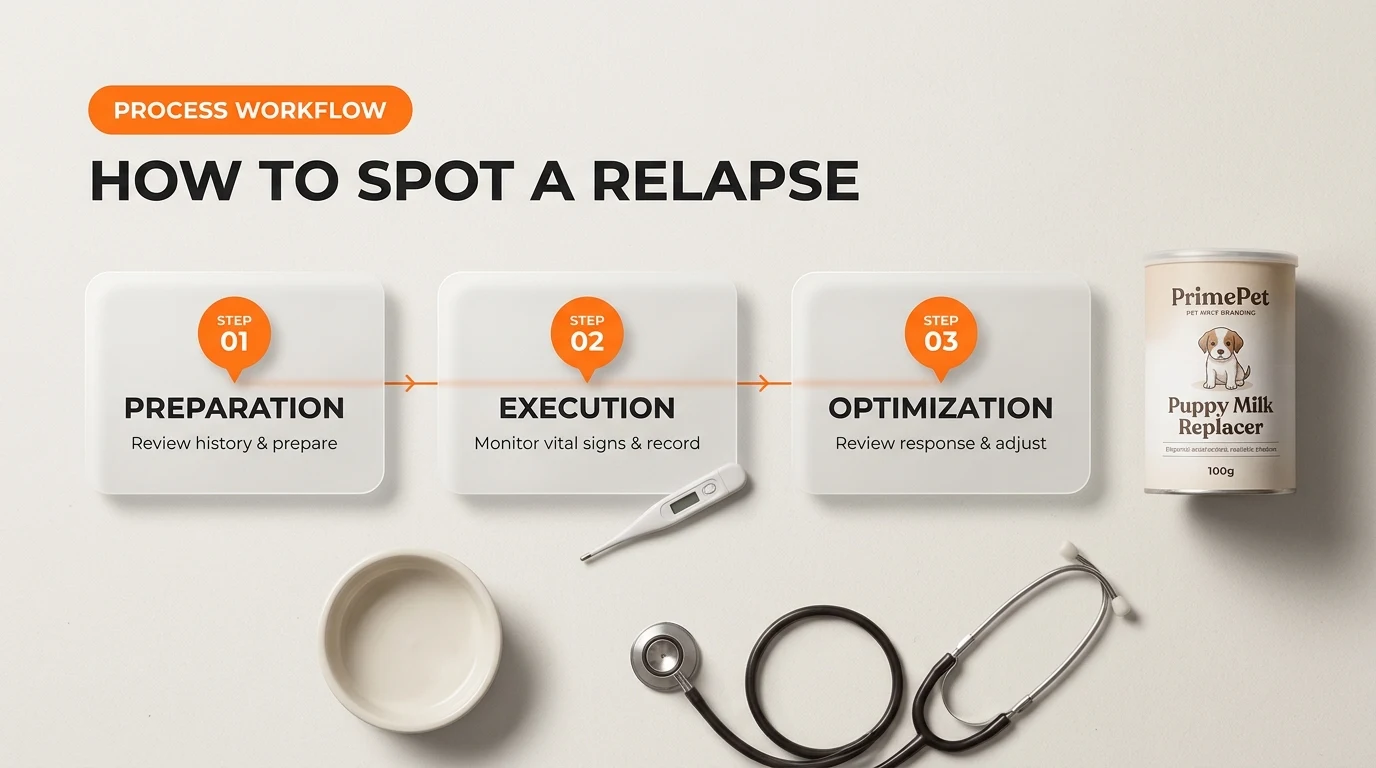
Keeping a targeted post parvo recovery checklist helps you spot these specific biological breakdowns before they spiral out of control. Use this clinical triage reference to guide your immediate next steps:
| Clinical Parameter | Normal Convalescence | Critical ER Threshold (Immediate Return) | Suspected Complication |
|---|---|---|---|
| Energy & Posture | Sleeps 16–18 hours daily; lifts head when you walk into the room; stretches upon waking. | Prostrate collapse; unable to hold head up; dull, glassy eyes; vocalizing in pain when the abdomen is touched. | Bacterial sepsis, severe septic shock, or acute abdominal distress. |
| Vomiting Episodes | Occasional clear, bubbly fluid or yellow bile spit-up once within 24 hours after eating too fast. | Two or more vomiting episodes in a 6-hour window; intractable dry-heaving; regurgitating water immediately. | Intussusception, severe gastritis, or functional ileus (gut paralysis). |
| Stool Quality | Soft, pudding-like feces; pale brown to yellowish; small volume; lack of severe foul odor. | Profuse liquid diarrhea; frank bright-red blood (hematochezia); dark, tarry stool (melena); classic parvo odor returns. | Mucosal sloughing relapse or secondary bacterial overgrowth (Cornell Riney Canine Health Center's parvovirus research outlines how opportunistic bacteria exploit denuded villi). |
| Core Body Temperature | Stable between 100.5°F and 102.5°F (38.0°C–39.2°C). | Temperature drops below 99.5°F (hypothermia) or spikes above 103.5°F (severe fever). | Systemic Inflammatory Response Syndrome (SIRS) or systemic blood infection. |
| Gum Color & Hydration | Gums are pink and slick; capillary refill time (CRT) is under 2 seconds; skin snap snaps back quickly. | Gums are sticky, dry, porcelain white, grayish-blue, or dark brick-red; skin tent takes longer than 3 seconds to flatten. | Hypovolemic shock, advanced dehydration, or dangerous blood pressure collapse. |
Never rely on feeling a dog's nose or ears to guess their temperature. When a puppy is in septic shock, their extremities feel ice-cold while their core is burning up, or vice versa. Keep a dedicated pet rectal thermometer on hand. The iProven Pet-Pro Digital Thermometer provides an accurate core reading in under 20 seconds with a flexible silicone tip that minimizes discomfort for a tender, sore pup.
Avoid non-contact infrared or human ear thermometers here. A dog's curved ear canal makes consumer ear thermometers notoriously unreliable, frequently registering a false "normal" while a dangerous fever simmers undetected.
Clinical Rule of Thumb: If your dog refuses water for more than 12 hours, vomits twice in a single afternoon, or shows a drop in rectal temperature below 100°F, bypass your primary vet's appointment queue and drive directly to the nearest 24-hour emergency facility. Convalescing puppies do not have the metabolic reserves to wait until morning.
Always assess their hydration through the "gum press" test. Lift the upper lip and press your thumb firmly against the pink gum tissue above their canine tooth for two seconds. Remove your thumb. The white imprint should snap back to a healthy bubblegum pink in under two seconds. If the white patch stays pale for three to four seconds, their vascular system is running out of fluids, as described in PetMD's guide on parvovirus infection stages.
Trust your instincts over wishful thinking. If your companion spent days fighting for life in an isolation ward, a sudden slide backward is not something they will "sleep off." Immediate intervention saves lives; hesitating costs them.
Phase 4 Checklist: Vaccination Rescheduling, Weight Gain Tracking, and Safe Socialization
Crossing the two-week recovery mark feels like a massive relief. Your puppy is wagging their tail, barking at leaves, and demanding meals again. But don't drop your guard just yet. The long-term nursing phase between weeks 2 and 8 is where real physical rebuilding happens. The virus stripped away your puppy's intestinal lining, wrecked their bone marrow, and left their immune system vulnerable. You must rebuild their physical strength, adjust their medical milestones, and introduce them to the world without endangering other pets.
Vaccine Rescheduling on Your Post Parvo Recovery Checklist
A common myth is that surviving parvovirus makes a puppy invincible to all canine diseases. While surviving CPV-2 provides strong natural immunity against that specific strain, it offers zero defense against canine distemper, adenovirus, or parainfluenza. Their body is clean of the virus, but their immune memory needs attention.
Parvo attacks bone marrow, causing severe leukopenia—a sudden drop in disease-fighting white blood cells. Vaccinating an animal whose immune system is still recovering wastes the vaccine and strains the pup's system. Think of it like making an athlete run a race right after getting out of the ICU.
Clinical Rule of Thumb: Most veterinarians recommend waiting 14 to 28 days after all gastrointestinal signs resolve before resuming any core vaccine series. The puppy must show steady weight gain and normal energy levels before getting their next shot.
Maternal antibody interference complicates this timeline further. Before getting sick, your puppy held mother's antibodies that blocked vaccines from taking hold. The illness disrupted that natural fading process. Once your vet clears your puppy for injections, follow the updated San Diego Humane Society puppy vaccination protocol. This guideline recommends booster shots every three to four weeks until the puppy reaches 16 to 20 weeks of age. Your vet may also run an antibody titer test to check your dog's actual defense levels before giving booster shots.
Weight Restoration and Muscle Condition Targets
Parvovirus burns through a puppy's fat stores and lean muscle in days. Dehydration and nutrient starvation leave behind prominent ribs, visible hip bones, and sunken flanks. Rebuilding that muscle takes steady patience. Do not try to fatten your puppy up overnight by overfeeding. An overloaded stomach triggers osmotic diarrhea, which pulls your recovery right back to square one.
| Rehabilitation Phase | Primary Objective | Expected Weekly Gain | Feeding Strategy |
|---|---|---|---|
| Weeks 2–3 | GI stabilization & slow caloric increase | 5% to 8% body weight | Transition from bland prescription gut diets to high-calorie puppy kibble (divided into 4 small daily meals). |
| Weeks 4–5 | Lean muscle mass rebuilding | 8% to 12% body weight | Feed calculated Resting Energy Requirement (RER) multiplied by normal puppy growth factors (3 meals daily). |
| Weeks 6–8 | Return to standard breed growth curves | Normal breed-specific trajectory | Standard complete and balanced growth diet; begin assessing body condition scores regularly. |
Track your dog's progress with numbers, not just looks. Weigh your puppy on the same scale at the same time each morning before meals. Standard bathroom scales are rarely precise enough for small breeds; holding your puppy while standing on a human scale misses small four-ounce weight drops that point to gut issues. Use a dedicated baby or pet scale, like the Greater Goods Digital Pet Scale, which records small weight shifts accurately down to the ounce.
Evaluate your puppy's physical frame using the AAHA canine life stage guidelines. You should feel ribs easily beneath a light blanket of fat, without individual bones sticking out harshly. The waist must be visible behind the ribs when viewed from above. Integrating these objective metrics into your everyday post parvo recovery checklist helps you spot nutritional deficiencies early.
Safe Socialization Without Biosecurity Risks
Owners often feel trapped during weeks 2 through 8. Online dog groups frequently stress that puppies must meet 100 new people and dogs before 16 weeks of age, leaving many owners feeling like they need to catch up immediately. But you can't throw caution out the window. Surviving pups shed infectious virus in their feces for 14 to 21 days—and sometimes up to a full month—after symptoms vanish. Placing an infected puppy in a dog park endangers every unprotected dog in the neighborhood.
You can fulfill crucial behavioral needs while maintaining strict sanitation and quarantine rules. Socialization means exposing your puppy to novel environments, sounds, and objects—not just letting them roughhouse with strange dogs.
- Keep paws off the ground in public spaces: Carry your puppy in your arms, use a pet sling, or place them in an enclosed puppy stroller. Let them watch traffic, listen to construction noise, and observe people wearing hats or carrying umbrellas while resting safely above contaminated grass and sidewalks.
- Arrange controlled playdates on clean turf: Socialization with other dogs is fine only if the other dog is fully vaccinated, healthy, and an adult. Host these visits indoors or in a secure, private yard where no sick animals have lived. Avoid all dog parks, pet stores, and shared apartment potty runs until eight weeks post-recovery.
- Manage the home sanitation boundary: Keep using separate sanitation shoes when taking your puppy to their designated outdoor bathroom zone. Clean their paws with dog-safe sanitizing wipes right after outdoor trips so they don't track residual viral particles onto your clean living room rugs.
Rehabilitation is not a race. Giving your puppy time to repair their gut, rebuild their muscle, and slowly expand their social boundaries keeps their recovery steady and safe.
Long-Term Vitality: Sustaining Your Dog's Complete Rehabilitation After Parvovirus
You made it through the hardest part. Watching a puppy battle parvovirus is an exhausting, emotionally draining ordeal that tests your resolve every single hour. Parvo tears through the intestinal lining and sidelines the immune system, but dogs that pull through possess an incredible capacity for regeneration. Once you step out of the crisis mode of emergency clinics and round-the-clock puppy nursing, your focus shifts toward gentle, steady rebuilding. Your dog's body knows how to heal. You simply need to give them time, clean surroundings, and consistent nourishment.
The journey across the finish line takes several weeks. During the first fortnight after discharge, your dog’s digestive tract is still rebuilding microscopic intestinal villi—the tiny finger-like structures that absorb fluids and nutrients. You might notice occasional soft stools or quiet days where their stamina dips. That does not automatically mean a relapse. Full cellular repair takes up to a month. Maintain strict household sanitation, wash bedding weekly in high heat, and keep your puppy isolated from unvaccinated dogs until your veterinarian gives the green light.
For an in-depth breakdown of how veterinary specialists manage pediatric recovery and transition young dogs safely away from intensive hospital care, watch this clinical briefing from board-certified emergency specialist Dr. Justine Lee. Her practical notes provide clear context on what your puppy’s internal organs are handling during early convalescence.
Sustaining Gut Health on Your Post Parvo Recovery Checklist
The final phase of your post parvo recovery checklist centers on repairing the gastrointestinal microbiome. Parvovirus ravages natural intestinal flora, and aggressive antibiotic therapy—while life-saving—clears out beneficial bacteria alongside the bad. Many pet owners note persistent bowel sensitivity weeks after discharge, particularly when dogs receive prolonged antibiotic courses. You can learn more about how recovery drugs alter the intestinal environment through this guide on the impact of metronidazole on canine gut health.
Dietary selection during months two and three plays a massive role in building strong digestive foundations. Many veterinarians recommend moving from home-cooked chicken and rice to dedicated veterinary gastrointestinal formulations rather than switching straight back to standard commercial kibble:
- Royal Canin Gastrointestinal Puppy: Formulated with high caloric density and balanced prebiotic fibers (MOS and FOS). It eases digestive strain on regenerating microvilli while supplying the extra energy growing puppies need.
- Purina Pro Plan Veterinary Diets EN Gastroenteric: Offers moderate fat levels, high total digestibility, and added zinc to promote mucosal integrity. It works exceptionally well for dogs prone to loose stools after heavy medical treatments.
Pairing a therapeutic diet with a veterinarian-backed probiotic—such as Visbiome Vet or Purina FortiFlora—helps speed up healthy microbial colonization. Rebuilding this microscopic protective barrier reduces the risk of chronic food intolerances later in adulthood.
Survivors often develop exceptional natural immunity. According to extensive veterinary research on long-term canine parvovirus outcomes, the vast majority of recovered dogs grow into energetic, healthy adults without lifelong intestinal dysfunction when provided attentive post-infection care.
Work hand-in-hand with your primary veterinarian to finish their foundational medical protocol. You will need to reset their core vaccination schedule since active parvo blunts the immune response to other routine puppy shots. Weigh your dog weekly to confirm consistent gain, keep rich table scraps off the menu, and celebrate the small wins. By diligently working through each step of your post parvo recovery checklist, you transform a fragile survivor into a vibrant, thriving companion ready for a lifetime of adventure.
Dr. Attaur Rehman (DVM)
Certified Veterinary Surgeon and Founder of Prime Pet Pakistan. Lab-formulated treatments and authentic clinical care for dogs and cats.