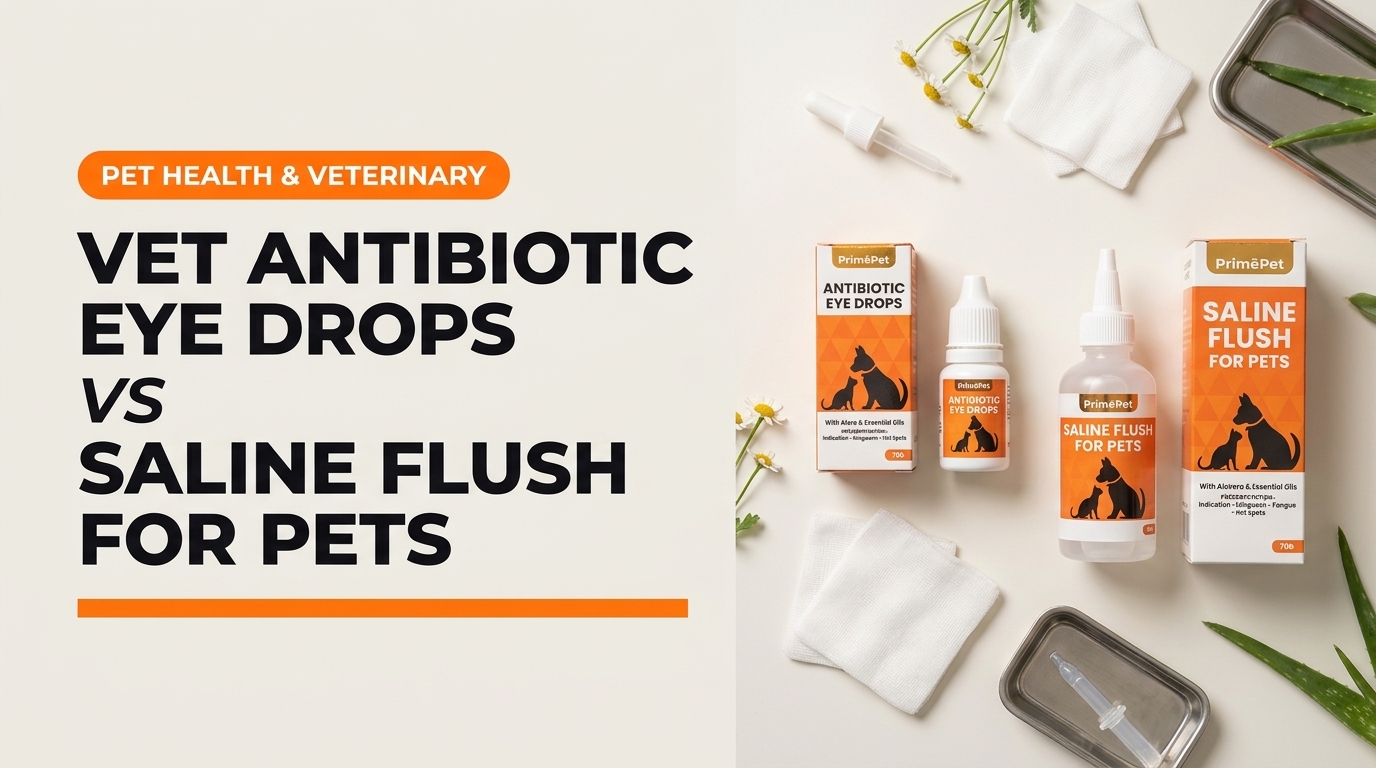
Vet Antibiotic Eye Drops vs Saline Flush for Pets
When your dog starts pawing at a swollen eyelid or your cat keeps one eye squinted shut, panic sets in fast. You might find yourself weighing vet antibiotic eye drops vs saline flush solutions while rummaging through your pet first-aid kit, wondering which option offers safe relief without causing accidental harm. For pets, choosing between medicated antimicrobial drops and a gentle, sterile rinse isn't just a minor care decision—it directly influences whether your companion heals cleanly or risks permanent vision loss.
Table of Contents
- Core Differences: Vet Antibiotic Eye Drops vs Saline Flush Explained
- When Is a Sterile Saline Flush the Right Choice for Dogs and Cats?
- Clinical Indications: What Symptoms Require Prescription Vet Antibiotic Drops?
- What Are the Dangers of Misusing Antibiotic Eye Drops on Pets?
- How to Safely Administer Eye Wash and Medicated Drops in Tandem
- Which One Should You Choose? A Quick Symptom-to-Action Decision Matrix
- Protecting Your Pet’s Vision: Safe First Steps for Lasting Eye Health
Pet eyes are delicate, highly reactive, and quick to show distress. A sudden flood of clear tears, bloodshot conjunctiva, or thick yellow discharge can stem from something as mild as windblown trail dust. Those identical symptoms can also point to a deep corneal ulcer, viral flare-up, or aggressive bacterial infection. Knowing whether you need a simple physical rinse to float away grit or prescription medication to kill multiplying bacteria makes all the difference.
Many owners reach for leftover prescription bottles or wonder if an over-the-counter rinse like Vetericyn Plus Eye Wash or plain veterinary-grade saline is sufficient. Pouring leftover medicated drops into an eye with an undiagnosed scratch can trigger deep tissue melting, while relying only on a saltwater rinse for an active bacterial invasion allows the infection to spread unchecked. Understanding how these two distinct eye products function lets you soothe surface discomfort safely while knowing exactly when to head to the veterinary clinic.
Core Differences: Vet Antibiotic Eye Drops vs Saline Flush Explained
Many pet owners confuse cleaning an irritated eye with treating an active disease. Grasping the distinction between vet antibiotic eye drops vs saline flush solutions keeps you from wasting precious time or causing accidental harm to your pet's corneas. Think of sterile saline like a garden hose rinsing mud off a car windshield. An antibiotic drop works like a targeted chemical treatment designed to wipe out specific living microbes. One cleans the surface through physical force. The other changes biological processes at the cellular level.
| Feature | Veterinary Antibiotic Eye Drops | Sterile Saline Eye Flush |
|---|---|---|
| Pharmacological Class | Antimicrobial therapeutic drug | Isotonic mechanical irrigant |
| Active Ingredients | Tobramycin, Ciprofloxacin, or Neomycin/Polymyxin B | 0.9% Sodium Chloride in purified water |
| Mechanism of Action | Disrupts bacterial cell walls or stops protein production | Physically lifts and floats out loose debris and excess mucus |
| Prescription Status | Rx required (regulated veterinary medicine) | Over-the-counter (OTC) |
| Usual Shelf Life Once Open | 28 to 30 days before discarding | 30 to 90 days (or single-use for preservative-free pods) |
| Primary Indication | Confirmed bacterial conjunctivitis, corneal ulcers | Dust clearance, pollen rinsing, mucus buildup, crust softening |
Comparing Vet Antibiotic Eye Drops vs Saline Flush Under the Hood
The active ingredients define what these fluids actually do once they touch the eye. Prescription drops like Tobramycin or Terramycin ointment carry heavy-duty biochemical compounds. Aminoglycosides prevent bacteria from synthesizing proteins, which stops them from multiplying. Fluoroquinolones like ciprofloxacin block bacterial DNA replication entirely. These medications don't soothe an eye by moistening it. They exist solely to destroy specific microscopic organisms before those invaders eat through delicate corneal layers.
Sterile saline is entirely different. It contains just 0.9% sodium chloride dissolved in purified water. This exact ratio matches the natural salt balance of your dog's or cat's bloodstream and tear film. Because it is isotonic, it won't sting, swell tissue, or dry out the ocular surface. It doesn't attack cellular machinery. It simply creates a gentle, non-irritating current that sweeps away sand, loose eyelashes, dried gunk, and environmental pollens.
"Pet parents often ask if they can hold onto leftover prescription drops for the next time their dog's eye gets red. Doing that is a massive gamble. The moment that dropper tip touches a whisker, the clock starts ticking on bacterial contamination inside the bottle."
Shelf life creates another stark divide between the two. Preservative-free saline pods—such as individual human-grade 0.9% sodium chloride vials—are designed for single use. You twist the cap, flood the eye, and throw the plastic vial away immediately. Multi-dose bottles like Nutri-Vet Eye Rinse or Bausch & Lomb Advanced Relief contain mild preservatives that keep the bottle clean for a few months on a shelf. Veterinary antibiotic solutions, however, degrade quickly. Most manufacturers recommend tossing medicated bottles 30 days after opening. Beyond that window, the active drug loses potency, and the bottle itself may harbor harmful microbes.
Cost and access shape real-world decisions every day. A bottle of plain sterile wash costs between $8 and $15 at any neighborhood grocery store or pharmacy. Getting medicated drops requires a professional veterinary ophthalmic examination guidelines visit, a fluorescein stain test to check for corneal scratches, and a pharmacy charge that usually runs between $35 and $70 for the medication alone. While saline gives you an immediate, low-cost first response to clear minor irritants, it can never substitute for the targeted power of true antibiotic therapy.
When Is a Sterile Saline Flush the Right Choice for Dogs and Cats?
Sterile saline flush is the unsung hero of pet first-aid kits. Chemically balanced at 0.9% sodium chloride, it matches the exact salt concentration of your pet's natural tears. It contains zero active medication, zero steroids, and zero antibiotics. Instead, think of it as a liquid broom. Its sole job is to mechanically rinse away foreign matter without stinging delicate membranes or causing drug resistance.
Most pet parents panic at the first sign of an eye problem. The eye looks red, wet, or partly closed, prompting an immediate urge to medicate. Reaching for prescription drugs too early can cause serious harm. Understanding the balance between vet antibiotic eye drops vs saline flush helps you protect your pet's vision while avoiding unnecessary medication.
Deciding on Vet Antibiotic Eye Drops vs Saline Flush for Everyday Irritation
Saline flush is the safest, most effective choice when the underlying issue is environmental, mechanical, or surface-level. Dogs and cats encounter dozens of airborne irritants daily. A simple rinse solves many problems before they spiral into secondary bacterial infections.
Use a sterile saline wash in these specific situations:
- Flushing dust, sand, and plant debris: If your dog spent the afternoon digging at the beach or running through tall grass, squinting often means a speck of dirt is stuck under the lid. A generous rinse floats the irritant out safely.
- Rinsing seasonal allergens: Just like humans, pets suffer from pollen, mold, and ragweed allergies. A saline rinse dilutes trapped pollen grains on the cornea, calming red, itchy eyes without medicated intervention.
- Softening crusty discharge and tear stains: Dried discharge pulls on sensitive eyelid skin. Soaking a clean cotton pad with saline softens dried crusts around the corners of the eyes so you can wipe them away without scratching the skin.
- First-aid cleaning after grooming or bathing: Shampoos, conditioners, and clipper dust often end up in pet eyes during a grooming session. Flushing immediately afterward stops chemical irritation in its tracks.
- Prepping for a veterinary visit: If your pet has sticky mucus, clearing the crusts with pure saline right before an appointment helps your vet examine the cornea clearly. It does not mask symptoms or alter diagnostic tests like fluorescein stain checks.
Safety Warning: Never use human contact lens cleaning solution or enzymatic soaking liquids on pets. These products contain harsh disinfecting agents and preservatives meant for plastic lenses, not living corneas. Always buy products labeled specifically as "Sterile Saline Solution" (0.9% sodium chloride) or veterinary eyewash.
How does saline fit into your everyday routine? It works best as an immediate response tool. Consider a dog running through a briar patch on an off-leash trail. The dog starts blinking rapidly and rubbing its paw over its eye. At that exact moment, an owner cannot know whether bacteria entered the eye. Applying a heavy antibiotic ointment right away traps dirt against the surface. Flushing the eye with a stream of sterile saline lifts the foreign particle away instantly. The relief is often immediate.
When selecting a product, plain over-the-counter sterile saline eyewash (available at any human pharmacy) works well. Dedicated veterinary products like Vetericyn Plus Eye Wash offer specially shaped nozzle tips that produce a gentle, steady stream. Squeeze bottles allow you to rinse the eyeball from the inner corner outward without poking your pet. For outdoor travel, single-dose saline ampoules work even better. They remain sealed and completely sterile until the moment you twist off the plastic cap.
If you flush the eye and your pet continues squinting, pawing, or showing cloudiness after two hours, stop flushing. Saline removes dirt, but it cannot repair a scratched cornea or kill a deep infection. That is the moment a veterinarian must step in.
Clinical Indications: What Symptoms Require Prescription Vet Antibiotic Drops?
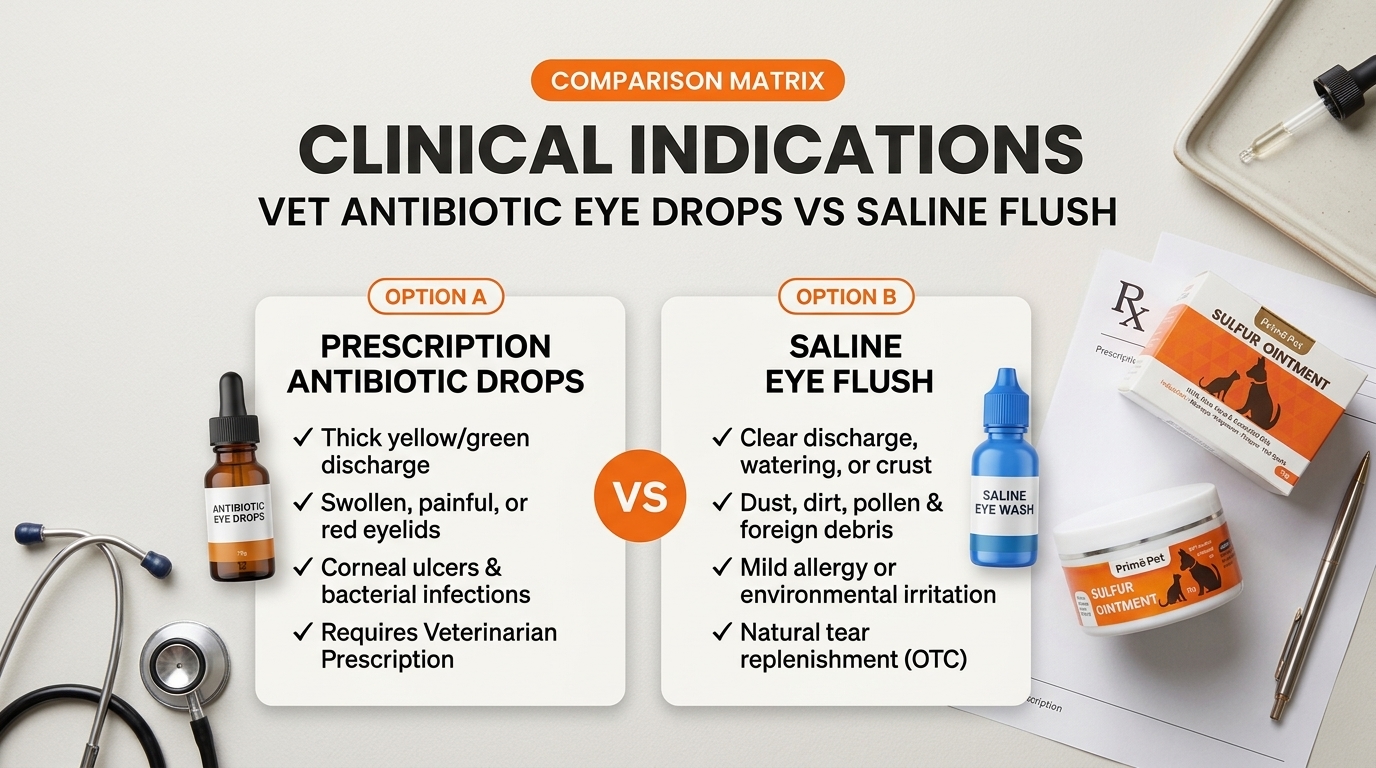
Saline rinses clear away dust, pollen, and loose sleep crust. They cannot kill multiplying bacteria. When a pet develops a true infection or an open wound on the eye, plain saline acts like a garden hose against a grease fire. You need targeted pharmacological firepower.
Understanding the clinical boundary between vet antibiotic eye drops vs saline flush can mean the difference between rapid healing and permanent vision loss. Pet parents on forums often ask whether a costly clinic exam is truly necessary just to get a bottle of drops. The short answer is yes. Eyes deteriorate rapidly, sometimes within 24 to 48 hours. Here are the specific clinical signs and conditions that require prescription antimicrobials.
Diagnostic Red Flags: Vet Antibiotic Eye Drops vs Saline Flush
A simple rinse won't cut it when specific physical symptoms appear. Look closely at your pet's eyes under good light and watch for these immediate danger signs:
- Thick, Colored Discharge: Clear, watery tears usually point to dust, wind, or allergies. Thick yellow, grey, or green discharge (purulent exudate) means white blood cells are actively dying in a fight against bacteria. This discharge often glues the eyelids shut overnight.
- Blepharospasm (Persistent Squinting): If your dog or cat holds one eye tightly shut or paws relentlessly at their face, they are in acute pain. Severe discomfort almost always indicates damage to the corneal surface or severe internal inflammation.
- Cloudiness or Blue Haze: A healthy cornea is completely clear like glass. A cloudy, bluish, or milky appearance means fluid is leaking into the corneal layers (corneal edema), a hallmark sign of a scratch, ulcer, or deep infection.
- Swollen, Cobblestone Conjunctiva: When the pink tissue lining the eyelids bulges out like raw meat (chemosis), the eye is under severe inflammatory stress that saline cannot soothe.
Clinical Pearl: Never use leftover medicated drops from a previous illness. Many prescription eye drops contain steroids like dexamethasone. If your pet has a microscopic scratch on their cornea, applying a steroid drop can cause the cornea to melt and rupture, causing irreversible blindness.
Bacterial Conjunctivitis
Bacterial conjunctivitis occurs when harmful microbes overwhelm the surface tissues of the eye. Dogs rarely get primary bacterial conjunctivitis; it is usually secondary to underlying issues like dry eye (keratoconjunctivitis sicca) or eyelid abnormalities. In cats, bacteria like Chlamydia felis and Mycoplasma frequently trigger severe, crusty eye infections.
Veterinarians typically treat surface conjunctivitis with broad-spectrum topical solutions. Common prescription therapies include topical ophthalmic antimicrobials like Triple Antibiotic (a blend of neomycin, polymyxin B, and bacitracin) or Terramycin (oxytetracycline and polymyxin B ointment). These medications coat the eyeball, kill the target bacteria, and allow the inflamed conjunctiva to calm down.
Corneal Scratches and Abrasions
Pets lead active lives. They sprint through tall brush, chase squirrels into briar patches, and play rough with other animals. A single claw swipe or rogue stick can scrape off the microscopic surface layer of the cornea. This creates an open door for bacteria living on the eyelids to invade the deep tissue.
When a vet suspects an abrasion, they place an orange dye called fluorescein directly on the eye. The dye washes off healthy tissue but clings to damaged areas, glowing bright green under blue light. If an ulcer is present, prescription antibiotic drops like Tobramycin or Ciprofloxacin are non-negotiable. They protect the exposed corneal basement membrane while it knits back together.
Post-Surgical Protection and Deep Trauma
Vets also prescribe antibiotic drops proactively. After procedures like cherry eye repair, eyelid mass removal, or cataract surgery, the natural defenses of the eye are temporarily compromised. Sterile saline keeps the surgical site clean during recovery, but medicated drops guard the healing incisions against opportunistic pathogens that could destroy the surgical repair.
What Are the Dangers of Misusing Antibiotic Eye Drops on Pets?
You walk into the living room and notice your dog squinting, one eye swollen with watery discharge pooling on the muzzle. Your first impulse might be checking the medicine cabinet for that half-empty bottle of ophthalmic drops from last year. Don't touch it. Grabbing leftover prescription medication without a fluorescent stain test is one of the fastest ways to cause irreversible vision loss in a dog or cat.
Understanding Risks: Vet Antibiotic Eye Drops vs Saline Flush in Untested Eyes
When pet owners weigh vet antibiotic eye drops vs saline flush, they often assume antibiotics are simply a stronger, better version of an eye wash. That assumption carries severe consequences. Many prescription veterinary eye medications—like Neomycin-Polymyxin-Dexamethasone (often abbreviated as NeoPolyDex)—contain corticosteroids alongside antibacterial agents. Corticosteroids soothe redness quickly. They knock out inflammation. But if your pet has a scratch on the cornea, a steroid acts like fertilizer for tissue decay.
Think of the cornea as a clear, three-layer windshield. A minor scratch from a backyard branch strips away the protective outer surface. Your pet's body tries to send repair cells to patch the gouge, but topical steroids turn that immune response off completely. Even worse, the steroid stimulates collagenase, an enzyme that literally dissolves the structural layers of the eye. Within 24 to 48 hours, a simple surface abrasion degrades into a "melting corneal ulcer." The cornea thins, gives way under internal pressure, and ruptures. What began as a tiny scratch ends in emergency surgery or total removal of the eye.
Clinical Reality: A basic saline flush cleans away irritating dust without interfering with tissue healing. An unprescribed antibiotic-steroid drop, on the other hand, can turn a simple scrape into a ruptured eyeball in less than two days.
Breeding Superbugs and Disrupting Eye Flora
Corneal perforation isn't the only risk. Misusing single-agent antibiotics like tobramycin, ciprofloxacin, or oxytetracycline creates long-term microbial nightmares. Your pet's eye has its own natural microbiome. A healthy balance of harmless bacteria keeps aggressive fungi and pathogenic invaders from settling in.
Applying prescription drops when an eye is simply irritated by dust or seasonal allergies wipes out that friendly flora. The surviving bacteria adapt, mutate, and build defenses against common veterinary medications. If your pet develops a genuine bacterial infection later in life, standard treatments fail. You're left with a stubborn, drug-resistant bug that requires compounded, high-cost ophthalmic pharmaceuticals to eradicate.
The Danger of Masking Serious Non-Bacterial Emergencies
Squinting and redness are universal distress signals. To a pet owner, conjunctivitis looks identical to uveitis, dry eye, a lodged plant awn, or acute glaucoma. Glaucoma isn't an infection. It occurs when fluid can't drain from inside the globe, causing intraocular pressure to skyrocket. That physical pressure pinches the optic nerve and starves the retina of blood.
High eye pressure hurts terribly. It destroys vision fast. If you waste critical hours administering old antibiotic drops hoping the eye clears up, the pet's window for saving their sight snaps shut. Permanent blindness from acute glaucoma can occur in as little as 24 to 48 hours. Antibiotics have zero effect on fluid dynamics or intraocular pressure. Relying on them blindsides owners with a false sense of security while a true emergency silently destroys the eye from within.
How to Safely Administer Eye Wash and Medicated Drops in Tandem
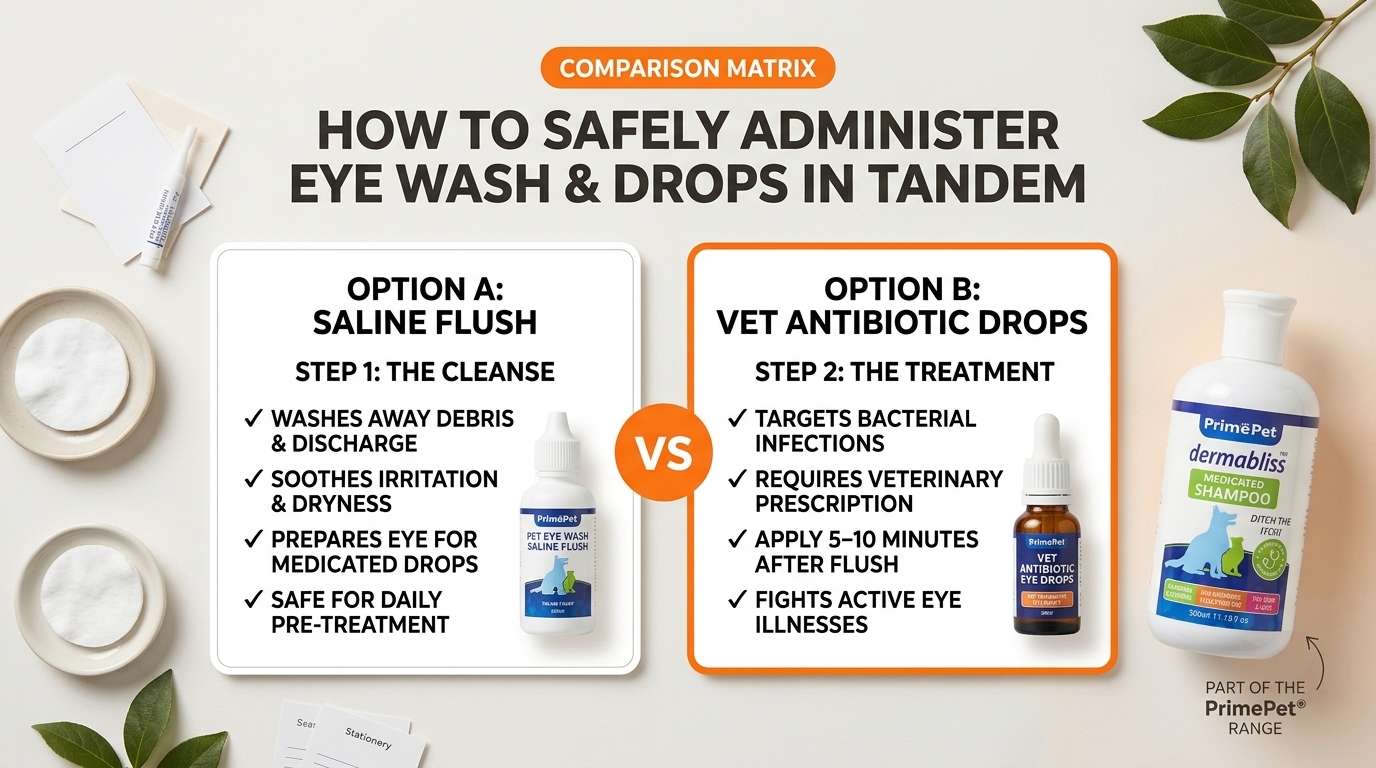
Administering treatments to an irritated eye can turn into a wrestling match. When your vet prescribes an antibiotic while you already use a daily cleanser, combining them haphazardly can undo the benefits of both. A clear routine keeps your pet comfortable and ensures the medication actually works.
Coordinating Vet Antibiotic Eye Drops vs Saline Flush in a Daily Routine
The golden rule of ocular treatment is simple: always wash first and medicate second. Think of an infected eye like a dirty windshield. If you apply a targeted medication over dried discharge and crust, the active ingredients sit on top of the mucus instead of reaching the cornea or conjunctiva. A sterile wash clears the surface so the antibiotic can do its job.
Timing between these steps matters just as much as the order. If you rinse the eye and immediately squeeze in the prescription drop, you will wash the medication straight down the tear duct. When evaluating your schedule for vet antibiotic eye drops vs saline flush, leave a strict gap of 5 to 10 minutes between the rinse and the drug.
The 10-Minute Waiting Rule: After flushing out mucus with an isotonic saline wash, wait at least 5 to 10 minutes before applying prescription drops. This window allows the eye’s natural tear film to stabilize so the antibiotic isn't diluted or washed away.
Applying an ointment instead of a drop? Keep the same order, but remember that liquid drops always go before thick ointments. Ointments create a greasy protective barrier that liquid antibiotics cannot penetrate.
Step-by-Step Administration Protocol
Preparation makes the difference between a smooth five-second application and a stressful chase around the living room. Set up your supplies before bringing your pet into the room.
- Sanitize your hands: Wash thoroughly with warm water and soap. You don't want household bacteria transferring to your pet's compromised eye.
- Clear gross debris: Take a sterile gauze pad soaked in an over-the-counter rinse like Vetericyn Plus Eye Wash or plain buffered saline. Gently wipe outward from the inner corner to remove crust around the eyelids.
- Rinse the ocular surface: Hold the saline bottle slightly above the eye and squeeze a gentle stream across the eyeball to float away trapped discharge.
- Start the timer: Let your pet blink naturally and wipe away excess saline running down their cheek. Give them a small treat and wait 8 to 10 minutes.
- Instill the antibiotic: Rest your hand against the top of your pet's head. Pull the upper eyelid back slightly with your thumb and place the exact prescribed drop count into the eye from behind their field of vision.
Restraint Strategies for Stressed Dogs and Cats
Pets panic when they see objects heading straight for their pupils. Approaching head-on triggers an instinctive blink and dodge response. The trick is to position yourself behind or beside your pet, never directly in front of their nose.
For cats and small dogs, swaddling prevents clawing. Wrap the body snugly in a bath towel, leaving only the head exposed—a technique veterinary teams call the "purrito." Tuck the wrapped pet gently between your side and your forearm. This secures their limbs without applying forceful pressure to their chest or neck.
Larger dogs do best backed into a corner or against a sofa. This prevents them from backing away from you. Stand behind them, cup their chin with one hand to tilt the nose upward, and use your dominant hand to deliver the drops from above their forehead. By coming from behind, the bottle stays outside their direct line of sight.
Hygiene Habits to Prevent Cross-Contamination
Never let the dropper tip touch the eyeball, eyelids, or your fingers. This is the single most common mistake pet owners make at home. The moment that plastic nozzle brushes against an infected cornea or oily fur, bacteria migrate inside the bottle. Within days, you could be squeezing a contaminated bacterial culture back into your pet's eye.
Keep the tip suspended at least half an inch above the ocular surface. If your pet lunges and the nozzle touches their eye, wipe the tip immediately with a sterile alcohol swab, allow it to air-dry completely for 60 seconds, and recap it. Keeping your bottles clean protects your financial investment and prevents secondary infections from taking hold.
Which One Should You Choose? A Quick Symptom-to-Action Decision Matrix
When your dog trots inside squinting after a run through tall grass, or your cat wakes up with crusty tear tracks, panic sets in quickly. Eyes are delicate. An innocent irritation can resemble a blinding injury within hours. Navigating the choice between vet antibiotic eye drops vs saline flush comes down to whether you are cleaning away harmless dirt or battling an active, tissue-destroying infection.
A basic saline rinse acts like a garden hose on a dirty windshield. It washes away seeds, pollen, and loose crusts without altering ocular chemistry. Prescribed ophthalmic antibiotics, on the other hand, function like targeted defense forces. They stop specific bacteria from multiplying. Grabbing the wrong bottle or waiting too long carries serious stakes.
Choosing Vet Antibiotic Eye Drops vs Saline Flush by Symptom
Use this symptom-to-action guide to quickly match what you see in your pet's eye to the safest, most effective response.
| What You See | Probable Cause | First-Line Protocol | Recommended Action |
|---|---|---|---|
| Clear, watery runoff Mild blinking, no swelling, pet seems happy. |
Dust, loose hair, seasonal allergies, or wind irritation. | Sterile Saline Flush (e.g., Vetericyn Plus All Animal Eye Wash). | Rinse generously 2 to 3 times daily. Monitor for 24 hours. If squinting starts, stop and call your vet. |
| Dried crust in corner White or pale gray discharge upon waking; clear eyeball underneath. |
Normal sleep mucus accumulation or mild tear duct sluggishness. | Wetted cotton ball with sterile isotonic saline. | Softly soften and wipe the debris away from the inner eye outward. No antibiotics needed. |
| Thick yellow or green discharge Eyelids stuck shut, bright red conjunctiva (eye whites). |
Bacterial conjunctivitis or secondary bacterial infection. | Prescription Vet Antibiotic Drops (e.g., Tobramycin or Terramycin). | Vet exam required. Flush excess discharge with saline first, wait five minutes, then apply prescribed drops. |
| Corneal cloudiness or bluish haze Eye looks like a milky marble; pet keeps eye shut tight. |
Corneal edema, deep scratch, or glaucoma. | Immediate Veterinary Emergency. Do not apply medicated drops. | Do not use leftover human or pet eye drops. Keep your pet from pawing the eye and see a clinician immediately. |
| Visible scratch or pupil asymmetry One pupil larger than the other; rough spot on cornea. |
Corneal ulceration or blunt ocular trauma. | Veterinary diagnostic workup (Fluorescein stain). | Prescription drops will be determined by the vet based on whether the ulcer is superficial or deep. |
Clinical Rule of Thumb: If an eye is painful—marked by tightly clamped lids, pawing, or photophobia (hiding from light)—saline will not fix the problem. Pain signals tissue damage that demands professional diagnostic tools.
Evaluating Edge Cases: The 24-Hour Watch Window
Pet owners frequently ask if they can safely try an over-the-counter flush before spending money on an emergency veterinary exam. The answer depends entirely on your pet's comfort level.
If your pet opens both eyes fully, shows zero cloudiness, and produces only clear tears, a 24-hour observation window with an isotonic rinse is generally safe. Flush the eye with a gentle stream of plain, preservative-free saline to remove any lingering grit. Keep an Elizabethan collar on hand if they attempt to scratch their face with their dewclaws.
Never wait if you notice active blepharospasm. That is the medical term for involuntary, tight squinting caused by pain. A scratched cornea can become infected with bacteria within hours. In aggressive cases, bacterial enzymes dissolve the structural collagen of the eye—a condition vets refer to as a "melting ulcer." Waiting two days to see if a saline flush clears up green discharge can turn a curable scratch into a ruptured eye requiring surgical removal.
Before any antibiotic drops are prescribed, your veterinarian will run a quick fluorescein stain test. This glowing green dye sticks exclusively to damaged corneal layers. It reveals pinpoint scratches invisible to the naked eye. This step is mandatory because certain antibiotic preparations contain corticosteroids. Putting a steroid-containing drop onto an undetected corneal scratch accelerates tissue destruction and can blind your pet.
Keep a sterile, buffered eye wash in your home first-aid kit for emergency debris removal. Leave the prescription antimicrobial agents to your vet's direct guidance.
Protecting Your Pet’s Vision: Safe First Steps for Lasting Eye Health
Pet parents often panic when an eye turns red or starts weeping. It is an understandable reaction. You want quick relief for your dog or cat, but guessing with medications can permanently damage delicate ocular tissues. Eye emergencies progress quickly. A bottle of sterile, unpreserved eye wash belongs in every pet first aid kit. Over-the-counter options like Vetericyn Plus All Animal Eye Wash or standard human-grade sterile saline provide immediate, harmless comfort. They rinse away backyard dirt, allergens, and loose debris without irritating sensitive tissue.
Evaluating vet antibiotic eye drops vs saline flush comes down to recognizing what saline cannot do. Saline cleans the ocular surface; it never cures an infection or stops a spreading corneal ulcer. When a dog squints against daylight, rubs frantically at its face, or produces thick yellow discharge, basic washing will not resolve the problem. Antibiotic solutions like tobramycin, ofloxacin, or Terramycin require a verified diagnosis. Using leftover medicated drops without a veterinarian performing a fluorescein stain test is an unpredictable gamble that can lead to corneal perforation and permanent vision loss.
Balancing Vet Antibiotic Eye Drops vs Saline Flush at Home
Never dig through old medicine cabinets for leftover pet prescriptions. Chemical compounds expire, and using steroid-laced drops on a scratch can melt the cornea within forty-eight hours. Keep your immediate response simple. Flush the eye with a gentle stream of sterile saline to clear surface irritants, place an Elizabethan collar on your pet to prevent scratching, and watch their behavior closely.
If squinting, cloudiness, or heavy discharge continues after a single flush, stop there. Call your clinic right away. Saline gives you a safe way to clean the area, but only your veterinarian can run the tests needed to protect your pet's sight for the long haul.
Dr. Attaur Rehman (DVM)
Certified Veterinary Surgeon and Founder of Prime Pet Pakistan. Lab-formulated treatments and authentic clinical care for dogs and cats.