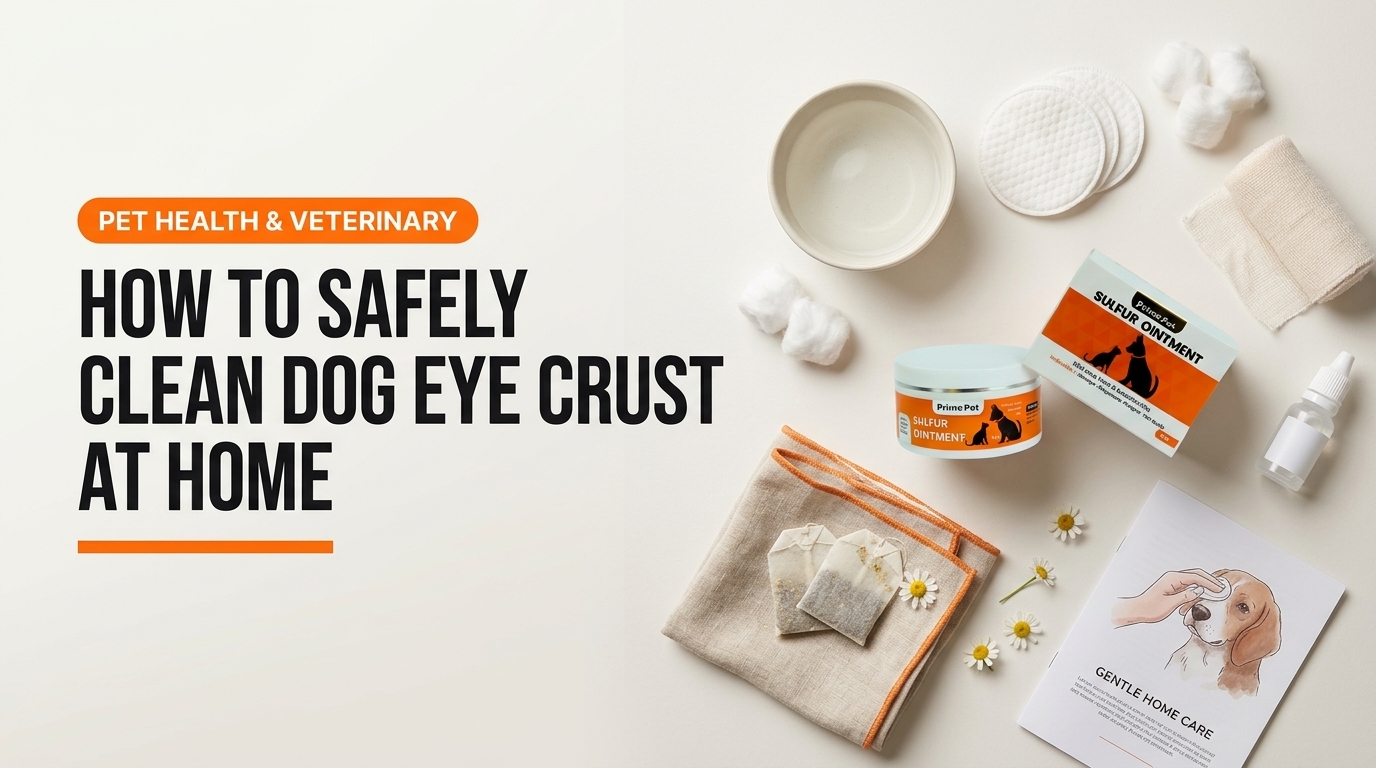
How to Safely Clean Dog Eye Crust at Home - how to clean dog eye crust at home
Waking up next to your dog often comes with a messy surprise: hard, crusty gunk clinging to their facial fur. Knowing how to clean dog eye crust at home is one of the most practical everyday grooming skills you can master as a loving pet parent. Dogs collect dust, loose hair, and outdoor pollen in their inner eye corners after a deep sleep or a spirited romp through the yard. While minor morning eye matter is entirely normal, neglecting this buildup turns simple dried tear fluid into painful, tightly glued mats that pull at sensitive canine skin.
Table of Contents
- Understanding Dog Eye Discharge and Why Gentle Hygiene Matters
- Why Does Eye Crust Form on Dogs? Normal Gunk vs. Clinical Signs
- Safe Preparation: What Supplies to Gather (and What to Avoid)
- Step-by-Step Guide: How to Clean Dog Eye Crust at Home Safely
- Caring for Brachycephalic and Long-Haired Breeds Prone to Heavy Discharge
- Supporting Ocular Defense and Mucous Membrane Health from Within
- When Does Eye Gunk Require Immediate Veterinary Attention?
- Establishing a Stress-Free Daily Eye Care Routine for Your Pet
Tears protect canine vision. They wash away microscopic yard grit, windblown plant debris, and shedding dander before foreign matter can scratch the cornea. When watery tears evaporate during rest, the remaining proteins, dead cells, and mucus coagulate near the tear ducts. Picking at these dry crusts with long fingernails or rubbing them with dry tissues can easily scratch the eyeball or tear out delicate facial hairs. Routine, calm hygiene keeps opportunistic bacteria from flourishing inside damp skin folds.
Comfortable ocular grooming goes beyond external wiping. When a dog lacks essential trace micronutrients, their delicate tear film breaks down, causing secondary irritation and heavier mucus production. Standard store kibble often loses vital nutrients under extreme processing heat. Giving your companion PrimePet Vital Mix Multivitamin & Mineral Supplement for Dogs & Cats for PKR 1,500 provides a reliable daily wellness boost that nourishes mucosal linings, strengthens immunity, and supports tear health from the inside out. Understanding how to clean dog eye crust at home safely keeps your companion bright-eyed, relaxed, and free from preventable ocular infections.
Why Does Eye Crust Form on Dogs? Normal Gunk vs. Clinical Signs
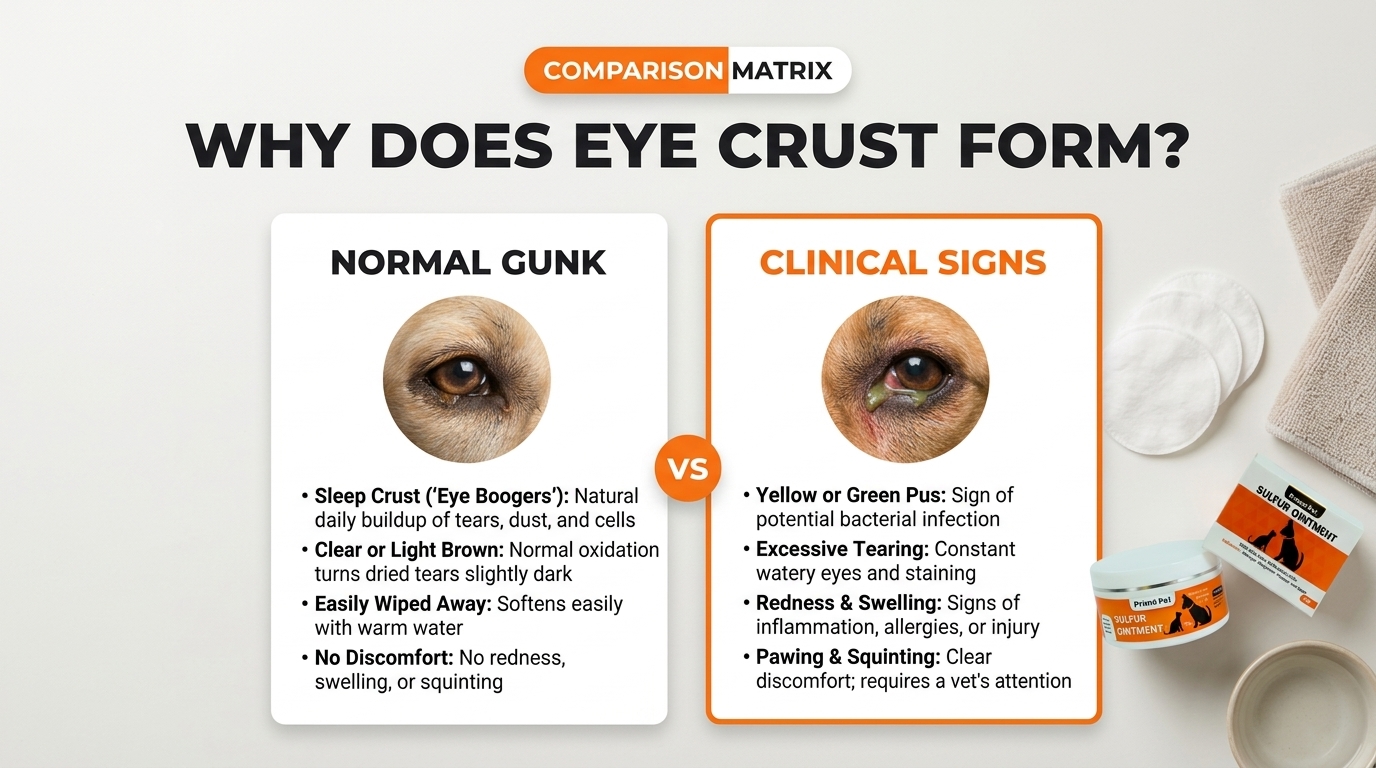
Every dog wakes up with a little morning grit. You probably wipe away those tiny, dry specks from your dog's eyelids without thinking twice. That dried residue is simply a natural mixture of shed skin cells, dried tears, and mucus that settles along the inner corner of the eye while your dog rests. Think of tears like windshield wiper fluid. Throughout the day, every blink sweeps away dust, keeping the cornea smooth and clear. Blinking stops during sleep. Residual fluid gathers, dries out, and hardens into ordinary morning eye crust.
Knowing Normal Gunk from Infection Before Learning How to Clean Dog Eye Crust at Home
Before you figure out how to clean dog eye crust at home, you must identify whether that residue is ordinary biological waste or an active infection. Normal crust is usually clear, light cream, or reddish-brown. If you share your home with a light-furred dog, you've likely seen rusty streaks staining their muzzle. That color doesn't come from blood. It comes from porphyrins, which are natural, iron-rich molecules released when the body breaks down red blood cells. Porphyrins exit the body through saliva, urine, and tears. When exposed to light and air, they oxidize and turn dark rusty red. As long as your dog's eye white isn't red, swollen, or held shut, this reddish crust is completely harmless.
Pathological discharge looks and acts different. Thick green or neon-yellow mucus points toward a bacterial infection, conjunctivitis, or a scratched cornea. Milky, gray gunk that forms sticky strings across the eyeball often signals dry eye, known clinically as keratoconjunctivitis sicca. In dogs with dry eye, the immune system attacks the tear glands. The eye stops making the watery fluid it needs, leaving behind thick mucus that clings to the surface like glue. If you spot cloudiness, constant squinting, or pawing at the eye, put down the cleaning cloth and call your veterinarian.
| Discharge Appearance | Probable Root Cause | Recommended Action |
|---|---|---|
| Clear, watery runoff | Dust, light wind, mild allergy, or blocked tear duct | Monitor closely and wipe gently with damp cotton |
| Dry reddish-brown crust | Normal sleep crust colored by natural iron porphyrins | Safe to clean off at home during regular grooming |
| Sticky gray-white film | Keratoconjunctivitis sicca (dry eye / low tear volume) | Needs a Schirmer tear test from your vet |
| Thick yellow or green pus | Bacterial conjunctivitis, corneal scratch, or infection | Immediate veterinary exam and medicated drops |
Household Triggers: Dust, Drafts, and Dry Indoor Air
Environmental conditions inside your house directly affect how much eye crust gathers on your dog each day. Central heating units, strong ceiling fans, and dusty carpets pull moisture straight off the ocular surface. Tears form a thin, three-part sandwich over the eye: an inner layer of mucus, a middle layer of watery salt, and an outer shield of natural oils. When dry drafts evaporate that oily shield, the eye panics. It overcompensates by pumping out excess fluid or thick mucus to coat the cornea before dirt can scratch it.
Pollen drifting through open windows can spark mild seasonal allergies. You'll see this as constant clear tearing that crusts overnight. Setting up a basic air purifier in your bedroom helps trap those floating particles before they irritate your pet's eyes. Beyond airborne dust, your dog's inner nutritional reserves determine how well their ocular mucous membranes hold up against daily irritants. Standard kibble diets often lose heat-sensitive micronutrients during factory extrusion. Adding PrimePet Vital Mix Multivitamin & Mineral Supplement for Dogs & Cats (Primepet Vital) (PKR 1,500) to their daily meals supplies bioavailable vitamins and minerals that strengthen immune defenses and maintain resilient mucous membrane barriers. Stronger cellular defenses mean less reactive eye gunk, making daily face cleaning much easier for you both.
Safe Preparation: What Supplies to Gather (and What to Avoid)
Preparation makes the difference between a calm grooming session and an accidental injury. Canine eyes are vulnerable structures protected only by a paper-thin corneal layer. When you learn how to clean dog eye crust at home, collecting the proper tools beforehand prevents you from scrambling while restraining an anxious dog. Having everything within arm's reach keeps your pet relaxed and your movements steady.
Essential Supplies for How to Clean Dog Eye Crust at Home
You do not need expensive medical gear to clean your dog's eyes. You only need clean, gentle, and sterile items that soften dried crust without scratching the eye surface. Gather these basics on a clean counter before bringing your dog over:
- Sterile 0.9% Saline Solution: Plain, unmedicated saline provides an isotonic wash that matches your dog's natural tear pH. It rinses away crust without burning or drying out ocular tissue. Choose single-use ampoules or sterile squeeze bottles with no added preservatives or redness relievers.
- Cooled Boiled Water: If you don't have commercial saline, boil fresh tap water for five minutes to kill bacteria, then allow it to cool completely to room temperature. Never apply hot or warm water directly to the eye area.
- Lint-Free Medical Gauze Pads: Woven cotton gauze holds moisture well and won't shred when pulled across coarse canine fur. Square 2x2 or 4x4 pads give you great finger control.
- Soft Microfiber Cloths: If your dog dislikes the texture of gauze, a clean microfiber washcloth dedicated exclusively to pet eye hygiene works well for softening hardened drainage.
- High-Value Training Treats: Keep pea-sized bits of boiled chicken, freeze-dried liver, or soft dog treats nearby. Rewarding your dog before and after cleaning creates a positive, cooperative habit.
External eye hygiene works best when paired with sound internal nutrition. When pets produce excess tears due to seasonal allergies or sluggish immune defenses, addressing their diet can help reduce persistent crusting. High-heat kibble processing often destroys vital micronutrients. Integrating PrimePet Vital Mix Multivitamin & Mineral Supplement for Dogs & Cats (Vital Mix) (PKR 1,500) into your pet's daily meals supplies essential minerals and vitamins that promote healthy mucous membranes and resilient immune defenses from the inside out.
Everyday Household Items That Pose Severe Eye Hazards
Many pet owners reach for bathroom staples in a pinch. This common mistake leads straight to emergency veterinary visits. Canine eyes react poorly to everyday cleansers, abrasive papers, and human pharmaceuticals.
| Item to Avoid | Hidden Danger | Safe Veterinary Alternative |
|---|---|---|
| Abrasive Paper Towels & Facial Tissues | Made from pressed wood pulp. The microscopic fibers act like fine sandpaper, scratching the cornea and leaving ragged paper dust behind. | Sterile woven gauze pads or soft cotton cloths. |
| Cotton Balls & Cotton Rounds | Loose cotton fibers easily unravel, stick to damp crust, and become lodged underneath the third eyelid, causing painful foreign-body irritation. | Lint-free medical wipes or dense microfiber towels. |
| Cotton Swabs (Q-Tips) | A sudden head twitch can drive the rigid plastic or paper stick directly into the eyeball, puncturing delicate structures. | Flat gauze pads wrapped gently around your index finger. |
| Medicated Human Eye Drops | Decongestant drops contain vasoconstrictors like tetrahydrozoline that restrict blood flow. Human steroid drops can cause blindness if your dog has an undiagnosed corneal scratch. | Prescription veterinary drops or plain 0.9% sterile saline. |
| Alcohol, Peroxide, & Baby Wipes | Chemicals, fragrances, and preservatives strip natural tear oils and trigger severe chemical burns on the conjunctiva. | Pure saline wash or pre-boiled, cooled water. |
Clinical Safety Tip: Always dedicate a separate gauze pad to each eye. If one eye carries an active bacterial infection, using the same cloth across both eyes spreads the pathogens immediately.
Take a few moments to inspect the lids and fur around your dog's muzzle before touching the crust. Once your sterile wipes and lukewarm solutions are staged on a stable table, you are ready to approach your pet in a quiet, low-distraction room.
Step-by-Step Guide: How to Clean Dog Eye Crust at Home Safely
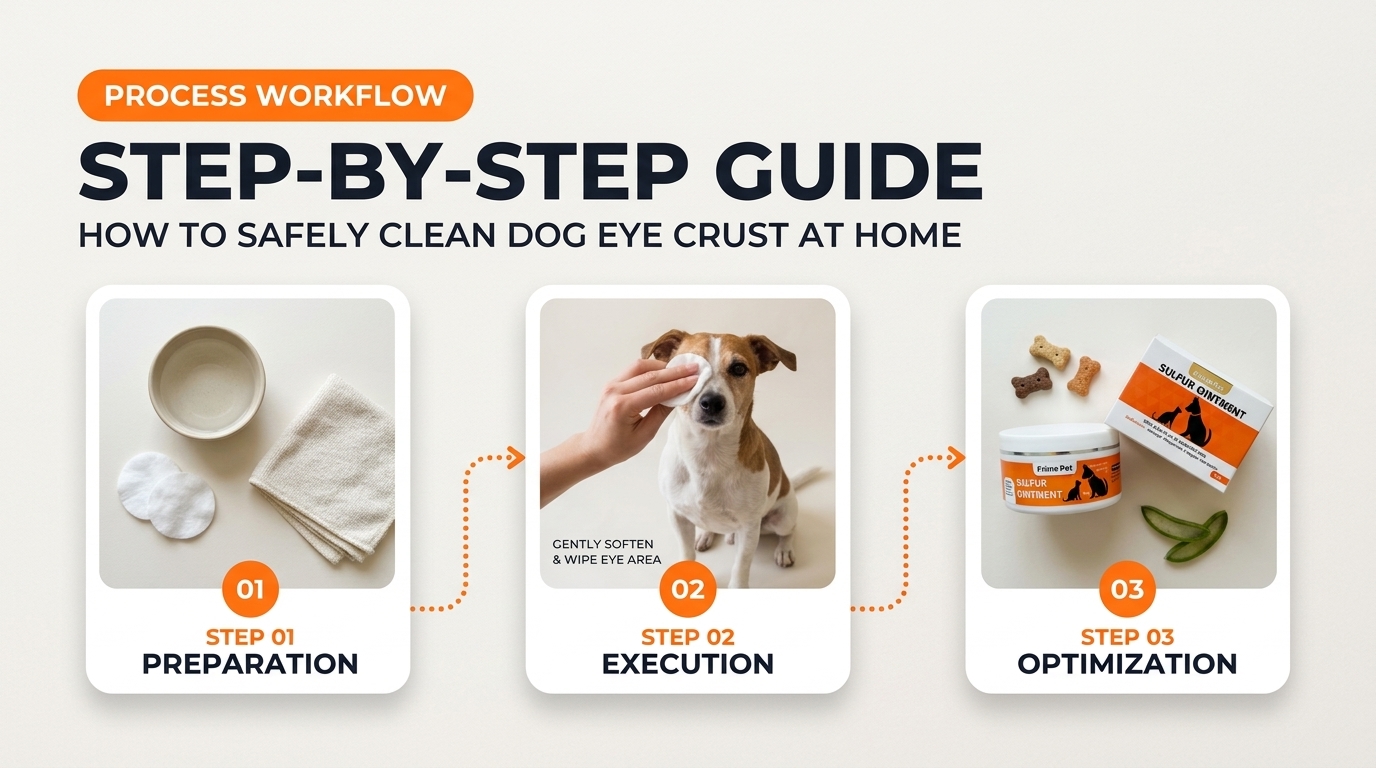
Tugging dry, hardened gunk off your dog's eyelids hurts. Dogs often pull away or snap during grooming because pulling dry crust yanks on sensitive facial hairs. When learning how to clean dog eye crust at home, patience matters far more than elbow grease. The secret is simple: soften the debris before you try to wipe it away.
Mastering How to Clean Dog Eye Crust at Home with Minimal Fuss
Before touching the eye area, establish gentle control over your dog. Position yourself level with your pet rather than hovering directly over their head. Looming can trigger anxiety in nervous dogs.
Cup your non-dominant hand comfortably beneath your dog's lower jaw. Rest your fingers along their cheekbone. This chin cradle stabilizes the skull without restricting their breathing or squeezing their throat. Don't grip the muzzle tightly. If you clamp down on their snout, their natural instinct is to yank backward. Instead, place your body against a wall or couch so your dog cannot back out of reach. Speak softly to help their breathing slow down.
Never reach for scissors, tweezers, or human nail files to pick crust away from facial hair. A sudden sneeze or jerk can cause an accidental corneal puncture in a split second.
The Soak-and-Sweep Method
Once your pet sits comfortably, work through this vet-approved sequence:
- Saturate your pad: Moisten a lint-free cotton round or soft medical gauze square with warm water or sterile isotonic saline. Test the temperature against your inner wrist first. It should feel pleasantly warm, never hot. Avoid raw cotton balls because their loose fibers cling to wet eyelashes.
- Apply the warm compress: Hold the damp pad directly against the dried crust for 20 to 30 seconds. Think of this step like soaking a dried oatmeal pot before washing it. The warm moisture rehydrates hardened proteins and mucus, releasing their glue-like grip on the hair shafts.
- Sweep inward to outward: Gently wipe from the inner corner of the eye (near the tear duct) toward the outer cheek. Moving in this outward direction sweeps bacteria and debris away from the delicate ocular surface. Wiping inward drags dirt directly back across the cornea, which can leave painful microscopic scratches.
- Switch pads between eyes: Never reuse the same pad on both eyes. If one eye harbors mild bacteria, wiping the other eye with the same surface spreads the problem.
- Pat dry: Finish by blotting damp skin folds with a dry tissue. Lingering moisture allows red yeast and bacteria to thrive in warm facial creases.
Eye hygiene isn't just about external cleaning. Heavy, stubborn discharge often reflects immune strain or nutritional gaps. Adding PrimePet Vital Mix Multivitamin & Mineral Supplement for Dogs & Cats (PKR 1,500) to your pet's daily meals supports healthy mucous membranes and tear quality from within. Factory pet foods frequently lose sensitive micronutrients during heat processing. Supplying pure trace minerals, vitamins, and antioxidants at this direct PKR 1,500 rate gives your dog the nutritional defense they need to keep their eyes clear, bright, and comfortable.
Caring for Brachycephalic and Long-Haired Breeds Prone to Heavy Discharge
Flat-faced dogs have a completely different facial anatomy than long-snouted breeds. Breeds like Pugs, French Bulldogs, Boston Terriers, and Shih Tzus have shallow eye sockets. Think of an ordinary dog's eye socket as a deep cereal bowl, while a flat-faced dog's socket is more like a shallow saucer. Because their eyeballs sit forward, their eyelids often cannot close fully over the center of the eye during a blink. Dust settles on the cornea easily, triggering high tear production to flush debris away.
Their shortened facial bones also pinch and bend the tear drainage pipes—the nasolacrimal ducts. Instead of draining invisibly through the nose and throat, tears overflow past the lower eyelids onto the muzzle. In long-haired breeds and Persian-mix dogs, rogue hairs along the inner eye corner act like tiny candle wicks. They draw tears out of the eye and pull them down into the facial hair, creating damp, rusty tracks.
A Specialized Guide: How to Clean Dog Eye Crust at Home for Flat-Faced Breeds
Learning how to clean dog eye crust at home on a flat-faced or long-haired dog requires a two-step method. You cannot simply wipe the surface and walk away. Crust locks onto both the eyelid rims and the skin inside the deep nose fold just below the eye.
| Step Area | Standard Dog Eyecare | Brachycephalic & Long-Haired Dog Eyecare |
|---|---|---|
| Inner Eye Corners | Wipe away soft sleep dust once daily with a damp cotton pad. | Pre-soak hardened crust for 60 seconds with warm saline to avoid pulling thin lid skin. |
| Facial Folds | Rarely needed; skin remains open to moving air and stays dry. | Separate the fold, wipe accumulated gunk out, and dry completely down to the base. |
| Coat Trimming | Occasional cleanup around the brows during regular grooming. | Comb facial hair downward with a fine flea comb to clear hair wicks near the tear duct. |
Start by softening any hardened crust on the eyelid margins. Hold a warm, damp washcloth against the inner corner for thirty seconds. The warmth loosens dried proteins so they slide off without tugging delicate eyelashes. Next, use a clean section of the cloth to sweep outward, away from the eyeball. For long-haired breeds, gently glide an ultra-fine tear stain comb through the damp hair to pull out micro-crusts before they cement against the skin.
Mastering the Facial Fold Dry-Down Technique
Cleaning out the crust is only half the battle. If you leave moisture sitting inside the skin folds below your dog's eyes, you invite trouble. Deep facial wrinkles create a dark, warm, and airless pocket—the exact environment where Malassezia yeast and bacteria thrive.
Many pet parents ask in community forums whether dedicated daily fold cleaning is worth the effort compared to weekly grooming routines. Skipping even two days allows trapped tears and skin oils to ferment into a greasy, sour-smelling sludge. This triggers intertrigo (friction-induced fold dermatitis), leaving the skin raw, inflamed, and painful.
The Golden Rule of Fold Hygiene: Never leave a fold wetter than you found it. Cleaning dissolves debris, but thorough drying prevents fungal dermatitis and painful secondary eye infections.
Follow this drying protocol every time you wash your dog's eye area:
- Part the fold gently: Use your thumb and index finger to roll the skin wrinkle open so you can see the pink valley at the bottom.
- Extract trapped debris: Run a fresh, damp cotton round along the crease from the nose outward to clear trapped gunk. Never push gunk deeper into the crease.
- Blot with dry gauze: Take a square of sterile woven gauze or a clean microfiber cloth and press it firmly into the crease. Gauze works better than cotton balls because it leaves zero loose lint fibers behind to irritate the cornea.
- Verify the base is dry: Run a dry fingertip through the fold. The skin should feel smooth and completely dry, not tacky or slippery.
Frequent moisture exposure chips away at the skin's protective lipid barrier. Standard pet foods often lose vital nutrients during high-heat kibble extrusion, leaving skin less resilient against daily tear overflow. To help maintain skin elasticity and soothe sensitive mucous membranes around the eyes, consider adding PrimePet Vital Mix Multivitamin & Mineral Supplement for Dogs & Cats (Vital Mix) #2 to their daily bowl. Formulated to fortify your pet's natural defenses from within for PKR 1,500, it provides essential micronutrients and trace minerals that support dermal repair and tissue health across heavy-discharge breeds.
If you notice the fold skin turning bright red, oozing a yellowish discharge, or giving off an odor like stale corn chips, pause your home routine. Those signs point to an active microbial bloom that requires veterinary-prescribed topical treatments rather than standard home maintenance.
Supporting Ocular Defense and Mucous Membrane Health from Within
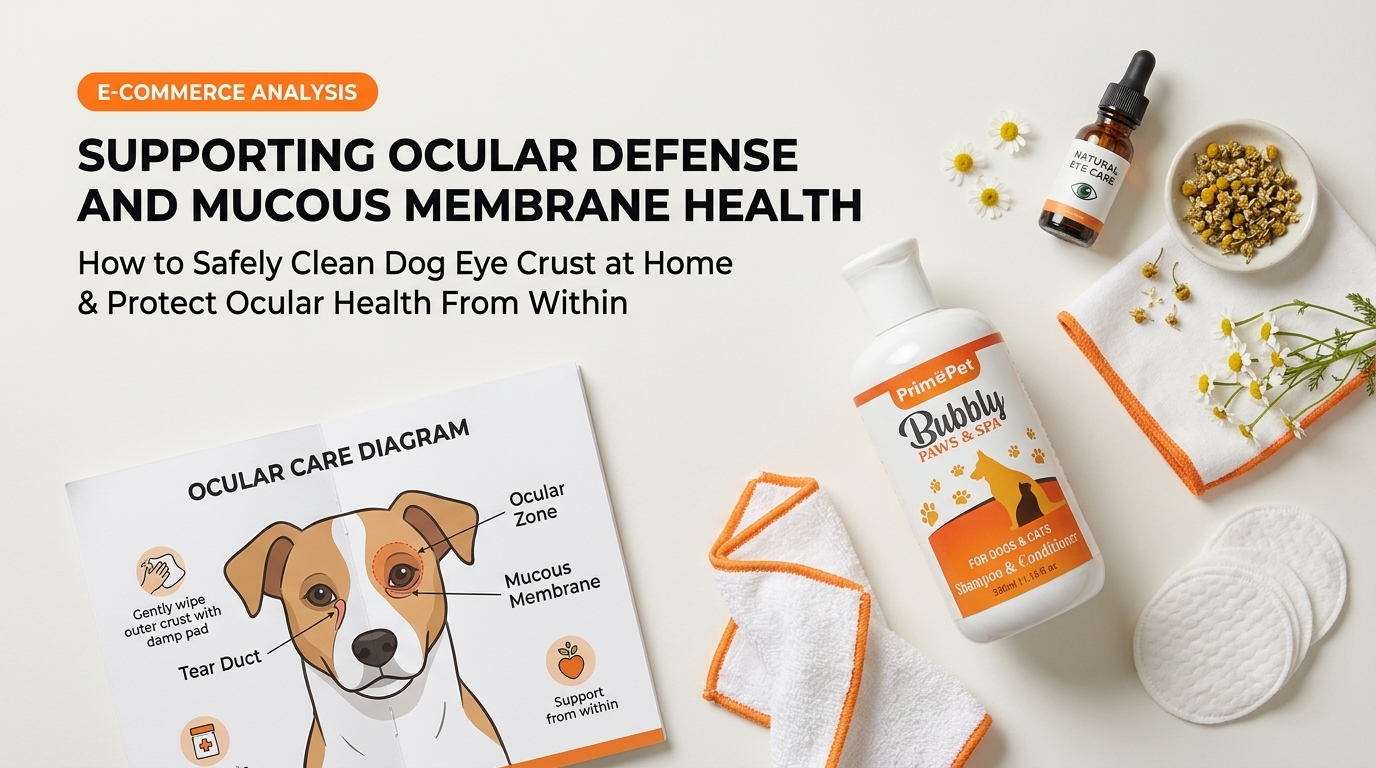
Mastering how to clean dog eye crust at home solves the immediate cosmetic issue, but it only addresses half the problem. Gentle wiping clears away dried gunk from delicate lids. It does not stop excessive discharge from returning tomorrow morning. If you find yourself clearing heavy mucus every few hours, your dog's eyes are likely reacting to an internal vulnerability.
The eyes rely on a microscopic three-layer shield known as the tear film. This shield consists of a base mucus layer, a middle watery layer, and an outer oily layer. Think of this tear film like motor oil in a car engine. If the oil lacks the proper lubricating additives, friction builds, dirt sticks, and the system overheats. When a dog's mucous membranes lack vital micronutrients, the tear film breaks down. The eye dries out quickly, leading to irritation, redness, and compensatory surges of thick, crust-forming mucus.
The Nutritional Gap in Modern Pet Bowls
Most commercial kibbles meet basic survival standards. They rarely provide optimal levels of fragile micronutrients. Standard dry foods undergo intense heat extrusion during manufacturing. This high heat degrades heat-sensitive vitamins, essential fatty acids, and active trace minerals before the food ever lands in your pet's bowl.
Without adequate vitamin A, epithelial tissue suffers. Goblet cells—the microscopic glands responsible for producing the protective mucus layer of the eye—begin to misfire. Deficiencies in zinc and B-complex vitamins weaken the skin barrier around the eyelids, making the tissue prone to secondary microbial overgrowth. When these nutritional shortfalls persist, your dog's natural ocular defenses falter. Dust, pollen, and everyday bacteria easily trigger low-grade inflammatory discharge.
Clinical Note: Chronic morning eye crust is rarely just an external hygiene issue. When the tear film loses its structural integrity due to dietary deficits, the eye produces excess sticky proteins to trap foreign debris, creating persistent crusting around the medial canthus.
Beyond Surface Wiping: How to Clean Dog Eye Crust at Home from the Inside Out
Pet owners frequently ask whether investing in nutritional therapy actually saves time compared to daily manual wipe routines. Manual cleaning manages the residue. Internal fortification changes the environment that produces the crust in the first place. Bolstering systemic immunity stabilizes the mucous membranes lining the conjunctiva, reducing the frequency of heavy crusting episodes.
To bridge the nutritional gap left by processed kibble, we recommend incorporating PrimePet Vital Mix Multivitamin & Mineral Supplement for Dogs & Cats into your pet's daily feeding regimen. Available directly for PKR 1,500, this targeted daily supplement is formulated to replenish the vital micronutrients lost during commercial food processing.
Why Targeted Micronutrients Transform Ocular Defense
- Fortifies Mucous Membranes: Delivers bioavailable fat-soluble vitamins that nourish goblet cells and maintain healthy conjunctival tissues.
- Enhances Immune Resistance: Balanced trace minerals support systemic white blood cell function, keeping opportunistic surface bacteria in check.
- Strengthens the Dermal Barrier: Zinc and B-vitamins protect the delicate periocular skin from friction and moisture burn caused by running tears.
- High Cost-to-Benefit Ratio: At PKR 1,500, PrimePet Vital Mix provides a cost-effective alternative to juggling multiple individual single-ingredient oils and powders.
Instead of constantly scrubbing irritated eyes, pairing gentle topical cleansing with internal nutritional support creates long-term resilience. Add the recommended dose of PrimePet Vital Mix to your dog's morning meal. Within several weeks, improved tear-film stability and strengthened local immunity will translate to brighter, clearer eyes—and far less crust to wipe away each morning.
When Does Eye Gunk Require Immediate Veterinary Attention?
Gentle warm compresses work wonders for daily maintenance. Still, knowing how to clean dog eye crust at home also means knowing when to stop. Canine eyes are fragile. A superficial scratch can turn into a melting corneal ulcer within forty-eight hours, risking irreversible vision loss. If your dog shows signs of sharp physical distress or structural tissue changes, put down the cleaning wipes and pick up the phone.
Watch for these distinct clinical warning signs during your daily grooming checks:
- Blepharospasm (Persistent Squinting): Your dog holds one or both eyes tightly shut or blinks rapidly. Think of how it feels to get a sharp grain of sand trapped behind a contact lens. That protective, involuntary clamping is blepharospasm, and it always signals acute ocular pain.
- Corneal Cloudiness or Color Shifts: A healthy cornea looks like clean window glass. If you notice a bluish haze, milky spots, or dull film, fluid has penetrated the clear dome of the eye. This cloudiness often indicates deep inflammation, glaucoma, or an active ulcer.
- Scleral Injection (Severe Redness): While mild pinkness can occur from minor wind irritation, engorged blood vessels over the white part of the eye (the sclera) point to serious conditions like uveitis or sudden spikes in intraocular pressure.
- Third Eyelid Elevation: Dogs possess a nictitating membrane tucked inside the inner corner of the eye. If this pink tissue sweeps across the eyeball and stays visible, the eye is sinking back into the socket to escape pain.
- Copious Yellow or Green Purulent Discharge: Normal morning "sleep" dries clear, reddish-brown, or slightly grey. Thick, yellow-green mucus glued to the eyelids indicates bacterial overgrowth or severe dry eye (Keratoconjunctivitis Sicca).
- Behavioral Changes: Pawing at the face, rubbing against carpet, or whimpering when you touch their head are urgent cries for clinical help.
| Symptom Profile | Safe for Home Care | Requires Urgent Veterinary Evaluation |
|---|---|---|
| Discharge Appearance | Light crust, clear watery tears, slight dark-red crumbly dried sleep. | Continuous yellow or green pus, heavy goopy mucus pooling in the lid margin. |
| Eyelid & Eye Position | Wide open, symmetrical, comfortable blinking. | Squinting, eye clamped shut, protruding third eyelid, swollen puffy lids. |
| Corneal Clarity | Bright, completely transparent, reflective. | Milky, hazy, bluish cast, or visible surface pitting and dents. |
| Pain Response | Relaxed posture, tolerates gentle touch around muzzle. | Frantic pawing, vocalizing, head shying, hiding in dark rooms. |
Knowing When Not to Rely on How to Clean Dog Eye Crust at Home
Wiping away discharge when a dog has an underlying corneal injury can cause serious harm. The mechanical friction of a damp cloth over an open scratch grates against damaged epithelial cells. If tap water gets into an open wound, waterborne microbes like Pseudomonas can cause rapid bacterial infection. Standard reference guidelines from the Merck Veterinary Manual on ocular trauma emphasize that diagnosing surface damage requires specialized tools like fluorescein dye strips, which glow neon green under cobalt blue light to highlight microscopic tears.
Your vet will run straightforward diagnostics to find the root problem. A Schirmer Tear Test checks whether your dog produces enough natural tears to lubricate the cornea. Tonometry measures internal fluid pressure to rule out glaucoma. These tests take only minutes, don't hurt, and give you an exact answer before permanent damage occurs.
Topical medications treat sudden emergencies, but lifelong ocular resilience depends on balanced systemic nutrition. High-heat manufacturing often strips standard commercial pet food of vital micronutrients, including vitamin A, zinc, and essential fatty acids. These nutrients maintain clear tear films and strong mucous membranes. To bridge these dietary gaps, consider our authentic PrimePet Vital Mix Multivitamin & Mineral Supplement for Dogs & Cats (available direct for PKR 1,500). Adding this balanced blend to your pet's daily meals supports immune defense and cellular repair, helping their eyes naturally resist routine environmental irritants.
Never administer leftover human eye drops, steroid ointments, or over-the-counter medicated solutions to your dog's eyes. If a corneal scratch is present, applying a topical steroid can cause the cornea to dissolve, resulting in eye rupture.
Trust your instincts. If your pet's eyes look clear and comfortable, keep up with gentle warm water wipes. If you notice swelling, color changes, or squinting, skip the home remedies and let a veterinarian examine them immediately.
Establishing a Stress-Free Daily Eye Care Routine for Your Pet
Eyes tell you everything about your dog's immediate comfort and overall wellness. Daily ocular care shouldn't feel like an unpredictable wrestling match on the living room rug. When you turn cleaning into a calm, predictable ritual, your pet learns there is nothing to fear from a soft cloth or a damp pad. Consistency turns a dreaded chore into a comforting bonding moment that keeps irritation and stubborn staining at bay.
Mastering How to Clean Dog Eye Crust at Home with Daily Consistency
Mastering how to clean dog eye crust at home comes down to steady habits, soft touch, and proper timing. Many owners wait until dried gunk forms cement-like clumps around the tear ducts, which makes removal painful and causes dogs to shy away. Softening buildup before it hardens protects delicate eyelid skin from micro-tears and raw spots.
A stress-free daily routine follows three straightforward steps:
- Morning inspection: Check both eyes during your morning petting session. Look for changes in tear clarity, redness on the conjunctiva, or squinting. Catching irritation early stops minor dust buildup from turning into a full-blown surface infection.
- Warm soak and wipe: Moisten a clean cotton pad or lint-free washcloth with sterile saline or body-temperature water. Hold the compress against the inner corner of the eye for twenty seconds to dissolve dried mucus before wiping gently downward and outward. Never pick at dry discharge with bare fingernails.
- High-value reward: Offer a small, savory bite immediately after wiping each eye. Dogs connect the dots fast. When sitting still for a warm cloth consistently produces a special treat, resistance vanishes.
A thirty-second soak softens stubborn tear tracks without pulling sensitive facial fur. Gentle friction and patient soaking will always outperform brute force.
External wiping manages existing drainage, but lasting comfort starts on the inside. Ocular discharge frequently increases when underlying cellular defenses wear down. Standard kibble and canned foods often lose delicate vitamins during high-heat processing. Supplying targeted nutrients daily helps maintain resilient mucous membranes, steady tear production, and a robust immune barrier against everyday environmental dust.
Pet owners looking to reinforce ocular and systemic vitality can add the PrimePet Vital Mix Multivitamin & Mineral Supplement for Dogs & Cats (Primepet Vital) #2 to their pet's daily meals. Priced at PKR 1,500, this complete multivitamin delivers authentic, direct-to-consumer nutritional support designed to enhance immunity, sustain healthy energy levels, and nourish the mucous membranes protecting delicate eye tissue. Pairing a clean external wipe-down with reliable internal nutrition keeps your dog's eyes bright, moist, and free from chronic irritation.
Watch for sudden changes that home care cannot resolve. If clear morning boogers shift to thick green discharge, or if your dog begins rubbing their face obsessively against the carpet, set the washcloth aside and call your veterinarian. Clear vision and comfortable eyes require proactive attention. Give your dog the gentle daily care and nutritional backing they deserve to stay happy, alert, and seeing clearly for years to come.
Dr. Attaur Rehman (DVM)
Certified Veterinary Surgeon and Founder of Prime Pet Pakistan. Lab-formulated treatments and authentic clinical care for dogs and cats.