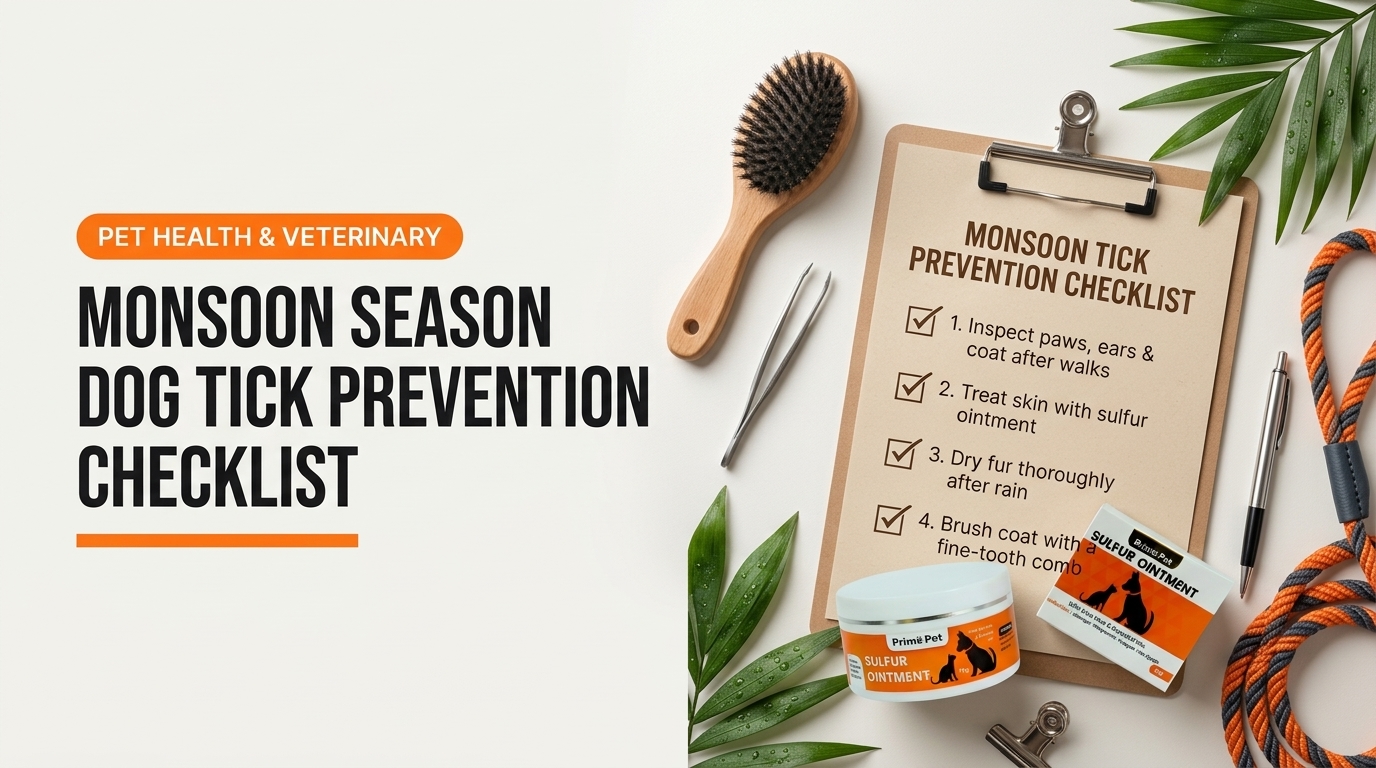
Monsoon Season Dog Tick Prevention Checklist - monsoon dog tick prevention checklist
When heavy rains arrive, parasite populations explode across lawns, dog parks, and residential walking paths. Following a structured monsoon dog tick prevention checklist is the single most dependable way to keep your dog safe from debilitating illnesses during wet weather. Damp heat turns ordinary soil and tall grass into an open-air nursery. Ticks multiply fast. Without a routine, your dog faces constant exposure to hungry parasites waiting on every sodden blade of grass.
Table of Contents
- Phase 1: Outdoor Risk Assessment and Yard Drainage Protocols
- The Daily Monsoon Dog Tick Prevention Checklist: 6 Body Inspection Zones
- Phase 3: Safe Extraction, Disinfection, and Skin Care Protocols
- Phase 4: Fortifying Canine Immunity and Skin Barriers from the Inside Out
- Phase 5: Indoor Bedding and Living Space Sanitation Template
- Sustaining Proactive Parasite Defense Throughout the Wet Months
Brown dog ticks (Rhipicephalus sanguineus) and bush ticks (Haemaphysalis longicornis) thrive in high humidity. When ambient moisture climbs above 80 percent and outdoor temperatures hover between 25°C and 35°C, their life cycles accelerate. Tick eggs hatch in days rather than weeks. Larvae and nymphs crawl actively up low shrubs and masonry cracks, resting in an ambush posture known as "questing." The moment your dog brushes past, these parasites latch onto the fur, burrow toward warm skin, and begin a blood meal that can last for days.
Tick bites cause far more damage than simple itching or surface dermatitis. These blood-sucking parasites carry devastating microscopic pathogens directly into your dog's bloodstream. Two of the most destructive are Babesia and Ehrlichia:
- Babesiosis: This microscopic protozoan invades and shatters your dog's red blood cells. Think of red blood cells like tiny oxygen-delivery vans; when Babesia destroys them, the body starves of oxygen. Dogs experience sudden high fever, profound lethargy, pale gums, and dark, tea-colored urine. Severe cases lead to irreversible organ failure within forty-eight hours.
- Ehrlichiosis: This bacterial disease targets white blood cells and blood-clotting platelets. It acts like an internal saboteur, disabling the immune system from within. Affected pets suffer from swollen lymph nodes, painful and stiff joints, nosebleeds, unexplained bruising, and chronic weight loss that can persist for months if left undiagnosed.
Pet parents on veterinary care discussions on seasonal prevention frequently debate whether disciplined prevention routines justify the daily effort compared to reactive vet visits. The reality is simple: treating full-blown tick fever requires intensive hospitalization, IV fluid therapy, and costly blood transfusions. Preventing bites in the first place costs a fraction of that stress and money.
A complete defense plan pairs topical protection with internal resilience. While spot-on treatments and yard management keep external parasites at bay, your dog's immune system remains the final line of defense against blood-borne pathogens. Standard commercial kibbles often lose heat-sensitive vitamins and trace minerals during high-heat manufacturing, leaving nutritional gaps that weaken skin barriers and cellular immunity. Adding PrimePet Vital Mix Multivitamin & Mineral Supplement for Dogs & Cats (PKR 1,500) provides direct nutritional reinforcement. Its targeted blend of essential vitamins and minerals supports natural tissue repair, maintains a robust dermal barrier, and keeps white blood cell activity sharp throughout heavy weather stress.
Stopping seasonal tick infestations requires moving beyond random inspections. The following phase-by-phase framework turns your daily monsoon dog tick prevention checklist into a reliable shield, starting with yard drainage and ending with indoor sanitation.
Phase 1: Outdoor Risk Assessment and Yard Drainage Protocols
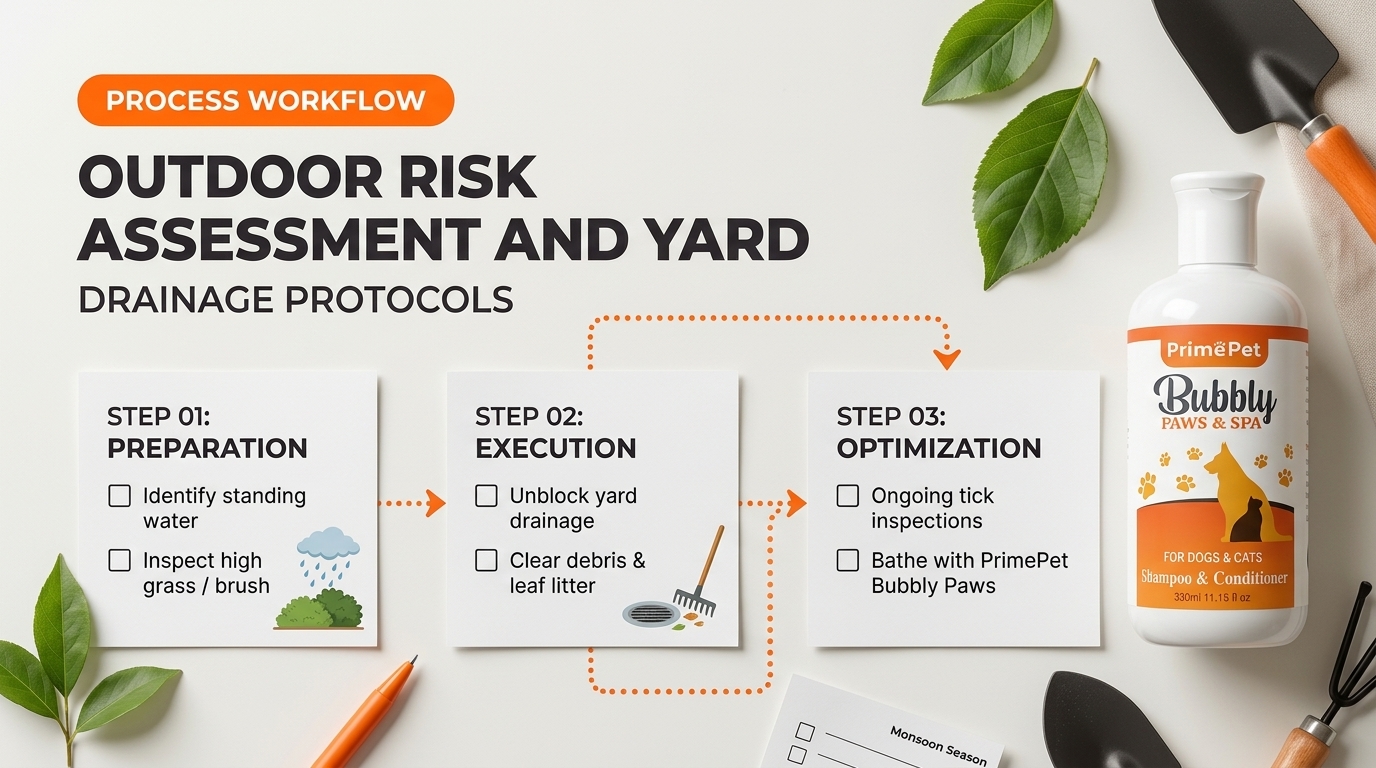
Ticks love the rainy season. High humidity keeps them from drying out, while warm puddles and lush vegetation create ideal breeding grounds right outside your door. You cannot stop the rain, but you can turn your property into hostile territory for parasites before your dog steps outside.
Phase 1 of your defense focuses on your immediate environment. Ticks do not jump or fly. They climb up tall grass blades and wait with their front legs stretched wide, ready to grab passing fur. Biologists call this "questing." Think of ticks as hitchhikers waiting along a shoulder-high road. If you remove the road and dry out the soil, they cannot reach your dog.
Securing the Perimeter: Monsoon Dog Tick Prevention Checklist for Yards
Before unclipping your dog's leash for outdoor playtime, run through a physical audit of your walking paths and lawn. Many pet owners ask whether setting up an outdoor yard protocol is worth the manual effort compared to just paying for recurring chemical lawn sprays. Chemical treatments often wash away in heavy downpours, leaving toxic runoff in puddles that dogs drink from. Physical yard control costs less, lasts longer, and keeps your pets safe.
| Inspection Zone | Risk Factor | Action Required |
|---|---|---|
| Turf & Lawn | Blades over 3 inches tall trap ground moisture and offer climbing ladders. | Mow weekly. Keep grass clipped to 2 inches or lower throughout the rains. |
| Garden Borders | Decaying leaf litter under bushes shields tick nymphs from sunlight. | Rake wet leaves weekly. Prune shrub branches that sit within 18 inches of the ground. |
| Property Fences | Wild rodents deposit ticks along overgrown wooden or brick perimeters. | Lay a 3-foot wide dry buffer strip of cedar mulch or gravel along boundary lines. |
A simple gravel or wood-chip barrier works wonders. Ticks dry out fast when walking across hot gravel, so they rarely cross these dry boundary strips to reach your main lawn. As detailed in Penn State Extension tick ecology research, physical landscape buffers dramatically decrease tick migration into manicured recreational turf.
Eliminating Moisture Traps and Drainage Bottlenecks
Standing water doesn't breed ticks directly—ticks are arachnids, not mosquitoes. However, stagnant water creates a continuous micro-climate of 85% to 95% relative humidity right at ground level. That damp air keeps ticks alive and active for weeks without feeding. Poor drainage also attracts stray rodents that carry seed ticks directly into your space.
Inspect your gutters after heavy downpours. Overflowing downspouts dump gallons of water against your foundation, turning flowerbeds into swampy tick sanctuaries. Clear out wet leaves and install splash blocks to channel water at least five feet away from pet play areas.
Fill in low spots on your lawn using coarse sand mixed with compost. Sand drains quickly and prevents water from pooling. Store plant pots, wheelbarrows, and empty buckets upside down so water never collects. If your yard suffers from persistent mud, keep your dog on a paved walkway until the topsoil dries out completely.
Field Tip: Never let your dog run through thick, wet groundcover like ivy or pachysandra during monsoon months. These plants act as thermal blankets, trapping moisture and sheltering tick clusters from direct sunlight.
Timing Walks Around Humidity Spikes
Ticks regulate their movement based on ambient moisture and heat. During the monsoon, humidity peaks at two distinct times: dawn, when heavy dew coats foliage, and dusk, when evening rains saturate the air. These are the danger hours. Ticks climb to the highest points of grass blades because they don't have to worry about desiccation.
Shift your dog's exercise routine to midday windows whenever the rain pauses. Sunlight and light wind lower surface humidity on concrete paths and short grass, driving ticks down toward root crowns where they cannot reach your dog's legs. Choose wide asphalt roads or packed gravel trails over narrow dirt paths bordered by tall brush.
Even with an airtight yard drainage routine, wet walks are inevitable during the monsoon season. High humidity breaks down your dog's natural skin oils, leaving their skin barrier vulnerable to secondary infections from minor parasite bites. Standard kibble often loses vital heat-sensitive nutrients during manufacturing. Adding PrimePet Vital Mix Multivitamin & Mineral Supplement for Dogs & Cats (available directly for PKR 1,500) gives your pet balanced micronutrients that strengthen natural skin immunity and coat health from within. A resilient skin barrier helps prevent hot spots and bacterial irritation if an outdoor parasite manages to latch on before you spot it.
Complete your perimeter maintenance before the heaviest rains arrive. Once your lawn drains freely and your walking paths stay clear of tall foliage, you dramatically cut the odds of parasites hitching a ride into your living room.
The Daily Monsoon Dog Tick Prevention Checklist: 6 Body Inspection Zones
Wet weather drives parasites up tall blades of grass where they wait for a host. When your dog brushes past damp foliage, ticks transfer in seconds. Chemical treatments are useful, but they don't stop ticks from crawling aboard and hitching a ride into your living room. Pet owners often ask whether daily manual checks are worth the effort if their dog already takes oral preventatives. The reality is simple: oral tablets require the tick to bite and ingest blood before dying. A physical check stops them before they latch or transmit pathogens.
Set up an inspection station right at your front door. Keep a towel, a fine-tooth flea comb, and a bright flashlight handy. Don't let your dog run onto carpets or sofas until you complete this routine. Run your bare fingers directly against the skin beneath the fur. You aren't just looking with your eyes; you're feeling for tiny, seed-like bumps.
Field Pro Tip: Ticks feel like tiny, hard scabs or smooth raised pebbles adhering firmly to the skin. If a scab doesn't flake away easily with a gentle touch, don't yank it. Part the fur and look directly at it under bright light.
Tactile Scanning: The Monsoon Dog Tick Prevention Checklist Routine
Ticks seek out dark, moist, and vascular zones where canine skin is thin and capillary blood flows close to the surface. Work methodically from head to tail so you never skip a spot.
1. Between Paw Pads and Digits
Dogs step directly into grass clusters where tick larvae and nymphs wait. Spread each toe wide. Inspect the deep webbed pockets between the toes, around the claw beds, and in the crevices surrounding the central metacarpal pad. Wet mud often cakes between the toes during rainy days, disguising small nymphs as specks of dirt. Rinse dirty paws with clean water and towel dry them before probing with your fingertips.
2. Inside Ear Folds and Canal Margins
The warm, humid pocket of a canine ear is prime parasite territory. Examine the base of the ears where thick fur meets bare skin. Flip the pinna (ear flap) back. Check along the outer margins, the delicate skin folds near the Henry's pocket (the small pouch at the outer base), and down toward the entrance of the ear canal. If your dog shakes their head repeatedly after a walk, inspect this area immediately.
3. Under the Collar and Harness Straps
Friction gear creates an ideal sheltering zone. Collars, bandanas, and harnesses trap heat, humidity, and dead hair. Unbuckle all walking gear before starting your inspection. Ticks frequently gather directly underneath nylon straps and metal rings where fingers rarely brush during casual petting. Feel along the nape of the neck and beneath the throat latch with firm, flat palm sweeps.
4. Groin, Inguinal Creases, and Inner Thighs
The soft skin where the rear legs connect to the torso offers little resistance to piercing tick mouthparts. Gently roll your dog onto their back or lift a rear leg. Run your fingertips through the hairless creases along the groin and the inner thighs. Ticks here often crawl deep into the inguinal fold where body warmth stays highest.
5. Under the Tail and Perianal Region
This hidden zone is easy to overlook. Lift the tail completely. Check the base of the tail bone, the underside hair, and the sensitive skin encircling the anus. The dark crevice beneath the tail gives ticks immediate camouflage, especially on dogs with thick, feathery tails like Golden Retrievers or German Shepherds.
6. Along the Belly and Armpits (Axillary Folds)
Just like the groin, the axillary regions under the front shoulders feature thin skin and rich blood supplies. Slide your hands into the deep armpit crevices behind the front legs. Then, sweep your hand flat down the chest and along the entire underbelly toward the pelvis. Feel carefully around the nipples, where tiny nymph ticks frequently settle and blend into pigmented skin.
Body Zone Inspection Reference
| Zone | Tactile Target | Monsoon Risk Level | Detection Method |
|---|---|---|---|
| Paws & Webbing | Tiny seed-like bumps between toes | Critical | Spread digits apart; wash away mud; feel inner webbing |
| Ears & Folds | Cluster scabs on thin flap margins | High | Flip ears back; shine light directly into fold crevices |
| Gear Contact Lines | Flat ticks trapped under bands | Moderate | Remove harness and collar completely before scanning |
| Groin & Flanks | Raised smooth bumps on bare skin | Critical | Roll dog back; scan hairless creases along legs |
| Perianal & Tail | Engorging bodies tucked under tail base | High | Lift tail high; part fur around the rectal ring |
| Belly & Armpits | Small nodules tucked near nipples and folds | High | Run flat palm through armpits; check each mammary site |
Executing this monsoon dog tick prevention checklist takes less than five minutes once you build muscle memory. Pet owners often struggle with edge cases during high-humidity weeks, like missing immature nymphs that look identical to tiny freckles. Many owners share similar frustrations in community discussions on physical tick inspection workflows, pointing out that manual checks require consistent habits to match chemical efficacy. Pair tactile touch with good lighting so you catch parasites before they feed.
Parasite defense works best from two angles: external vigilance and internal resilience. Tick bites introduce bacteria, fungi, and saliva proteins that trigger acute hotspots, especially when damp fur stays humid for hours. Standard pet foods lose heat-sensitive nutrients during industrial processing, leaving skin barriers weakened and vulnerable to secondary infections. Adding PrimePet Vital Mix Multivitamin & Mineral Supplement for Dogs & Cats (PKR 1,500) to your pet's daily meals supplies the micronutrients required for robust dermal repair. A nourished canine coat repels moisture more effectively, dries faster after rains, and gives you a smoother canvas to feel out crawling pests before they do harm.
Phase 3: Safe Extraction, Disinfection, and Skin Care Protocols

Finding an engorged tick buried in your dog's coat is alarming. Don't panic. Rushing the extraction causes most complications. Monsoon humidity softens your dog's skin, turning a tiny puncture into prime real estate for opportunistic bacteria. Think of a tick's mouthparts like a tiny barbed harpoon. Jerking it sideways tears the skin and leaves mouthparts embedded deep in the dermis.
Never squeeze a tick by its swollen abdomen. Using blunt household tweezers or bare fingers acts like a syringe plunger, injecting infectious gut bacteria and tick saliva straight into your dog's bloodstream. Instead, you need dedicated tools: surgical fine-tipped tweezers or a specialized tick hook (often sold as a tick twister).
Clinical Extraction Steps on the Monsoon Dog Tick Prevention Checklist
Executing this procedure properly is a primary defense milestone on your monsoon dog tick prevention checklist. Follow these steps calmly:
- Expose the base: Part your dog's damp fur and hold it flat with one hand. Keep the skin taut around the bite site.
- Position the tool: If using fine-tipped tweezers, grasp the tick at the absolute base of its head, right where it meets the dog's skin. If using a tick hook, slide the pronged fork sideways beneath the tick's body against the skin until the parasite rests securely in the slot.
- Execute the release: With fine-tipped tweezers, pull upward with slow, steady, 90-degree vertical pressure. Do not jerk, twist, or snap. With a tick hook, gently rotate the handle two to three full turns in one direction without pulling upward until the barbs disengage naturally.
- Dispose safely: Drop the live parasite into a small container of rubbing alcohol to suffocate it. Do not crush it between your fingernails.
Pet owners frequently debate manual workflows versus dedicated tools in online discussions on extraction pitfalls, especially when a tick's head snaps off beneath the skin. If mouthparts remain embedded, do not dig into the flesh with a sterilized sewing needle. Digging shreds tissue, causes bleeding, and pushes environmental bacteria deep into waterlogged monsoon skin. Swab the surface clean and let your dog's immune system push the fragments out naturally, just like a splinter.
Antiseptic Skin Cleansing and Moisture Management
Once the parasite is out, you must treat the wound immediately. Skip harsh chemicals like hydrogen peroxide or straight rubbing alcohol on open wounds. Peroxide destroys the fragile, newly forming skin cells and slows down healing. Instead, cleanse the area with a gentle veterinary antiseptic.
Use a dilute chlorhexidine solution (0.05% to 0.2%) or a watered-down povidone-iodine wash until it resembles weak tea. Soak a sterile gauze pad and dab the puncture firmly for thirty seconds. Do not let your dog run outside immediately after cleaning. Monsoon air traps dampness against the skin. Blot the area completely dry with clean gauze to prevent trapped moisture from incubating fungal spores.
Recognizing Secondary Wet-Weather Skin Infections
Monsoon dampness makes puncture wounds prone to rapid bacterial colonization. Keep a close eye on the bite site over the next two weeks. You need to distinguish between a harmless localized histamine reaction and a spreading bacterial infection.
| Symptom Indicator | Benign Reaction (Normal) | Secondary Bacterial Infection (Action Needed) |
|---|---|---|
| Swelling & Size | Small, firm bump under 5mm (pencil eraser size). | Spreading red plaque, hot to the touch, rapidly expanding beyond the bite. |
| Discharge & Odor | Clean scab, dry surface, zero smell. | Yellow or greenish pus, moist exudate, distinct sour or yeasty odor. |
| Dog Behavior | Mild scratching for a few hours, then ignored. | Intense licking, self-mutilation (hot spot formation), fever, or sudden lethargy. |
If you observe expanding redness, oozing pus, or noticeable heat around the wound, consult your veterinarian right away. Secondary bacterial pyoderma thrives in wet weather and requires prescription topical or oral antibiotics.
External wound hygiene is only half the battle. When parasite saliva enters the tissue, rapid dermal repair relies entirely on internal health. Standard kibbles often lose heat-sensitive vitamins and trace minerals during high-heat manufacturing. Supplementing your pet's meal with PrimePet Vital Mix Multivitamin & Mineral Supplement for Dogs & Cats (PKR 1,500) provides direct nutritional support. It supplies essential micronutrients that fortify the skin's natural moisture barrier, accelerate tissue repair at bite sites, and bolster everyday immune resilience throughout the wet season.
Phase 4: Fortifying Canine Immunity and Skin Barriers from the Inside Out
External sprays and physical combs only solve half the problem. When continuous downpours saturate the ground, ticks hitch rides indoors and attach to your dog's warmest skin folds. Ticks bite hard. They feed on blood, drain circulating iron, and introduce microscopic blood parasites like Babesia and Ehrlichia. At the same time, high humidity traps dampness deep against the skin, softening the dermal tissue. This moisture triggers severe yeast flare-ups, hot spots, and painful allergic dermatitis.
A dog with broken skin and a depressed immune system is an easy target. While spot-on treatments kill parasites after contact, they cannot mend broken tissue or restore depleted blood counts. Total seasonal defense requires working from the inside out.
Internal Defense in the Monsoon Dog Tick Prevention Checklist
Think of your dog's skin like a brick wall. The skin cells act as individual bricks, while natural lipids and oils serve as the mortar. Heavy rains and humid air strip away these essential surface oils, cracking the mortar. Once that barrier breaks down, tick bites cause runaway inflammation and secondary bacterial infections. Inside the bloodstream, engorging ticks deplete red blood cells, leaving your dog sluggish, pale, and lethargic.
Standard commercial dog food often fails to meet these spiked seasonal demands. Kibble loses heat-sensitive B vitamins, trace minerals, and fatty acids during high-temperature manufacturing. To fight off tick-borne fatigue and keep their coat water-resistant, dogs need direct, highly absorbable nutrients every single day.
Field Practitioner Note: Tick bites trigger an immediate spike in systemic histamine and white blood cell consumption. If your dog lacks the trace minerals needed to rebuild red blood cells, even minor tick infestations can snowball into clinical anemia.
Many owners wonder if daily supplements are truly worth the extra effort. In practical veterinary care discussions on Quora, pet parents frequently struggle with the costs of treating full-blown tick fever and chronic monsoon eczema. Trying to fix these issues with DIY home remedies like raw eggs or random table scraps often creates gut imbalances or food safety hazards in hot, damp weather.
PrimePet Vital Mix Multivitamin & Mineral Supplement for Dogs & Cats by Prime Pet solves this challenge directly. Formulated to replenish nutrients lost during industrial processing and wet-weather stress, this daily multivitamin delivers targeted nutritional support. At an authentic direct price of PKR 1,500, it provides premium immune fortification without unnecessary retail markups.
| Health Metric | External Treatments Only | Combined with PrimePet Vital Mix |
|---|---|---|
| Red Blood Cell Recovery | Slow; body relies entirely on basic dietary intake. | Rapid; bioavailable iron and B-complex vitamins rebuild cell counts. |
| Skin Barrier Toughness | Vulnerable to moisture, yeast buildup, and hot spots. | High; zinc and fat-soluble vitamins strengthen cellular cohesion. |
| Systemic Energy Levels | Drops quickly under sustained parasite feeding. | Steady; vital minerals sustain daily vitality and metabolic function. |
Integrating daily nutritional support into your monsoon dog tick prevention checklist transforms how your pet handles seasonal infestations. Instead of waiting for bites to turn into open wounds or tick-borne anemia, you give your dog the biological tools to fight back. A dense coat, a tough dermal barrier, and rich blood levels ensure that wet-weather parasites never gain the upper hand.
Phase 5: Indoor Bedding and Living Space Sanitation Template
Ticks don't stay outside when the rainy weather sets in. High humidity drives adult brown dog ticks indoors seeking shelter and hosts. Once an engorged female drops off your dog, she creeps behind baseboards or beneath floor runners to lay thousands of eggs. Skipping environmental control ruins even the best topical spot-ons. A structured sanitation template breaks this indoor breeding loop before it starts.
Weekly Sanitation Steps for Your Monsoon Dog Tick Prevention Checklist
Bedding acts as prime tick habitat during wet spells. Ticks crawl deep into fabric weaves where pet body heat and damp air create an ideal incubator. Wash your pet's bed covers, crate blankets, and favorite rug runners every seven days without exception.
Cold water will not kill tick eggs or nymphs. Set your washing machine to a cycle running at a minimum of 60°C (140°F) for at least 45 minutes. Follow this wash cycle with 30 minutes in a hot tumble dryer. High, dry heat physically desiccates tick larvae, cracking their protective outer shells. For non-washable foam inserts, wipe down the waterproof liners with a vet-safe disinfectant and air them in direct sunlight whenever rain clouds break.
| Sanitation Zone | Target Parasite Stage | Weekly Action Plan |
|---|---|---|
| Dog Beds & Blankets | Eggs, questing larvae, nymphs | Wash at 60°C; machine-dry on high heat for 30 minutes. |
| Baseboards & Wall Crevices | Climbing nymphs, egg clusters | Crevice-nozzle vacuuming followed by food-grade desiccant powder. |
| Sofa Seams & Cushions | Engorged adults, active ticks | Deep vacuuming under seat pads; steam-clean fabric folds. |
| Kennel Trays & Sleeping Crates | Larvae, resting adults | Scrub with pet-safe enzymatic wash; dry completely before bedding return. |
Do not just vacuum open carpet patches. Ticks are negative phototactic, which means they deliberately run away from light. They crawl into narrow baseboard gaps, dark corners underneath beds, and the deep piped seams of living room armchairs. Use an angled crevice nozzle to pull suction directly along room perimeters.
Sanitation Rule: Ticks survive inside suction canisters. Empty your vacuum collection bin directly into an exterior garbage bin immediately after cleaning. Seal the trash bag tightly so trapped ticks cannot crawl back inside.
A routine slip-up noted in Reddit discussions on environmental cleaning pitfalls involves leaving debris bags resting indoors for days. Trapped ticks easily crawl out of nozzles and re-infest living areas overnight.
Applying Pet-Friendly Desiccants and Barrier Sprays
Chemical foggers can irritate canine airways. Natural mineral desiccants provide a cleaner alternative. Food-grade diatomaceous earth (DE) works through mechanical action rather than neurotoxins. Its microscopic, razor-sharp silica particles cut through the waxy outer coating of a tick's exoskeleton, causing it to dehydrate and perish within 48 hours.
Dust fine amounts of food-grade DE along skirting boards, under floor mats, and deep inside dark kennel corners. Keep your pets out of the room while dusting until the powder settles completely to protect sensitive canine lungs from fine dust particles. For upholstery, use an indoor environmental spray containing a pet-safe Insect Growth Regulator (IGR) like pyriproxyfen. These sprays keep newly hatched tick eggs from maturing into biting adults.
A rigorous indoor routine stops environmental re-infestation, but parasite exposure still stresses your dog's immune system. Microscopic bites cause inflammation, leaving the coat thin and susceptible to rain-induced hot spots. Standard kibble often loses vital nutrients during industrial high-heat cooking. You can reinforce internal resistance by adding PrimePet Vital Mix Multivitamin & Mineral Supplement for Dogs & Cats to their daily feed. Priced at an authentic direct rate of PKR 1,500, this formula supplies balanced minerals and essential vitamins that nourish damaged skin barriers, accelerate coat recovery, and support cellular immunity against tick-borne stress.
Applying this system every seven days stops hidden pests from taking over your home. Consistently working through this monsoon dog tick prevention checklist inside living areas gives your dog clean, protected resting zones throughout the wet season.
Sustaining Proactive Parasite Defense Throughout the Wet Months
Rainy weeks wear pet parents down. Muddy paws, damp coats, and endless moisture make daily exercise feel like a chore. Easing off your routine right before the rain clears is where severe infestations start. Ticks do not disappear simply because heavy cloudbursts give way to mild drizzles. High humidity creates an ideal environment for pests to multiply, meaning your dog faces sustained exposure until cooler, dry air settles in.
Executing Your Monsoon Dog Tick Prevention Checklist With Consistency
Protecting your dog through wet weather works like weatherproofing a house. One shut window cannot stop a draft if the back door sits wide open. Your preventive efforts must work in tandem. Yard drainage cuts off pest harborage zones outdoors. Thorough bed washing removes hidden nymphs from your living room. Daily physical checks catch stray ticks before they transmit pathogens into your dog's bloodstream.
External vigilance is only half the battle. Persistent dampness softens the protective epidermal barrier, leaving skin vulnerable to inflammation, hot spots, and bacterial trouble after tick bites. Even balanced commercial diets often lose vital micronutrients during high-heat factory extrusion. Reinforcing your companion's diet with PrimePet Vital Mix Multivitamin & Mineral Supplement for Dogs & Cats at PKR 1,500 supplies the essential building blocks dogs need during damp weather. This blend delivers bioavailable vitamins and minerals that boost natural immunity, accelerate tissue repair, and support a tight skin barrier that repels environmental stress.
Consistent daily habits safeguard your dog far better than chaotic emergency vet visits ever will.
Stay the course through the final humid weeks. Committing to your complete monsoon dog tick prevention checklist protects your pet's daily comfort and prevents tick-borne diseases. Keep inspections swift and positive, maintain clean bedding, and strengthen your dog's internal vitality so they step into the dry season vibrant, strong, and pest-free.
Dr. Attaur Rehman (DVM)
Certified Veterinary Surgeon and Founder of Prime Pet Pakistan. Lab-formulated treatments and authentic clinical care for dogs and cats.